
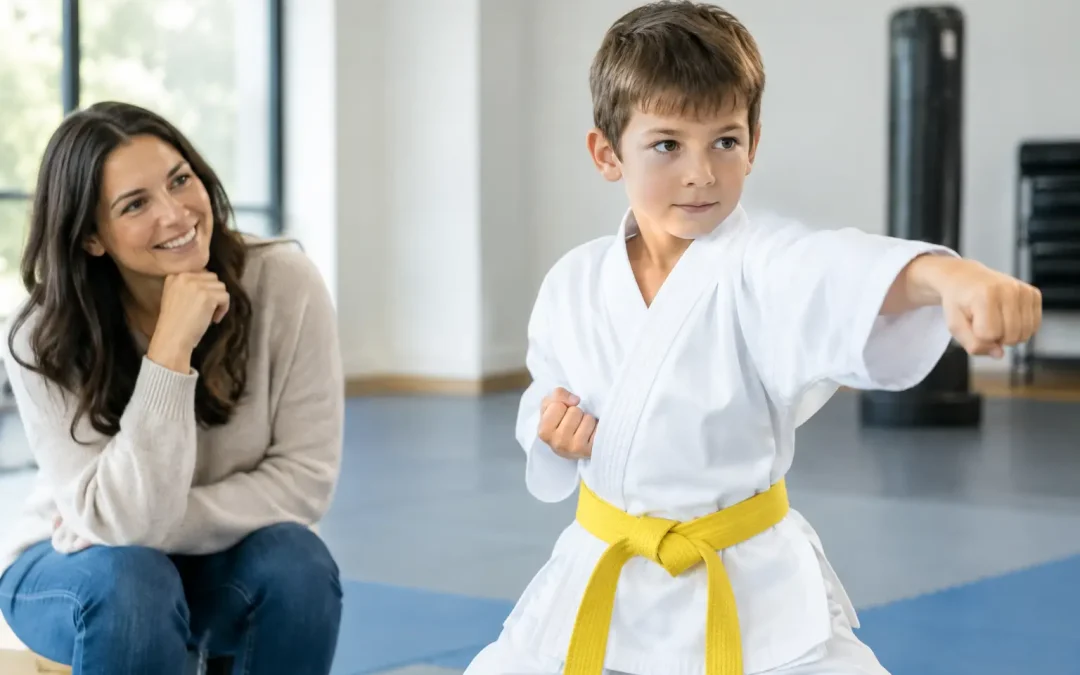
A child who finds it hard to sit still at school may thrive when they have a clear stance to hold, a combination to remember, and a coach who expects them to listen. Parents often ask, “will martial arts help behaviour?” The honest answer is that it can – especially when training is structured, age-appropriate, and reinforced at home – but it is not a quick fix or a replacement for professional support when that is needed.
Martial arts gives children and teens a positive place to practice the skills behind good behavior: listening, waiting, managing frustration, following directions, and treating other people with respect. Progress comes through regular effort, not through being naturally athletic or perfectly focused from day one.
Will martial arts help behavior at home and school?
Many parents notice that their child becomes more settled after joining a martial arts class. That change is not usually because they have simply worn off energy. Physical activity helps, but the bigger difference is the routine around it.
A well-run class has clear expectations from the first few minutes. Students line up, listen, respond when asked, take turns, and reset after a mistake. They learn that attention is part of training, just like kicking, punching, or moving safely. Over time, these repeated moments can help a child understand what self-control feels like in their body.
The benefits often carry into everyday life because children get to practice them every week. A student who learns to pause before starting a drill is practicing the same skill they need before calling out in class. A student who keeps trying after getting a combination wrong is building resilience for homework, friendships, and new challenges.
That said, behavior improvements are rarely instant or perfectly consistent. Children can be calm and focused in class yet still have difficult moments at home, particularly when they are tired, hungry, overwhelmed, or adjusting to a new routine. Think of martial arts as regular practice for life skills, not a promise of perfect behavior.
Why structure makes a difference
Children benefit from knowing where the boundaries are. In freestyle kickboxing, sessions can be energetic and enjoyable while still having a clear framework: warm-up, instruction, skill practice, partner work, and a respectful finish. That predictability can be reassuring, especially for children who struggle with transitions or busy environments.
Focus is taught in small moments
Focus is not something a child either has or does not have. It is a skill that develops through manageable challenges. Remembering a short sequence, watching a demonstration, or waiting for a turn gives students a reason to pay attention. They quickly see that listening helps them improve.
Good instructors keep expectations realistic for each age group. Younger children need movement, simple instructions, and frequent encouragement. Older children and teens can take on more responsibility, refine techniques, and support newer students. When the challenge fits the student, focus becomes more achievable.
Respect has a practical meaning
Respect in martial arts is not about making children silent or afraid to speak. It means learning to treat instructors, training partners, and themselves with care. Students are taught to control their movements, use equipment correctly, and recognize that everyone in the room is there to learn.
For a child who gets frustrated easily, partner drills can be particularly valuable. They must match their energy to the task, follow safety rules, and continue working with someone else even when things do not go their way. These are useful social skills, taught in a setting where the expectations are clear.
Confidence reduces some challenging behavior
Sometimes behavior that looks defiant is connected to worry, low confidence, or a fear of getting something wrong. A child may avoid tasks, argue, or become disruptive because they do not believe they can succeed.
Martial arts creates small, visible wins. Learning a new technique, earning recognition for effort, or realizing they can complete a class gives a child evidence that they are capable. This does not remove every challenge, but confidence can make it easier for them to handle correction and try again.
What parents can realistically expect
The best results tend to appear gradually. In the first few weeks, a child may simply become excited about going to class. After regular attendance, parents may see them using more respectful language, responding better to routines, or talking proudly about working toward a goal.
Progress will look different for every child. One may become more patient. Another may grow more comfortable speaking up. A teen may find a healthier way to handle stress after school. It is better to look for steady development than to compare your child with another student.
It also helps to remember that martial arts classes are not designed to diagnose or treat behavioral, emotional, or developmental needs. If your child is experiencing serious distress, aggression, persistent difficulties at school, or changes in mood, speak with the appropriate health, school, or family support professional. Martial arts can sit alongside that support as a positive routine and outlet.
How to choose a class that supports positive behavior
Not every martial arts environment will suit every child. The name of the style matters less than the quality of teaching and the atmosphere in the room. Look for a class where safety, respect, and encouragement are as important as physical technique.
A good beginner class should explain rules clearly without shaming children who are still learning. Instructors should correct poor behavior calmly and consistently, while noticing effort as well as achievement. Children need boundaries, but they also need to feel that they belong.
For parents in Carshalton, Croydon, and nearby South London areas, Taylor Martial Arts offers age-appropriate freestyle kickboxing classes that place discipline, respect, focus, and confidence at the center of training. The aim is not to create the loudest or toughest child in the room. It is to help each student develop at their own pace in a welcoming community.
Helping the lesson continue after class
Parents do not need to turn home into a dojo for martial arts to have an effect. A few simple conversations can help children connect what they are learning in class with everyday situations.
Ask what they practiced, what felt difficult, and what they did when they made a mistake. Praise specific actions, such as listening the first time, returning after a tough drill, or being a good partner. Specific encouragement shows children that progress is about their choices, not just a belt, grade, or perfect performance.
Consistency matters too. Arriving on time, bringing the right equipment, and attending regularly all reinforce the message that commitments count. If a child has had a difficult day, class can still be a useful reset, but avoid presenting training as a punishment for bad behavior. Martial arts works best when it feels like a positive responsibility and a place to grow.
A positive next step for your child
If your child needs more movement, stronger routines, or a safe place to build confidence, a trial class can tell you far more than a brochure ever could. Watch how they respond to the instructor, the structure, and the other students. The right class should challenge them while making them feel supported.
Give them time to learn the rhythm of training. With patient coaching, regular attendance, and encouragement at home, the lessons they practice on the mat can become steady habits that help them handle life beyond it.
Recent Comments