
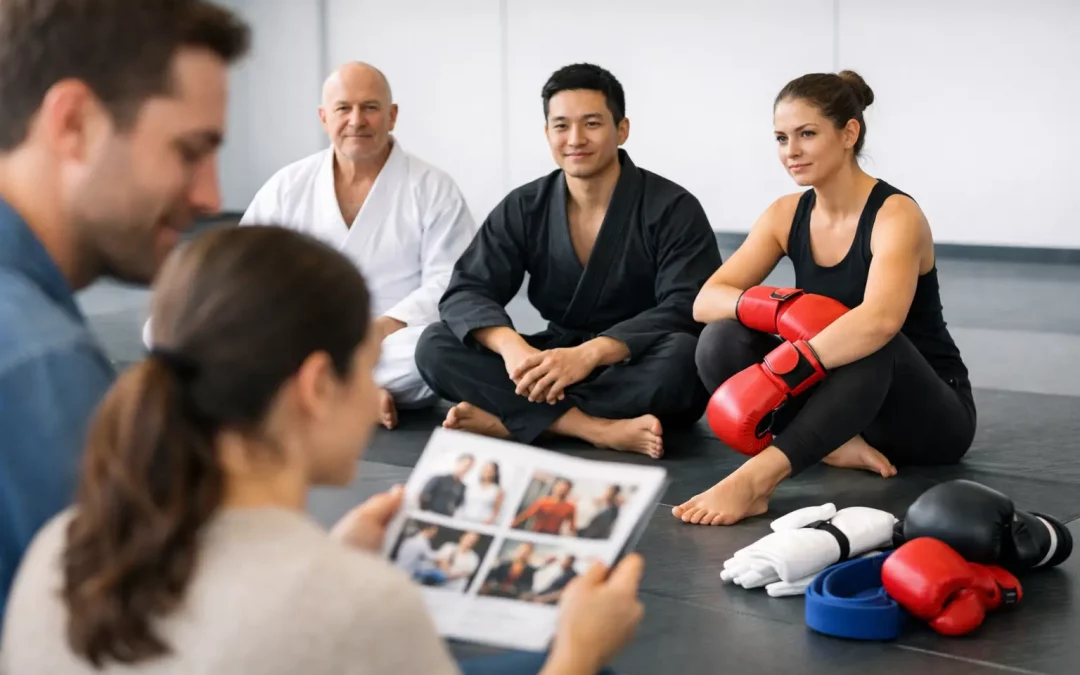
A martial arts class should feel purposeful from the moment you walk in. You should see students being challenged at the right level, instructors giving clear direction, and a room where effort and respect matter. Knowing how to choose martial arts classes is not about finding the toughest-looking program. It is about finding a place where you or your child can build confidence, fitness, focus, and practical skills week after week.
The right class can become a positive part of family life. The wrong one can leave a beginner feeling overlooked, pressured, or simply uninterested. Before committing, take the time to look beyond the timetable and ask what the school actually helps students become.
Start With the Goal Behind the Class
People begin martial arts for different reasons. A parent may want their child to listen better, become more confident, and enjoy a healthy routine away from screens. A teenager may need an activity that improves fitness while giving them a stronger sense of belonging. An adult may be looking for practical self-defense, stress relief, or a new challenge after years away from exercise.
All of these are good reasons to start, but they can point toward different types of training. If your main priority is a friendly introduction to fitness and self-defense, a beginner-focused kickboxing class may be a better fit than a competition-centered gym. If your child is very young, look for a program designed around their age and attention span rather than a smaller version of an adult class.
Be honest about what you want from the first few months. You do not need to choose a class based on what you might want years from now. A supportive first experience is what gives beginners the confidence to keep showing up.
Look Closely at the Instructor
An experienced instructor matters, but experience alone is not enough. Great martial arts teaching requires patience, structure, awareness, and the ability to bring out the best in different personalities.
During a class visit or trial, watch how the instructor speaks to students. Are instructions clear? Do they correct mistakes in a respectful way? Do quieter students receive attention, not just the naturally confident ones? A strong instructor keeps standards high without using fear, embarrassment, or unnecessary shouting as motivation.
For children, this balance is especially valuable. Martial arts should teach accountability. Students should learn to stand still, listen, practice with care, and take responsibility for their progress. But they should also feel safe enough to make mistakes and try again. Confidence is not built by getting everything right on day one. It is built through steady encouragement and earned improvement.
Ask who teaches each age group and how instructors support beginners. You should come away with clear answers, not vague promises.
Choose Age-Appropriate Martial Arts Classes
A four-year-old, a ten-year-old, and a teenager do not learn in the same way. Neither should they be taught in exactly the same environment.
Younger children often benefit from short activities, simple instructions, movement games, and routines that develop coordination and listening skills. The aim is not to turn them into expert fighters. It is to help them develop focus, balance, confidence, and respect while enjoying being active.
As children grow, training can become more technical and physically demanding. Older students can learn combinations, controlled partner drills, fitness work, and the discipline that comes with working toward new grades or goals. Teens also benefit from a class where they can train seriously without feeling judged for being new.
Adults need a different balance again. A good adult class should offer a genuine workout and practical skill development while recognizing that people arrive with different fitness levels, work schedules, and previous injuries. There is a difference between a class that challenges you and one that makes beginners feel they have to prove themselves immediately.
Safety Should Be Visible, Not Just Promised
Martial arts involve movement, contact, and learning control. That is part of what makes training valuable. Safety does not mean removing every challenge. It means teaching students how to train responsibly.
Watch whether students are paired appropriately by age, size, and experience. Notice whether drills are explained before they begin and whether instructors actively supervise partner work. In a well-run class, students learn that control is a sign of skill. They should understand when to make contact, how much force to use, and how to look after their training partners.
Ask about protective equipment, warm-ups, and how the school adapts exercises for beginners or students returning after an injury. The answers should be practical. A good school has clear routines because safety is part of its culture, not an afterthought.
It is also worth noticing the atmosphere between students. Respect should show up in the small moments: lining up properly, listening when someone is speaking, helping new members, and treating every partner with care.
Look for Structure, Progress, and Enjoyment
The best classes have a plan. Students should know what they are working on, whether that is a technique, a fitness target, a belt or grade requirement, or a personal habit such as better focus in class.
Structure helps children understand that progress comes from practice. It helps adults stay motivated when a new skill feels awkward at first. A clear curriculum also prevents training from becoming random. Every session does not have to look identical, but there should be a sense that each lesson builds toward something.
At the same time, structure should not mean boredom. Especially for younger students, enjoyable training is essential. A child who leaves class proud, energized, and eager to return is far more likely to develop the consistency that creates real progress.
Ask how students advance and what success looks like beyond belts or grades. The strongest programs recognize progress in many forms: improved fitness, better self-control, stronger technique, more confidence, and the courage to keep trying.
Consider the Community Around the Class
A martial arts school is not only a place to exercise. For many students, it becomes a community where they are known, encouraged, and held to positive standards.
Pay attention to the welcome you receive. Are parents given time to ask questions? Are new adults made to feel comfortable? Do students greet one another with respect? You do not need a loud or flashy environment. You need one where people take training seriously and still want newcomers to succeed.
For families, convenience matters too. A great program is only helpful if it fits your routine well enough to attend consistently. Consider class times, location, parking or transportation, and whether siblings or parents can train at suitable times. The ideal schedule is not always the one with the most sessions. It is the one your family can realistically maintain.
Try Before You Commit
A trial class gives you information no website or phone call can fully provide. You can feel the pace of the lesson, meet the instructor, and see whether the environment matches what you hoped for.
Arrive a few minutes early and stay long enough afterward to ask questions. If you are enrolling a child, ask them how they felt rather than only whether they liked it. Did they understand what to do? Did they feel included? Were they excited to return? A little nervousness is normal, especially in a first class. Feeling unsupported is not.
For adults, notice how your body responds as well as your confidence. You should expect to work hard, but you should not feel pressured to keep up with advanced students before you have learned the basics. Good training meets you where you are and gives you a path forward.
How to Choose Martial Arts Classes With Confidence
When comparing options, avoid making your decision based only on price, uniform color, or how dramatic a class looks from the doorway. Value comes from quality instruction, safe training, a clear progression, and a community that helps students stay committed.
Taylor Martial Arts is built around that balance: structured freestyle kickboxing for children, teens, and adults, with practical training and personal development at the center. The right club will make the same priorities clear from your first visit.
Choose the class where you or your child can be challenged, supported, and proud of the effort put in each week. The first step may be a trial lesson, but the real reward is finding a place where discipline grows into confidence and confidence carries into everyday life.
Recent Comments