
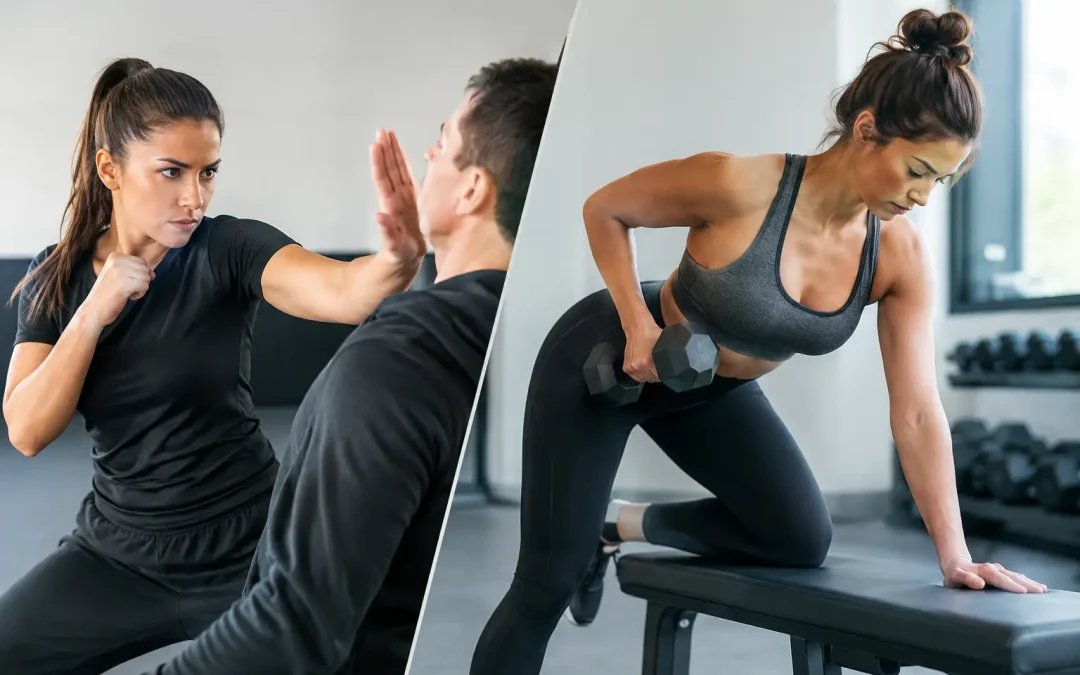
A hard workout can leave you tired, sweaty, and proud of what you achieved. But when people compare self defence versus fitness training, they are often asking a bigger question: will this class help me feel stronger in everyday life, or simply help me get fitter?
The best answer is not always one or the other. Fitness training can improve your health, energy, and body confidence. Self-defense training can teach awareness, practical movement, and how to stay calmer under pressure. Martial arts brings those benefits together while adding discipline, respect, focus, and a supportive routine that can suit children, teens, and adults.
Self Defence Versus Fitness Training: The Main Difference
Fitness training is usually designed around physical outcomes. You may want to improve cardiovascular health, lose weight, build strength, increase flexibility, or enjoy a regular activity that lifts your mood. A gym session, running club, dance class, or boot camp can all help you move more and feel better.
Self-defense training has a different starting point. It focuses on preparing you to recognize risk, create space, protect yourself when needed, and make sensible decisions under pressure. It is not about looking for confrontation or learning to fight for its own sake. Good self-defense instruction teaches control, awareness, and the importance of avoiding trouble wherever possible.
The distinction matters because a person can be very fit without knowing how to respond to an unwanted grab, intimidation, or a stressful situation. Equally, someone can learn a few self-defense techniques without developing the fitness needed to move quickly, maintain balance, or practice consistently. Physical ability and practical skills work best together.
What Fitness Training Gives You
Regular exercise is one of the strongest foundations you can build for your wellbeing. It supports your heart, muscles, joints, sleep, and mental health. For children, active classes can also establish positive habits early, giving them a healthy outlet after school and a break from screens.
Fitness training also develops perseverance. Turning up when you feel tired, completing another round, or improving your technique over time builds a sense of personal responsibility. Those lessons are valuable far beyond the training space.
Still, fitness alone may become repetitive if there is no larger purpose behind it. Some people lose motivation when every session feels like another set of exercises or another number on the scale. They want to feel fitter, but they also want to learn something useful, see clear progress, and be part of a group that knows their name.
What Self-Defense Training Adds
Practical self-defense training teaches more than strikes, blocks, or kicks. It helps students become more aware of their surroundings, understand personal space, and practice staying composed when things feel unfamiliar or uncomfortable. These are life skills, not just class skills.
For adults, this can mean moving through daily life with greater confidence. Confidence is not about being fearless or aggressive. It is about knowing you have trained your body and mind to respond with control. You may never need to use a physical technique outside class, and that is the goal. The value is in being more prepared, more observant, and less likely to panic.
For children and teens, self-defense elements can be especially valuable when taught in an age-appropriate way. They learn how to use their voice, set boundaries, seek help from a trusted adult, and walk away from conflict. They also learn that real strength includes respect and self-control.
A responsible martial arts class does not promise students they will be invincible. It gives them a safer, more realistic foundation: avoid danger where possible, use good judgment, and have practiced skills available if there is no other option.
Why Martial Arts Is Not Just One or the Other
Freestyle kickboxing offers a practical middle ground for people who want to get fit and develop useful skills at the same time. Training can include footwork, coordination, balance, pad work, controlled partner exercises, and conditioning. Your heart rate rises, your strength develops, and you are learning movements with a clear purpose.
This makes the session feel different from a standard workout. Instead of counting down minutes on a treadmill, you may be improving a combination, refining your stance, or working toward the next grade. There is a reason to return each week, because progress is visible in your fitness, technique, confidence, and mindset.
It also creates a healthier relationship with exercise. You are not training only to change how you look. You are training to become more capable. That shift can be particularly helpful for young people who need encouragement to stay active without feeling judged or compared.
At Taylor Martial Arts, classes are structured to help students develop at their own level while being challenged to improve. Beginners do not need to arrive fit, flexible, or experienced. They need a willingness to listen, practice, and keep going.
Choosing the Right Focus for Your Family
The right class depends on what you need most right now. If your main goal is general health, stress relief, or getting back into a regular routine, a fitness-focused class may be enough. The key is finding an activity you genuinely enjoy and can sustain.
If you are concerned about confidence, personal safety, discipline, or helping your child handle challenges more calmly, self-defense-based martial arts may be a stronger fit. The physical benefits are still there, but the training has wider personal value.
For many families, the strongest choice is a class that combines both. Parents often want their children to be active, but they also want them to gain focus, respect, resilience, and confidence. Adults may join for fitness and discover that the mental reset after a class is just as valuable as the workout itself.
Age and personality matter too. A young child needs clear routines, positive encouragement, and activities matched to their development. A teenager may respond well to the confidence that comes from measurable improvement and belonging to a supportive group. Adults may value practical instruction, a welcoming atmosphere, and training that fits around work and family life.
Fitness Without Pressure, Self-Defense Without Fear
A good training environment should never rely on fear, humiliation, or pressure to get results. Students learn best when instructors set high standards while also recognizing effort and progress. Discipline does not mean being shouted at. It means learning to be accountable, follow instructions, show respect, and keep working when something is difficult.
The same principle applies to self-defense. Training should build calm confidence, not anxiety. You do not need to assume danger is around every corner. You simply develop better awareness and the reassurance that you are learning practical ways to look after yourself.
Controlled martial arts training also teaches an important lesson about power: skill means using it responsibly. Students practice with partners, learn boundaries, and understand that control is more impressive than showing off. This is one reason family-focused classes can have such a positive effect on behavior, confidence, and social skills.
Make Progress That Reaches Beyond Class
Whether your first goal is fitness or self-defense, consistency is what changes results. One class can feel energizing, but regular training is where stronger movement, sharper focus, and real confidence begin to grow. Start at a pace that feels manageable and let your ability build over time.
The best training choice is the one that helps you or your child want to come back next week. Find a class where effort is encouraged, progress is recognized, and every student has room to become stronger, more focused, and more confident in daily life.
Recent Comments