
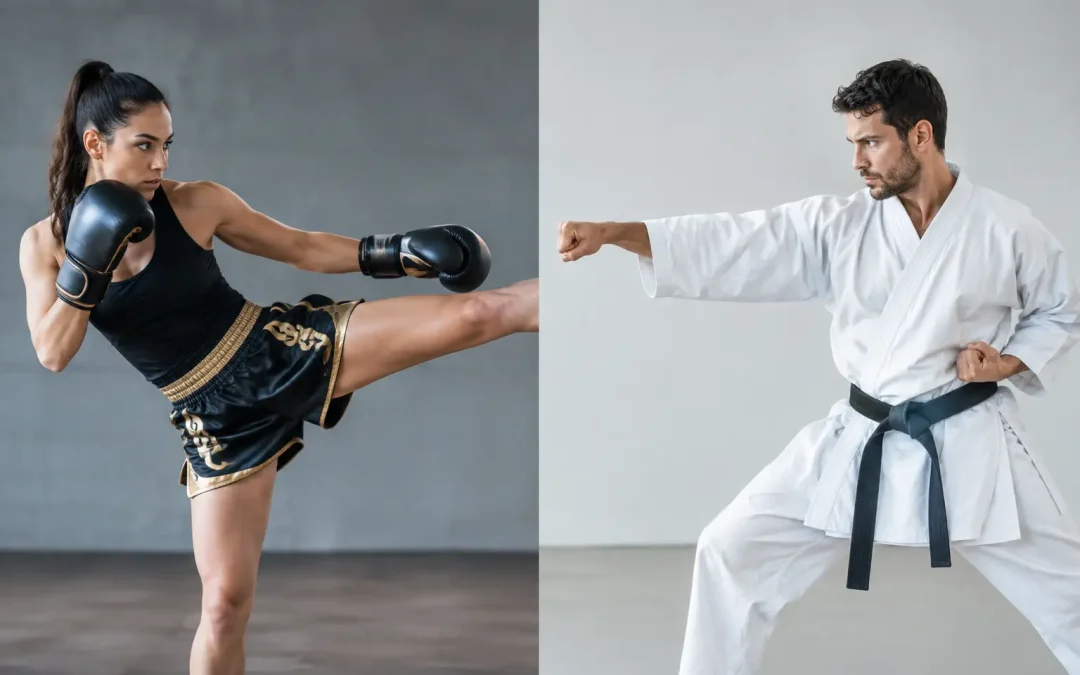
A child who needs more confidence, a teen who needs a positive routine, and an adult who wants practical fitness may all ask the same question: freestyle kickboxing vs traditional karate – which is the better choice? The honest answer is that both can be excellent. The right class is the one that matches your goals, feels welcoming, and gives you or your child a reason to keep showing up.
Both styles can build discipline, respect, focus, and fitness. Where they differ is in how they train, what they emphasize, and how the lessons are structured. Understanding those differences makes it easier to choose with confidence.
Freestyle Kickboxing vs Traditional Karate: The Main Difference
Freestyle kickboxing is a modern martial arts approach that combines punches, kicks, movement, defensive skills, and fitness training. Classes often focus on learning effective techniques through drills, pad work, controlled partner exercises, and combinations. Students develop coordination while working at a pace that can feel energetic and motivating.
Traditional karate is rooted in a specific martial arts system with established forms, techniques, terminology, and customs. Training commonly includes stances, blocks, strikes, kicks, kata or forms, and a clear grading structure. It often places strong emphasis on precision, tradition, and understanding the details behind each movement.
Neither approach is automatically better. Freestyle kickboxing tends to feel more flexible and active from the start, while traditional karate may appeal to students who enjoy a formal syllabus and the depth of a long-established style.
What Freestyle Kickboxing Training Feels Like
A freestyle kickboxing class is usually built around movement. Students learn how to stand, move, guard themselves, throw punches and kicks with control, and respond calmly under pressure. They may work on pads, practice combinations, improve footwork, and complete fitness exercises that support their martial arts skills.
For beginners, this can be a very accessible way to begin. You do not need to be naturally athletic or have previous experience. Good instruction breaks techniques into manageable steps, helping each student improve at a safe pace.
For children, that variety can make a real difference. A lesson may include focus drills, balance work, partner activities, and age-appropriate self-defense. There is enough action to keep energy levels positive, while the structure teaches children to listen, follow directions, and show respect for others.
For adults, freestyle kickboxing can offer a productive break from the usual gym routine. It develops cardiovascular fitness, strength, mobility, and coordination, but it also asks you to concentrate. When you are learning a combination or working with a partner, there is little room to carry the stress of the day with you.
What Traditional Karate Training Feels Like
Traditional karate often has a more formal feel. Students may line up by grade, use Japanese terminology, practice set techniques, and spend time refining individual positions and strikes. The goal is not simply to make a movement look sharp. It is to build control, posture, balance, timing, and discipline.
Kata is one of karate’s defining features. These are set patterns of movements that students practice repeatedly. For some people, kata is highly rewarding because it provides a clear route for measuring progress. It can encourage patience and attention to detail, especially for students who enjoy practicing toward a defined standard.
The more formal environment can be a great fit for children and adults who value routine. It may also suit families who want their martial arts experience to be closely connected to traditional customs and a particular style’s history.
That said, some beginners find repetitive forms less immediately engaging than pad work and combinations. This is not a weakness in karate. It simply comes down to how a student likes to learn and what keeps them motivated week after week.
Self-Defense: Practical Skills Need Practice
When families ask about martial arts, self-defense is often part of the conversation. Both freestyle kickboxing and traditional karate can teach valuable awareness, distance, balance, confidence, and control. The quality of instruction matters more than the name of the style alone.
Freestyle kickboxing commonly emphasizes practical movement, guarding, striking pads, and combining techniques while staying balanced. This can help students understand range and develop the confidence to act decisively when appropriate. Training should always be controlled and responsible, with safety and good judgment at the center.
Traditional karate can also provide effective self-defense foundations, particularly through its focus on strong body mechanics, positioning, and disciplined technique. However, the practical application of techniques can vary between schools. Some clubs spend more time on partner drills and realistic scenarios than others.
A worthwhile self-defense program should never teach students to look for a fight. The most important skills are awareness, avoiding unnecessary conflict, setting boundaries, and knowing when to get help. Physical techniques are one part of personal safety, not the whole picture.
Fitness, Confidence, and Personal Growth
Freestyle kickboxing is often an especially strong choice for people whose first goal is getting active. The pace of training can raise the heart rate quickly, improve stamina, and make exercise feel purposeful. Instead of counting repetitions alone, students are learning a skill as they train.
Karate develops fitness too, although the session may place more emphasis on technique, stances, forms, and controlled repetition. Depending on the school, it may feel less like a high-energy workout and more like a disciplined study of movement.
For many parents, confidence is just as important as fitness. Confidence does not come from telling a child they are capable. It grows when they try something difficult, keep practicing, and notice that they can do more than they could last month.
That is why consistent training matters. A quiet child may begin by standing at the back of the room, then gradually take part in partner work, speak up when asked, and earn the next grade. A teenager may learn to channel nervous energy into focus. An adult may discover that regular classes create a healthier routine and a stronger sense of self-belief.
Which Style Is Better for Children?
The best choice depends on the child, the instructor, and the class environment. A young child who benefits from active games, clear boundaries, and varied drills may enjoy freestyle kickboxing. A child who responds well to routine, precise instruction, and traditional forms may be drawn to karate.
Look beyond the style name when choosing a class. Are the lessons designed for the child’s age? Does the instructor set clear expectations with warmth and consistency? Are students encouraged without being pressured? Is safety treated seriously? Do children leave feeling proud, included, and eager to return?
A family-focused club should recognize that every child develops differently. Some need help building focus. Others need a positive outlet for energy, more confidence in social settings, or a challenge that takes them away from screens. Martial arts works best when it meets the student where they are and helps them move forward.
Choosing Between Freestyle Kickboxing and Traditional Karate
Start with your reason for training. If you want practical striking skills, active fitness, and a varied class experience, freestyle kickboxing may be the natural fit. If you are drawn to tradition, forms, detailed technique, and a formal progression, karate may be more appealing.
Then consider the people teaching the class. A supportive instructor can make a major difference to a beginner’s experience. The best classes balance high standards with encouragement. Students should be challenged, but they should also feel safe asking questions and making mistakes while they learn.
At Taylor Martial Arts, freestyle kickboxing classes are built around that balance: structured training, practical skills, and a community where children, teens, and adults can grow at their own level. The aim is not to create a room full of identical students. It is to help each person become more focused, confident, respectful, and capable.
The clearest way to know if a martial arts class is right for you is to step onto the mat and try it. Choose a place where progress is celebrated, discipline is taught with care, and every class gives you something positive to take into the rest of your week.
Recent Comments