
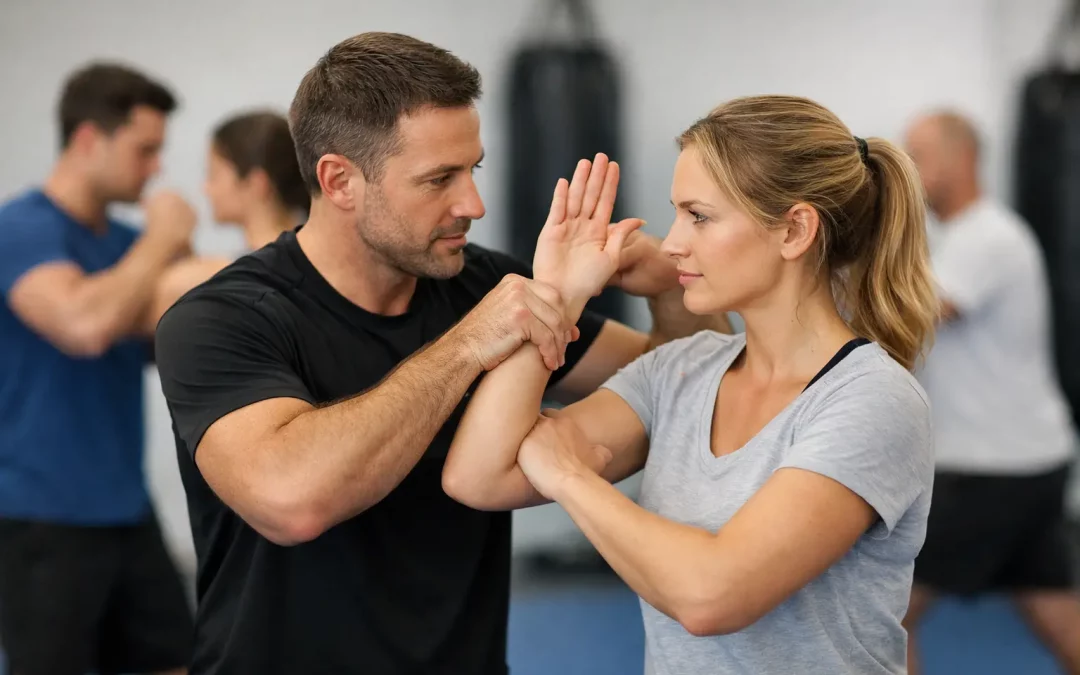
Walking into your first class can feel like the hardest part. Most people interested in beginner self defence classes are not trying to become fighters. They want to feel safer, get fitter, build confidence, and train in a place where they will be supported from day one.
That is exactly why the right class matters. A good beginner program should not throw you into the deep end. It should teach practical skills step by step, help you improve your fitness at a sensible pace, and create an environment where respect and encouragement come first. For children, teens, and adults, that structure often makes the difference between giving up early and building a habit that lasts.
What beginner self defence classes should actually teach
A lot of people hear the phrase self-defense and imagine complicated techniques or high-pressure sparring. In reality, strong beginner classes focus on simple, repeatable skills that are easier to remember under stress. That usually means stance, movement, balance, awareness, distance, timing, and basic striking or defensive reactions.
Just as important, beginners need to learn how to stay calm and make better decisions. Self-defense is not only about what your hands and feet do. It is also about posture, confidence, awareness of your surroundings, and knowing when to step away from a situation before it gets worse.
For younger students, the best instruction is age-appropriate. Children need structure, clear boundaries, and lessons that support discipline and focus as much as physical technique. Teenagers often benefit from training that strengthens confidence and helps them carry themselves with more assurance. Adults usually want practical skills, improved fitness, and a healthy routine they can stick with.
Why beginners do better in a structured class
Trying to learn self-defense from random videos often sounds convenient, but it has limits. You cannot easily correct your stance, balance, timing, or reactions on your own. You also miss the value of practicing with partners, following a clear progression, and learning from an instructor who knows when to simplify, when to challenge you, and when to slow things down.
Structured classes give beginners something they need right away – direction. Instead of guessing what to practice, you learn in the right order. That makes training safer, more productive, and less intimidating.
A well-run class also builds accountability. When you show up each week, you improve through repetition. That consistency helps students grow in skill, fitness, and confidence. Over time, the benefits go beyond the training floor and show up in school, work, and everyday life.
What to expect in your first beginner self defence classes
The first session should feel welcoming, not overwhelming. Most good classes start with a warm-up, followed by basic technique work, controlled partner drills, and simple combinations or movement patterns. You may practice how to stand properly, how to move with balance, how to protect yourself with your guard up, and how to use basic strikes with control.
For complete beginners, the pace matters. The goal is not to impress anyone on day one. The goal is to learn safely, understand the basics, and leave feeling more confident than when you arrived.
You should also expect clear coaching. Instructors should explain what you are doing, why it matters, and how to improve. That clarity helps beginners settle in quickly, especially if they feel nervous about getting started.
If a class feels chaotic, too advanced, or overly aggressive, that is worth paying attention to. Not every martial arts environment is right for every beginner. Some people want a highly competitive setting, but many families and first-time students do better in a club that balances discipline with support.
Confidence comes before advanced technique
One of the biggest benefits of training is confidence, but that confidence should be earned the right way. It does not come from pretending you know everything after a few lessons. It comes from regular practice, better posture, improved awareness, and the knowledge that you can stay composed while learning something challenging.
This is especially valuable for children and teens. Martial arts can help them become more focused, more respectful, and more comfortable in themselves. That does not happen overnight, and it should not be forced. It grows through routine, encouragement, and clear expectations.
Adults feel this shift too. Many start classes because they want self-defense skills, but keep training because they enjoy the routine, the physical progress, and the sense of community. Feeling stronger and more capable has a way of carrying into other parts of life.
Fitness is part of the benefit, not the barrier
A common worry is being unfit before starting. The truth is, beginner classes are where many people build their fitness. You do not need to arrive in great shape. You need to arrive willing to learn.
Good instruction meets beginners where they are. Some students want to improve cardio and lose weight. Others want more energy, better coordination, or a healthier outlet for stress. Those goals are all valid, and martial arts training can support them without making fitness feel like punishment.
There is a trade-off here. If you only want a casual workout with no structure, a martial arts class may feel more disciplined than a standard gym session. But for many people, that structure is exactly what helps them keep going. Training has purpose, progress is visible, and each session gives you something practical to work on.
How to choose the right class for your family
Not all beginner programs are equal, so it helps to look beyond the words self-defense on a flyer. Start with the atmosphere. Is the class respectful, organized, and beginner-friendly? Are instructors attentive? Do students look engaged and supported?
Next, think about age and experience. A strong program should group students in a way that makes sense. Children, teens, and adults all learn differently, and classes should reflect that. If everyone is thrown together without clear structure, beginners can easily feel lost.
You should also look for teaching that balances practical technique with personal development. The best schools do more than teach physical skills. They reinforce discipline, focus, respect, and consistency. For families, that matters just as much as the techniques themselves.
Location and schedule matter too. Even the best class on paper will not help much if getting there every week becomes difficult. For busy parents and working adults, convenience plays a big role in long-term success.
In local communities, that is often why clubs like Taylor Martial Arts appeal to families. The training is structured, accessible, and built around steady progress rather than intimidation.
Signs a beginner class is doing its job well
You can usually spot a strong class quite quickly. Beginners are given clear guidance. More experienced students train with control. Instructors correct without discouraging. The room feels disciplined, but not cold.
Progress should also be visible in small ways. Students stand taller. They move with more purpose. They become more focused, more coachable, and more confident. Those changes are not just good for martial arts. They are good for everyday life.
That said, progress does not look the same for everyone. One student may improve fitness first. Another may become more confident speaking up. A child may develop better listening and focus before their technique really sharpens. A good instructor understands those differences and teaches accordingly.
Starting is simpler than people think
Most beginners spend more time worrying about their first class than they ever need to. You do not have to be fast, flexible, or experienced. You do not need expensive gear. You only need a willingness to start and an environment that helps you build from the basics.
The right class will challenge you, but it should also support you. It should make room for questions, give you clear next steps, and help you improve at a pace you can manage. That is how beginners become consistent students.
If you have been thinking about trying beginner self defence classes, the best step is often the simplest one – show up, take the first lesson, and let progress begin from there. A good class will meet you where you are and help you become stronger, steadier, and more confident one session at a time.
Recent Comments