
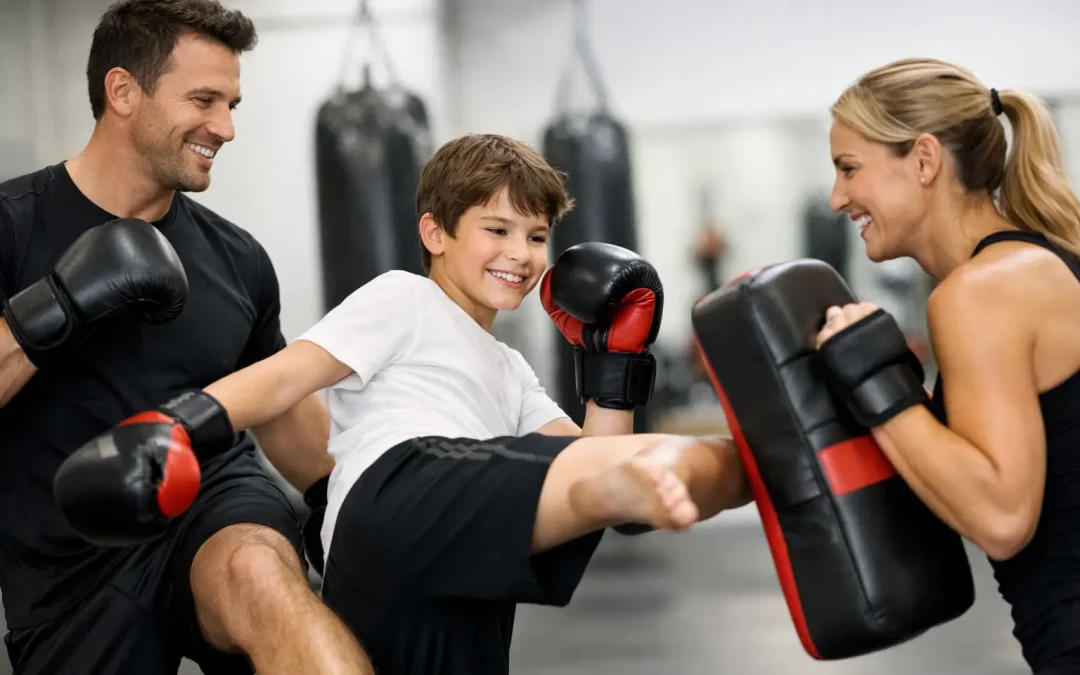
A good first kickboxing class should leave you feeling challenged, not intimidated. You may be learning a new stance, working out how to coordinate your hands and feet, or simply building the confidence to join in. This freestyle kickboxing training guide explains what beginners, parents, and returning exercisers can expect from structured training, and how steady practice creates benefits far beyond the mat.
Freestyle kickboxing is not only about throwing fast punches or high kicks. It is a practical activity that develops fitness, focus, respect, and self-belief. For children, it can provide a positive routine and a place to channel energy. For adults, it is a rewarding way to improve wellbeing while learning useful self-defense awareness.
What Is Freestyle Kickboxing?
Freestyle kickboxing combines punches, kicks, movement, defensive skills, and controlled partner work. Training is usually taught in progressive stages, so students can develop safe technique before adding speed, combinations, and more demanding drills.
A family-focused class is different from a fight gym. The aim is not to prove who is toughest in the room. The aim is to help every student improve from their own starting point. That may mean a child learns to listen, follow instructions, and keep trying after a mistake. It may mean an adult finds the discipline to train consistently after a long day at work.
Competition can be part of freestyle kickboxing for students who want it, but it does not have to be the reason for training. Many people attend because they enjoy the exercise, value practical skills, and want to be part of a supportive local community.
Freestyle Kickboxing Training Guide: Start With the Basics
The strongest kickboxers do the simple things well. Beginners do not need complicated combinations on day one. They need a balanced stance, good posture, controlled movement, and clear instruction.
Build a stable stance
Your stance is the foundation for every punch, kick, block, and step. Keep your feet at a comfortable distance, knees slightly bent, hands up to protect your head, and weight balanced so you can move in any direction. A stance that feels natural is more useful than one that looks rigid.
Children often need reminders to avoid crossing their feet or dropping their hands when they get excited. Adults may need time to relax their shoulders and stop trying to generate power from their arms alone. These are normal parts of learning. Consistent correction helps safe habits become automatic.
Learn technique before power
A clean straight punch uses the whole body. The foot turns, the hip rotates, the hand travels directly toward the target, and the other hand stays up in guard. A controlled kick begins with balance and chambering the leg, not swinging wildly from the hip.
Trying to hit hard too early can lead to poor technique and unnecessary strain. Instructors will normally focus on accuracy, control, and correct body position first. Power develops as coordination, timing, and confidence improve.
Practice defense and awareness
Kickboxing training should include more than attacking techniques. Students learn to keep their guard up, move away from pressure, block safely, and recognize distance. These skills build calmness as well as physical coordination.
Practical self-defense also means awareness and sensible decision-making. The best outcome in a difficult situation is usually to stay safe, create space, and leave. Training should build confidence without encouraging anyone to seek confrontation.
A Typical Class Builds More Than Fitness
Most classes begin with a warm-up to raise the heart rate and prepare the joints and muscles. This might include light running, mobility movements, bodyweight exercises, and basic kickboxing footwork. A proper warm-up matters because it helps students train with more control and reduces the chance of injury.
The technical section may focus on a small number of skills, such as a jab-cross combination, a front kick, a defensive block, or movement around a partner. Repetition is valuable. It gives students time to understand the movement rather than rushing from one unfamiliar drill to another.
Pad work is often a favorite part of class. It is energetic, satisfying, and a good way to practice combinations with a clear target. Students learn to hold pads responsibly, listen to instructions, and work with a partner. That teamwork is especially valuable for children and teens, who gain confidence while learning respect for others.
Classes may also include fitness drills, controlled sparring for appropriate levels, stretching, and time to reflect on what was learned. The exact format depends on the age group and experience level. Younger children need shorter, engaging activities with clear boundaries, while adults may spend longer improving conditioning and technical combinations.
How Often Should You Train?
For most beginners, one or two classes a week is a realistic and productive starting point. One session helps students learn the rhythm of class. Two sessions provide more repetition, which makes technique feel familiar faster. The right schedule depends on family routines, school demands, work commitments, and recovery.
More training is not always better if it leaves someone exhausted or unable to enjoy the process. Children benefit from regularity, but they also need rest, sleep, and time for other interests. Adults who are returning to exercise may need to build gradually, particularly if they have been inactive or are managing an old injury.
Between classes, simple practice can help. Spend a few minutes working on guard position, footwork, or a combination already taught by an instructor. Do not try to copy advanced moves from online videos without guidance. Good practice reinforces good habits.
What to Bring to Your First Kickboxing Class
You do not need expensive equipment to begin. Wear comfortable exercise clothing that allows you to move freely, bring water, and arrive a little early so you can settle in. Any required safety equipment, such as gloves or shin protection, can be explained by the instructor as you progress.
For parents, the most useful thing to bring is encouragement. A child may be quiet in their first class, need a little reassurance, or take time to join a partner drill. Let them settle at their own pace while reinforcing that effort matters more than getting everything right immediately.
For adults, leave the pressure to perform at the door. Nobody expects a beginner to know the terminology or have perfect flexibility. Ask questions, listen carefully, and focus on one improvement at a time.
Progress Comes From Consistency
Belts, gradings, and new techniques can give students clear goals, but real progress is often easier to notice in everyday life. A child who once avoided group activities may begin volunteering to demonstrate a drill. A teenager may become more focused on schoolwork because they have learned how to follow a routine. An adult may find they have more energy, better posture, and greater confidence in unfamiliar situations.
There will be difficult sessions. Some techniques take time. A kick may feel awkward, a combination may be forgotten, or fitness may dip after a busy week. This is where martial arts values matter. Discipline means turning up and trying again. Respect means learning safely with others. Focus means paying attention to the small details that lead to improvement.
At Taylor Martial Arts, classes are designed to give children, teens, and adults a clear path forward in a welcoming environment. Structured age-appropriate coaching means students can build skills at a pace that supports both confidence and safety.
Choosing the Right Class for Your Family
A good local kickboxing class should feel organized from the moment you arrive. Look for instructors who explain techniques clearly, manage the group attentively, and create an atmosphere where beginners are respected. Students should be encouraged to work hard, but never pressured to train beyond what is safe or appropriate for their level.
Ask whether classes are separated by age or experience when needed. Early-years students learn differently from teenagers, and teenagers have different needs from adults. Well-planned programs recognize those differences while keeping the core values of discipline, respect, and enjoyment consistent.
A free trial is a useful way to see whether the class is the right fit. Pay attention to how instructors speak to students, how partners work together, and how your child or you feel after the session. The right class should offer a challenge, a sense of achievement, and the motivation to come back.
Your first class is not a test of how fit, flexible, or confident you are. It is simply the first step in building a stronger routine. Show up, listen, keep your guard up, and give yourself permission to improve one session at a time.
Recent Comments