A rounded upper back, tight shoulders, or a habit of looking down at a screen can slowly become your normal. The good news is that movement training can help you notice those patterns and change them. So, does kickboxing improve posture? It can, especially when classes teach good stance, controlled technique, core engagement, and focused movement rather than simply hitting as hard as possible.
Kickboxing is not a quick fix for every postural concern. But practiced consistently, it can strengthen the muscles that support an upright position, improve body awareness, and give both children and adults a more confident way to move through daily life.
How Kickboxing Can Improve Posture
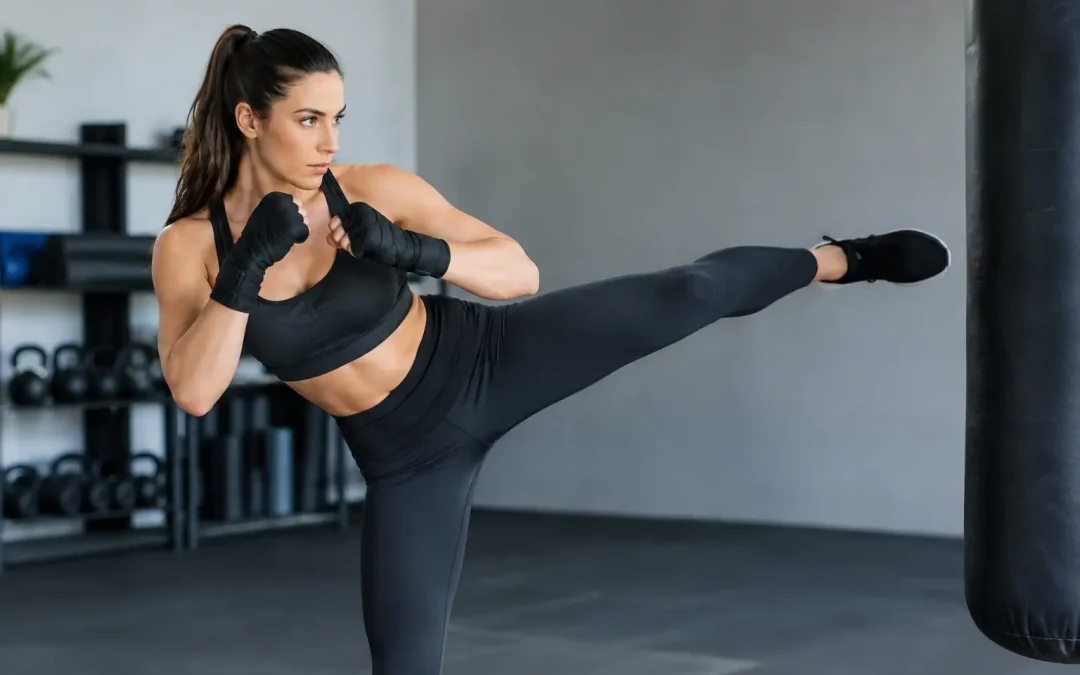
Good freestyle kickboxing begins with stance. Whether you are practicing a basic guard, stepping forward, throwing a punch, or delivering a controlled kick, your body needs a stable foundation. You learn to stand with your feet placed with purpose, knees soft, core active, chest open, and head balanced over your shoulders.
That is very different from drifting through the day with your weight dropped into one hip or your shoulders rounded forward. Repeating a sound fighting stance helps train awareness of alignment. Over time, students often become quicker to recognize when they are slouching at a desk, on the couch, or while walking.
Posture is not about standing stiffly all day. Healthy posture means being able to hold yourself with control, then move freely when you need to. Kickboxing develops both skills.
A stronger core supports better alignment
Every punch and kick starts with more than an arm or a leg. The core helps transfer force through the body while keeping the torso steady. During training, students brace, rotate, balance, and recover their position again and again.
This work can build strength and endurance through the abdominal muscles, lower back, hips, and pelvis. Those areas play an important role in supporting everyday posture. When they fatigue easily, it can be harder to sit upright, carry bags comfortably, or maintain balance during normal activities.
The goal is not to tense your stomach all day. It is to develop the strength and control to support your body naturally.
The upper back and shoulders get active
Many people spend hours with their arms in front of them: typing, driving, studying, gaming, or holding a phone. This can encourage the chest and front shoulders to feel tight while the muscles around the upper back become less active.
Kickboxing asks students to hold a guard with care, retract punches, keep the shoulders controlled, and avoid reaching or collapsing forward. Proper coaching matters here. A good class does not encourage students to hunch their shoulders up toward their ears or throw punches with poor balance.
Pad work, partner drills, and technical combinations can help the upper body become stronger and more coordinated. This may make it easier to maintain a taller, calmer position outside class too.
Balance training changes how you carry yourself
Kicks require balance. Before a kick leaves the floor, the supporting leg must be stable. The body must stay organized through the ankle, knee, hip, and trunk, then return to stance without falling forward or twisting away.
For children, these drills can be especially valuable because balance and coordination are still developing. For adults, they offer a practical way to challenge stability that may have been neglected by a mostly seated routine.
Better balance does not automatically mean perfect posture. It does, however, teach you how your body responds to shifts in weight. That awareness can lead to more confident walking, standing, and movement in everyday life.
Does Kickboxing Improve Posture for Children?
For children, posture is often less about correcting a fixed problem and more about building strong movement habits early. Kids grow quickly, carry heavy school bags, spend time on devices, and may not always have the body awareness to notice when they are slumping or leaning.
Age-appropriate kickboxing gives them a structured setting to practice standing tall, listening carefully, controlling their limbs, and moving with purpose. It also builds focus and discipline. A child who learns to reset their stance after every drill is practicing a useful habit: notice, adjust, and try again.
The benefits can extend beyond the class floor. Children may become more aware of how they sit during homework, how they carry themselves at school, and how their body feels during other sports. Just as importantly, they can develop confidence without being told to simply “stand up straight.”
At Taylor Martial Arts, instruction is designed to meet students at the right stage of development. That means technique, coordination, and respect for the learning process come before pressure to perform at an advanced level.
What Good Technique Looks Like
Not all kickboxing training supports posture equally. Fast, uncontrolled repetitions can reinforce poor habits. Effective instruction gives students time to learn position before adding speed, power, or more difficult combinations.
A well-taught class will regularly reinforce a few simple standards: keep the chin level rather than jutting forward, relax the shoulders, engage the midsection, bend the knees slightly, and return to a balanced stance after each movement. These cues may sound basic, but they are the foundation of safe and effective martial arts training.
Breathing also matters. Students who hold their breath often tighten their neck and shoulders. Learning to breathe steadily during drills can reduce unnecessary tension and help movement feel smoother.
For beginners, the best progress usually comes from repetition. A clean jab-cross combination performed with balance is more useful than a complicated sequence done while leaning, twisting, or losing control. Discipline in the small details builds results that last.
What Kickboxing Cannot Do on Its Own
Kickboxing can be part of better posture, but it is not a replacement for professional care when pain, injury, numbness, persistent headaches, or significant spinal concerns are involved. If posture changes suddenly or causes ongoing discomfort, speak with a qualified healthcare professional.
It also helps to look at the rest of the week. One or two classes can make a real difference, yet long periods of sitting without breaks may continue to challenge your body. Short walks, regular movement breaks, comfortable workstation setup, and enough sleep all support the work you do in class.
Flexibility can be another piece of the picture. Tight hips, chest muscles, or ankles may affect stance and movement. A thoughtful warm-up and cool-down can help, but forcing deep stretches is not the answer. Progress should feel controlled and sustainable.
Building Posture Through Consistent Training
The most noticeable changes tend to come from regular attendance. Each class gives you another opportunity to practice a balanced stance, strengthen the core, sharpen coordination, and move with focus. Over weeks and months, those repetitions add up.
Adults often appreciate that kickboxing gives posture work a purpose. Rather than doing exercises because they feel like a chore, you are learning practical self-defense skills, improving fitness, and challenging yourself at the same time. Children benefit from the routine, encouragement, and clear goals that martial arts training provides.
There is also a confidence element. When you feel stronger and more capable, you may naturally carry yourself differently. Confidence is not about puffing out your chest or trying to look tough. It is the quiet result of knowing you can stay composed, focused, and in control.
Start With Your Stance
If you want to improve posture through kickboxing, begin by paying attention to how you stand before every drill. Set your feet, soften your knees, lengthen through the top of your head, keep your guard relaxed, and breathe. Then return to that position each time a combination ends.
That simple reset is where better habits begin. With patient coaching, consistent practice, and a willingness to focus on technique, kickboxing can help you build a stronger, more balanced posture that supports you well beyond the training floor.
Recent Comments