
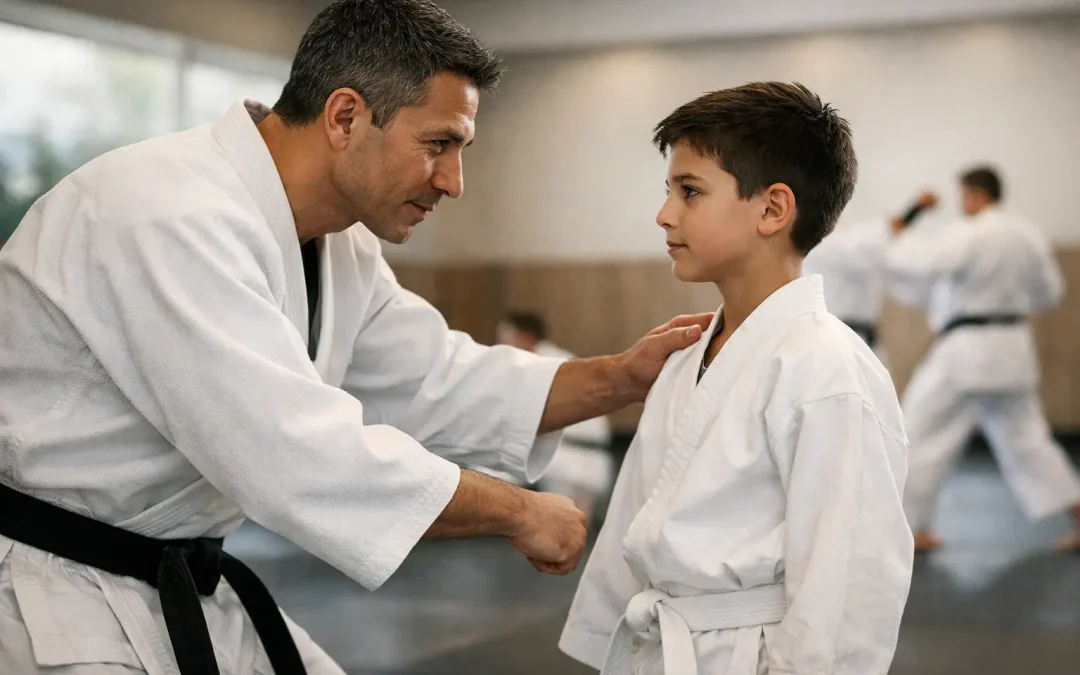
A child is tired after school, an adult has had a long day, and it would be easy to skip training. Then class begins. Shoes are lined up, students bow in, and everyone starts with the same basic stance. This is how martial arts builds discipline: not through harsh pressure or one big motivational speech, but through small commitments that are repeated week after week.
For families, discipline is often misunderstood as simply being well behaved or following instructions. In martial arts, it is something more useful. It is the ability to listen, focus, manage emotions, keep trying, and do what needs to be done even when it feels difficult. Those habits can support children at school, help teenagers handle growing independence, and give adults a steadier approach to fitness, stress, and personal goals.
How martial arts builds discipline through routine
A structured class gives discipline a practical shape. Students arrive at a set time, wear the right uniform, warm up, practice techniques, and finish respectfully. That predictable rhythm matters, especially for children who are still learning how to organize themselves and manage transitions.
Over time, attending class becomes a promise they keep to themselves. Some weeks they will feel full of energy. Other weeks they may feel nervous, distracted, or reluctant to leave the couch. Learning to show up anyway is one of the most valuable lessons martial arts can offer.
This does not mean every student must be perfect. Illness, family commitments, and busy school periods happen. Discipline is not about guilt when a session is missed. It is about returning to the routine and continuing the work. A supportive club helps students build consistency without making training feel like a punishment.
Small instructions create stronger habits
Kickboxing training is built from clear details: keep your guard up, watch your distance, control your balance, listen for the next instruction. At first, a student may need frequent reminders. With practice, those actions become more natural.
That process teaches an important connection between attention and results. When a student listens carefully, practices with purpose, and corrects a mistake, their technique improves. They begin to see that effort is not just a vague idea. It has a visible outcome.
For younger children, this may look like waiting their turn and following a simple sequence. For teens and adults, it may mean staying focused through a challenging drill rather than rushing through it. The level changes, but the habit is the same: pay attention, act with control, and keep improving.
Discipline grows when effort has a purpose
Martial arts gives students goals they can work toward. Learning a new combination, improving flexibility, building fitness, or progressing through a grading system all provide a reason to practice consistently. Goals turn discipline from something adults demand into something students understand for themselves.
A new belt or grade can be a proud moment, but its real value is in what comes before it. Students learn that progress comes from regular training, careful practice, and the willingness to be corrected. There is no shortcut that replaces the work.
That lesson can be especially powerful for children who are used to quick entertainment or instant results. Martial arts shows them that confidence is earned gradually. A technique that feels awkward in the first lesson can become sharp and controlled after many repetitions.
Parents can support this process by praising effort, focus, and attitude rather than only achievements. Instead of asking, “Did you get it right?” try asking, “What did you keep working on today?” This helps children value persistence, even when they are not yet where they want to be.
Respect gives discipline its direction
Discipline without respect can become rigid. In a good martial arts class, respect is part of every session. Students learn to respect instructors, training partners, the class space, and their own bodies.
Respect for instructors means listening and responding to guidance. Respect for partners means practicing with control, particularly when drills involve contact. A strong kick or punch is only useful when a student can use it safely and responsibly. This is why martial arts is not simply about teaching people to fight. It teaches them when to slow down, when to stop, and how to look after the people training beside them.
Respect for themselves is equally important. Students learn to stand tall, speak clearly, accept feedback, and recover after mistakes. For a child who lacks confidence, these small moments can make a real difference. For an adult, they can be a reminder that fitness and self-defense training should build self-belief, not self-criticism.
Controlled challenge teaches emotional discipline
Every student has moments of frustration. A combination may not click. A fitness exercise may feel hard. Sparring or partner work may bring nerves. Martial arts creates a safe place to experience those feelings and practice responding calmly.
Instead of walking away at the first sign of difficulty, students are encouraged to breathe, reset, listen, and try again. This is emotional discipline. It is the ability to notice a reaction without letting it take over.
For children, this can support patience at home and greater resilience at school. For teenagers, it can offer a healthy way to handle pressure and channel energy. Adults often find that training gives them a mental break from work and daily responsibilities, while also helping them become more comfortable with challenge.
The key is the environment. Discipline develops best when instructors set clear standards while also offering encouragement. Students need to know what is expected, but they also need to feel safe making mistakes. A welcoming class can be demanding without being intimidating.
Why age-appropriate training matters
The way martial arts builds discipline depends on the student’s age and needs. Young children benefit from short, engaging activities that develop listening, coordination, and basic classroom skills. They may be learning how to stand in line, follow directions, and use their energy positively.
School-age children can take on more responsibility. They can begin remembering combinations, setting simple goals, and understanding why focus and respect matter. They also benefit from being part of a team where everyone is working toward improvement.
Teenagers often need a place where they can build confidence without being judged. Training can give them structure, physical activity, and a positive group of peers. It also gives them a chance to develop leadership by helping newer students and setting an example through their own attitude.
Adults may come to martial arts for fitness or practical self-defense, but discipline often becomes one of the biggest benefits. Regular training creates protected time for wellbeing. It can strengthen routines, improve stress management, and provide a clear sense of progress outside work or family life.
Discipline is not the same as strictness
Some parents worry that discipline means a class will be overly severe or that their child will be shouted at for getting things wrong. That is not the goal. Effective martial arts instruction is clear, consistent, and respectful.
Students should understand boundaries and be accountable for their choices. At the same time, they should be encouraged to ask questions, learn at their own pace, and enjoy training. The best results come when a student feels both challenged and supported.
It also depends on personality. A naturally energetic child may need help slowing down and focusing. A quieter child may need encouragement to speak up and take space. Discipline should help each student become more capable, not force every student into the same mold.
Bringing martial arts discipline home
The habits learned in class become stronger when they are noticed at home. Families do not need to turn every evening into a training session. Simple conversations can help children connect their effort in martial arts with everyday life.
When a child packs their training bag, completes homework before screen time, or tries again after a setback, they are using the same skills they practice in class. Parents can reinforce this by recognizing specific behaviors: showing focus, being respectful, taking responsibility, or staying calm when something is hard.
For adults, the lesson may be just as practical. Protecting time for training can make it easier to protect time for sleep, movement, and personal goals. Discipline grows when it becomes part of a realistic routine rather than an impossible standard.
At Taylor Martial Arts, training is designed to help students build these habits in a friendly, family-focused setting. Whether someone is taking their first class or returning to exercise after time away, the first step is simply being willing to begin.
The next time training feels challenging, remember that discipline is not about never struggling. It is choosing to take one controlled, focused step forward – then returning to do it again.
Recent Comments