
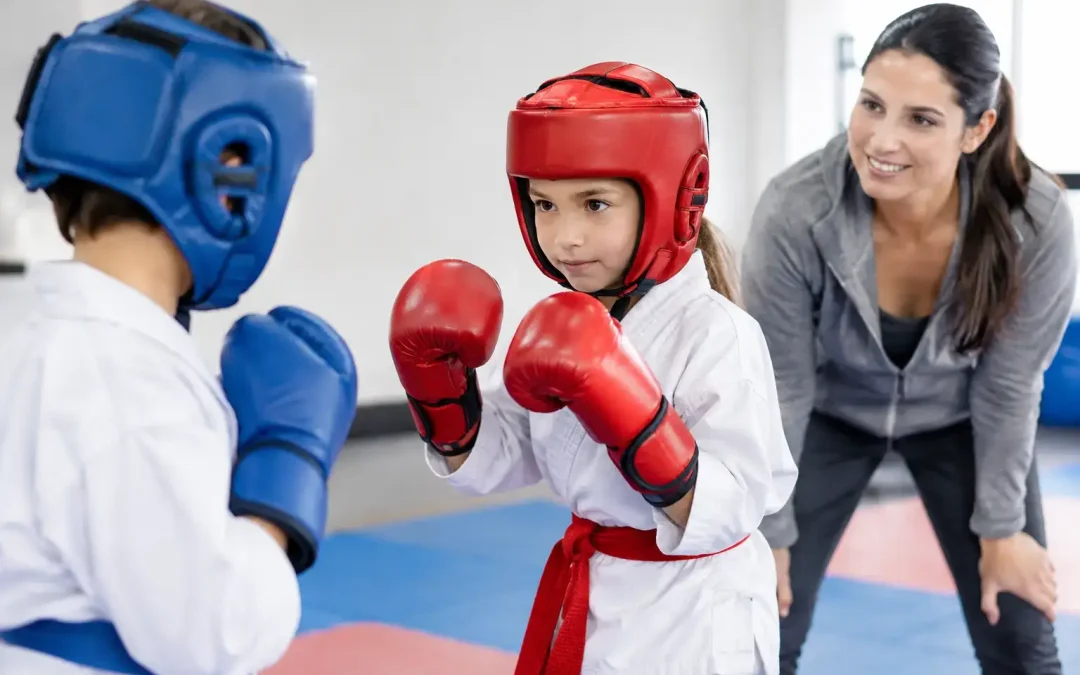
Sparring can be one of the moments children look forward to most in martial arts class. It lets them test their focus, movement, control, and courage with a training partner. For parents, it can also bring understandable questions. A good guide to youth sparring safety begins with one clear point: youth sparring is not fighting. It is supervised, structured practice designed to help children learn control and respect.
When it is taught well, sparring supports far more than physical ability. Children learn how to stay calm under pressure, listen closely, manage their energy, and treat a partner with care. Those are valuable life skills, but they depend on the right environment, clear standards, and coaches who put children before competition.
What Safe Youth Sparring Should Look Like
Safe sparring is purposeful, not chaotic. Children should be matched thoughtfully, given simple instructions, and watched closely throughout each round. The goal is not to prove who is toughest. The goal is to practice techniques at an appropriate level while building confidence and good habits.
A quality class sets expectations before sparring begins. Students know where they may make contact, how much control is expected, when to stop, and how to respond if a coach calls time. They also understand that a partner is someone to help, not someone to overpower.
For younger students and beginners, sparring may start with carefully limited activities rather than full rounds. A coach might ask one child to practice movement while the other works on distance, or allow only selected techniques. This gradual approach gives children time to develop awareness without feeling overwhelmed.
The Foundations of a Guide to Youth Sparring Safety
The safest sparring sessions are built long before gloves touch. Good preparation starts with age-appropriate classes, clear coaching, and a culture where children feel comfortable speaking up.
Proper supervision is non-negotiable
Children should never be left to “work it out” during sparring. A qualified coach needs to stay actively involved: watching pairings, correcting poor control, managing the pace, and stepping in early when emotions rise. Supervision is not simply being in the room. It means paying attention to how each child is coping and adjusting the activity when needed.
Pairing matters, too. Size, age, experience, temperament, and confidence level all play a role. Two children of similar height may still need different partners if one is brand new and the other moves with far greater speed or intensity. There is no one-size-fits-all formula. Good coaches make sensible decisions based on the students in front of them.
Equipment must fit and be used correctly
Protective equipment is part of the routine, not an afterthought. Depending on the class rules and activity, this may include properly fitted gloves, shin guards, a mouthguard, headgear, and other required protection. Equipment reduces risk, but it does not replace control, supervision, or good judgment.
Parents can help by checking that gear is clean, in good condition, and the right size. Gloves that slide around, loose headgear, or a poorly fitted mouthguard can distract a child and make training less safe. If you are unsure what your child needs, ask the coach before purchasing anything. Requirements can differ between ages, programs, and levels of contact.
Control comes before power
This is the lesson that matters most. Children should learn to touch with control, pull techniques when necessary, and keep the intensity suitable for their partner. A child who can throw a fast technique but cannot control it is not ready to increase intensity.
Coaches should praise smart decisions as much as athletic ones. Stepping back when a partner rushes in, stopping immediately on command, and checking that someone is okay are all signs of progress. This helps children understand that discipline is a strength, not a limitation.
Rules Give Children Confidence
Clear rules make sparring feel safer because children know what is expected. Before rounds begin, coaches should remind students of the boundaries: approved target areas, forbidden techniques, contact level, spacing, and stop commands. Instructions should be simple enough for every child to understand.
Children also need permission to pause. A student may need to stop because a piece of equipment has shifted, they feel nervous, they have taken an accidental knock, or they simply need clarification. Asking for a break should be treated as responsible behavior, not weakness.
Respect is visible in the small moments. Students should acknowledge their partner, listen when corrected, avoid arguing over points or contact, and finish a round with good sportsmanship. These habits create a welcoming training environment for everyone, including the child who is trying sparring for the first time.
How Parents Can Support Safe Training
Parents do not need martial arts experience to support their child well. The most useful conversations often happen on the way home from class. Instead of asking only, “Did you win?” try asking what they practiced, whether they felt in control, or what their coach helped them improve.
This keeps the focus on learning rather than results. It also gives your child a natural opening to share if something felt uncomfortable or confusing. Listen calmly, then speak with the coach if you have concerns. The best programs welcome respectful questions and take parent feedback seriously.
It helps to make sure your child arrives rested, hydrated, and ready to focus. Fatigue can affect coordination, patience, and decision-making. If your child is unwell, injured, or carrying a concern from school that may affect their concentration, let the coach know. A short conversation before class can help the coach adapt the session appropriately.
Avoid encouraging children to “go harder” to keep up with others. Every child develops at a different pace. Some will enjoy sparring quickly; others need more time to build comfort. Both responses are normal. Progress should be measured by growing confidence, attention, control, and willingness to learn.
When a Child Is Not Ready to Spar
Not every student needs to spar right away, and readiness is more than age or belt level. A child may need more time if they struggle to follow stop commands, become overly upset after contact, regularly lose control, or feel anxious about pairing up. That does not mean they have failed. It simply shows where more coaching and gradual practice are needed.
A supportive martial arts program offers ways to develop the same core skills through drills, partner exercises, pad work, and controlled movement games. Children can improve distance, balance, reactions, and confidence without being pushed into an activity before they are prepared.
Readiness can change from week to week. A normally confident child may have an off day, while a quiet beginner may suddenly be ready to try a short, closely supervised round. The right approach is flexible, patient, and centered on the child.
Building Safer, Stronger Young Martial Artists
At Taylor Martial Arts, youth training is built around more than techniques. Children are encouraged to develop discipline, respect, focus, and confidence in a supportive community. Sparring is one part of that journey, and it should always reflect those values.
The best outcome is not a child who is eager to hit harder. It is a child who knows how to stay composed, follow instructions, respect boundaries, and look after their training partner. With patient coaching and the right standards, sparring can become a positive challenge that helps young people grow stronger in class and beyond it.
If your child is curious about martial arts, look for a class that welcomes beginners, explains its safety expectations clearly, and gives every student the space to progress with confidence. A free trial can be a helpful first step for seeing how your child responds to the structure, the coaching, and the community.
Recent Comments