
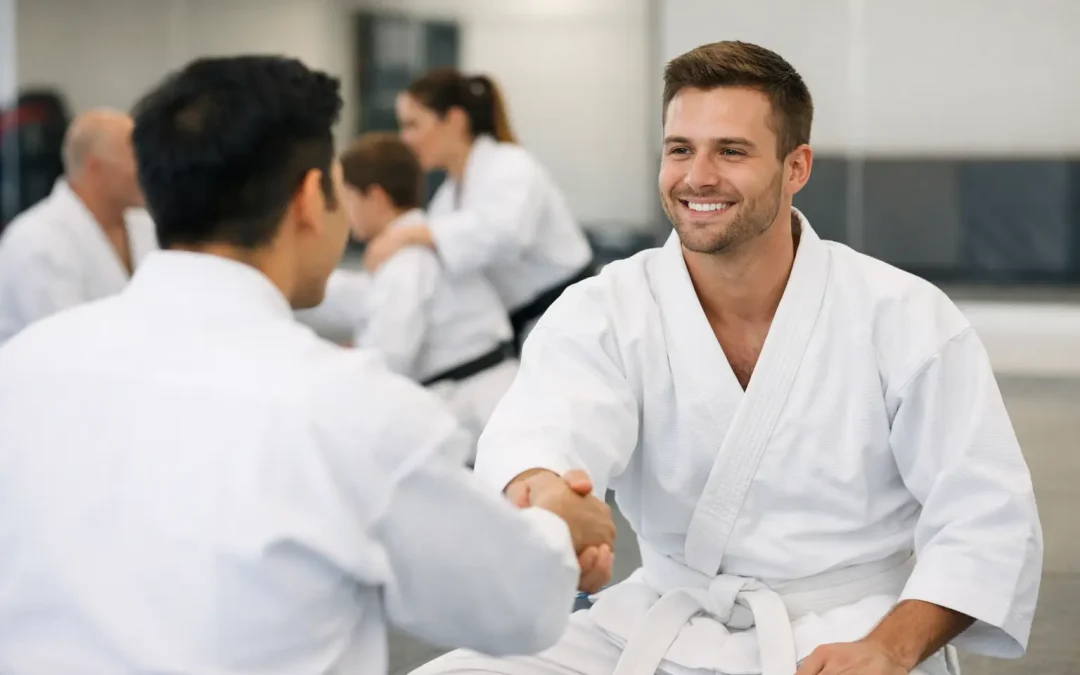
Your first class should not feel like a test. A free martial arts trial gives you or your child the chance to step onto the mat, meet the instructor, and see whether training feels right before making a commitment. It is a practical way to find a class that builds confidence, fitness, focus, and respect in a setting where beginners are genuinely welcome.
For many families, the biggest question is not whether martial arts has benefits. It is whether their child will feel comfortable joining in, listening, and trying something new. Adults often ask a similar question in a different way: Will I be fit enough? Will I know what I am doing? The answer begins with the first class.
Why Take a Free Martial Arts Trial?
Martial arts training is personal. The right club should offer more than energetic exercise. It should provide clear instruction, positive standards, and a community where people are encouraged to improve at their own pace.
A trial class lets you see those things in action. You can experience the atmosphere rather than relying only on what you have read or heard. For parents, it is an opportunity to watch how instructors communicate with children and how students treat one another. For adults, it is a chance to find out whether freestyle kickboxing offers the right balance of fitness, practical self-defense, and enjoyable challenge.
The goal is not to be perfect on day one. It is to take the first step with an open mind.
What Happens During a Free Martial Arts Trial?
A well-run beginner session is structured, friendly, and easy to follow. You will normally be welcomed, introduced to the instructor, and shown where to stand and what to do. There is no expectation that you already know martial arts terms, stances, or techniques.
Classes often begin with a warm-up designed to get the body moving safely. This may include simple mobility work, light cardio, balance exercises, and coordination drills. Children benefit from learning how to listen, follow instructions, and work with others. Adults get a useful introduction to the physical side of training without being thrown into an intense workout before they are ready.
From there, students may learn basic movements such as a fighting stance, simple punches, kicks, blocks, or movement patterns. Freestyle kickboxing training is built through repetition and good technique. Beginners are shown how to position themselves properly, control their movements, and train with awareness of the people around them.
A first class should be challenging enough to feel rewarding, but not so complicated that it feels discouraging. If you need to pause, ask a question, or watch a demonstration again, that is part of learning.
For children: learning skills beyond the moves
For a child, martial arts can become a positive weekly routine. The physical techniques matter, but so do the habits formed around them. Standing still when asked, taking turns, showing respect, and trying again after a mistake are all valuable lessons.
A good instructor will set clear boundaries while keeping the session encouraging. Children should understand what is expected of them, but they should also feel safe making mistakes. Confidence grows when a child realizes they can focus, practice, and improve.
Age-appropriate classes are especially important. Younger children need movement, simple instructions, and plenty of encouragement. Older children and teens can take on more technical drills, fitness work, and responsibility. The right class meets students where they are, rather than expecting every child to learn in exactly the same way.
For adults: a fresh start without pressure
Adults sometimes delay starting because they think martial arts classes are only for people who are already athletic or experienced. That is not the case. Beginner training is where everyone starts, whether your goal is to improve fitness, learn practical self-defense, reduce stress, or take on a new hobby.
You do not need to arrive with advanced flexibility, fast kicks, or knowledge of combat sports. You only need comfortable clothes, a willingness to listen, and the patience to learn one step at a time. Training can be adapted as you develop your fitness and confidence.
There is a difference between training hard and being pushed beyond what is sensible. A supportive class gives you a challenge while helping you build safely. Over time, regular sessions can improve stamina, coordination, balance, and self-belief.
What Should You Wear and Bring?
Keep it simple for your trial. Wear comfortable sports clothing that allows you to move freely, such as a T-shirt and athletic pants or shorts. Bring water, and arrive a few minutes early so you can settle in, ask questions, and start without rushing.
You do not need to buy a uniform or special equipment before your first session. The purpose of a trial is to find out whether the class is a good fit. If you decide to continue, your instructor can explain what you may need later and why.
Parents should let the instructor know about any injuries, medical needs, or concerns that could affect participation. The same applies to adult students. Open communication helps the class remain safe and enjoyable for everyone.
How to Tell if the Class Is the Right Fit
At the end of a trial, do not judge the experience only by whether every move came naturally. Very few people feel polished after one session. Instead, think about how the class made you feel.
Did your child come away proud that they tried? Did they feel included? Were expectations clear and appropriate? Did the instructor give encouragement as well as correction? These are strong signs of a class that can support long-term growth.
Adults can ask whether the session felt purposeful and manageable. Did you learn something practical? Did you feel welcomed rather than judged? Can you imagine returning next week and gradually becoming stronger, more focused, and more confident?
It is also worth considering the practical side. A class needs to fit family life, school commitments, work schedules, and travel. The best training plan is one you can attend consistently. Progress comes from regular practice, not from one perfect class.
Questions Parents and New Students Can Ask
Before or after a class, ask about the age range, how beginners are introduced, and what progression looks like over time. You may also want to ask how the club supports students who are shy, returning to exercise, or unsure about physical contact.
For children, ask how discipline is taught. Positive martial arts discipline is not about shouting or embarrassment. It is about clear expectations, accountability, and respect. Students learn that effort matters, that listening matters, and that their behavior affects the group.
For adults, ask how self-defense is approached. Practical training should build awareness, movement, confidence, and controlled technique. It should not make unrealistic promises or encourage unnecessary confrontation. The aim is to feel more capable and composed.
At Taylor Martial Arts, families and adults can explore freestyle kickboxing in a welcoming local environment where personal progress matters. A trial is the chance to see whether that approach feels right for you.
Your First Step Can Be a Small One
Starting something new can feel intimidating, especially for a child who is quiet in new groups or an adult who has not exercised for a while. But confidence is not something people have to wait for before they begin. It is something they build by showing up, practicing, and recognizing their own progress.
A free trial gives you room to take that first step without pressure. Come ready to learn, encourage your child to give their best effort, and allow yourself to be a beginner. The next class could become the steady, positive part of the week that helps you or your child grow stronger in more ways than one.
Recent Comments