
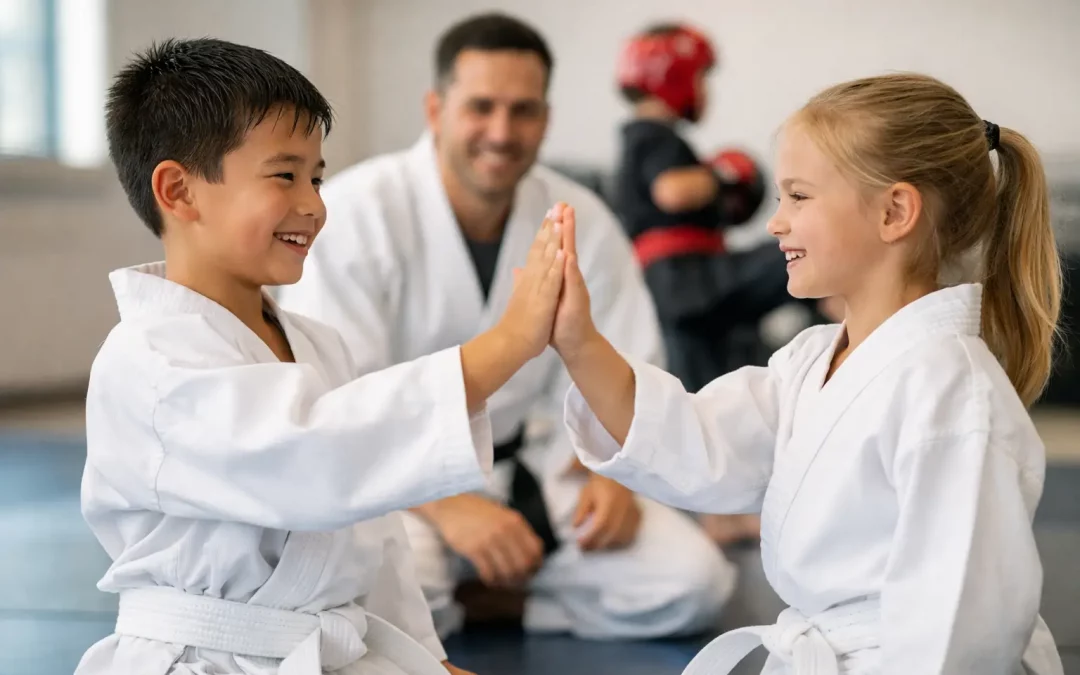
The first class usually answers the biggest question parents have. Not whether their child can kick or punch, but whether they can listen, follow instructions, and feel comfortable trying something new. That is why a good guide to kids martial arts starts with what happens beyond technique. For most families, the real value is in confidence, focus, respect, and having a positive routine that helps children grow.
Martial arts can be a great fit for kids who have lots of energy, kids who are shy, and kids who simply need an activity that gives them structure. It is not about turning every child into a fighter. It is about giving them a place to move, learn, and build habits that support them at school, at home, and with other people.
Why this guide to kids martial arts matters
Parents often come in with the same concerns. Will my child be safe? Will the class be too strict? Will they enjoy it enough to stick with it? Those are the right questions.
Kids martial arts works best when it balances encouragement with discipline. A class should feel welcoming, but it should also have clear expectations. Children usually respond well when they know the routine, understand the rules, and feel supported by an instructor who is calm, consistent, and experienced.
That balance matters because every child starts in a different place. Some need help with confidence. Some need help with focus. Some need a healthy outlet for energy after a long school day. The right program meets them where they are and helps them improve step by step.
What kids really gain from martial arts
Parents often start by looking for self-defense, and that makes sense. Practical skills matter. But the benefits usually reach much further than that.
Confidence is one of the biggest changes families notice. A child who learns a new technique, earns recognition for effort, or speaks up in class starts to carry themselves differently. That confidence is usually built slowly, which is a good thing. It is based on progress, not empty praise.
Focus is another major benefit. Martial arts classes ask kids to listen carefully, watch closely, and respond at the right time. For children who struggle to stay on task, that kind of structured practice can be very valuable. It does not mean every child suddenly becomes perfectly focused. It means they get repeated chances to improve an important skill.
Discipline and respect are also central. In a well-run class, kids learn that effort matters, instructions matter, and how they treat other people matters. Respect is shown in simple ways – waiting their turn, listening when others speak, and practicing with control.
Then there is fitness. Martial arts helps children develop coordination, balance, agility, and stamina. For some kids, traditional team sports feel overwhelming or too competitive. Martial arts can be a strong alternative because progress is personal. They are not trying to be the fastest on the field. They are learning to improve their own skills over time.
Choosing the right kids martial arts class
Not every class is right for every child. That does not mean one school is bad and another is good. It usually means the teaching style, structure, or class environment fits some families better than others.
Start with age-appropriate instruction. Younger children need shorter explanations, more repetition, and clear boundaries. Older kids and teens can usually handle more technical detail and more independent practice. If a program tries to teach every age in exactly the same way, it can be hard for children to stay engaged.
Look closely at the instructor’s approach. A strong instructor is encouraging without being soft, and disciplined without being intimidating. Kids should feel challenged, but never embarrassed. If the atmosphere is too loose, children may not learn much. If it is too harsh, many will shut down.
Class size also matters. A busy class can create energy and community, but children still need enough attention to learn safely and correctly. For beginners especially, clear coaching makes a big difference.
It also helps to ask what the class is trying to build. Some programs focus heavily on competition. Others focus more on personal development, practical self-defense, and long-term confidence. Neither approach is automatically wrong, but parents should choose one that matches their child’s needs and their family’s goals.
What to expect in a first class
A first session should feel organized and welcoming. Most children are at least a little nervous, even if they seem excited on the way in. That is normal.
In a good beginner class, the instructor will explain expectations clearly and keep the pace manageable. Kids may practice stance, movement, basic striking, simple drills, and how to work respectfully with others. They are also learning how class works – where to stand, when to listen, and how to respond.
Parents should not expect perfection. The first class is often about comfort and confidence more than performance. Some kids jump right in. Others watch carefully before joining fully. Both responses can be fine if the child is gradually becoming more comfortable.
What you want to see is engagement. Are they trying? Are they listening? Do they seem proud of themselves afterward? Those signs usually matter more than whether every move looked sharp on day one.
Is martial arts good for every child?
Martial arts can help many children, but the experience depends on the setting and the child’s personality. A very energetic child may benefit from the structure and physical outlet. A shy child may benefit from the confidence that comes from learning new skills in a supportive group.
At the same time, some children need a slower adjustment period. Some do better in smaller groups. Some need patient encouragement before they feel ready to participate fully. That is why a trial class is so useful. It lets families see whether the environment feels right without making a big commitment too early.
The goal is not to force a child into a mold. It is to find a training environment where they can grow. That growth may look different from one child to another.
How parents can support progress at home
Children do best when parents treat martial arts as part of a healthy routine, not just an occasional activity. Consistency is where the benefits build.
That does not mean turning home into a second class. It means helping your child arrive on time, encouraging them to keep going when they feel unsure, and noticing the positive changes that happen outside the training space. Maybe they are standing taller. Maybe they are listening better. Maybe they are handling frustration with more control.
It also helps to praise effort rather than only achievement. A new belt or award is exciting, but the habits behind it matter more. When parents recognize focus, perseverance, and respectful behavior, children begin to understand what success in martial arts really means.
Guide to kids martial arts by age and stage
Very young children often benefit most from simple structure, movement, and learning how to follow directions in a group. At this stage, martial arts is less about perfect technique and more about coordination, listening, and confidence.
Elementary-age children are usually ready for more skill development. They can begin to understand discipline, control, and the link between practice and progress. This is often the stage where parents start seeing clear changes in focus and self-belief.
Teenagers may be looking for different things. Some want fitness. Some want practical self-defense. Some want an activity that gives them goals and a stronger sense of identity. Good training can meet those needs while still reinforcing respect, accountability, and resilience.
What makes a family-focused martial arts program stand out
For many parents, the best programs are the ones that feel both professional and approachable. Families want clear teaching, safe instruction, and a positive environment where children are expected to do their best.
A family-focused school understands that development matters as much as technique. It creates structure without losing warmth. It teaches self-defense and fitness, but it also teaches kids how to carry themselves with respect and self-control.
That is why many local families choose clubs like Taylor Martial Arts. They want more than an after-school activity. They want a place where children can build confidence, improve focus, and be part of a community that supports their growth.
If you are considering martial arts for your child, trust what you see in the class as much as what you hear about it. A good program should challenge your child, encourage them, and give them room to improve at their own pace. The right start is rarely about finding the most intense class. It is about finding a place where your child can keep showing up, keep learning, and keep becoming more confident with every session.
Recent Comments