
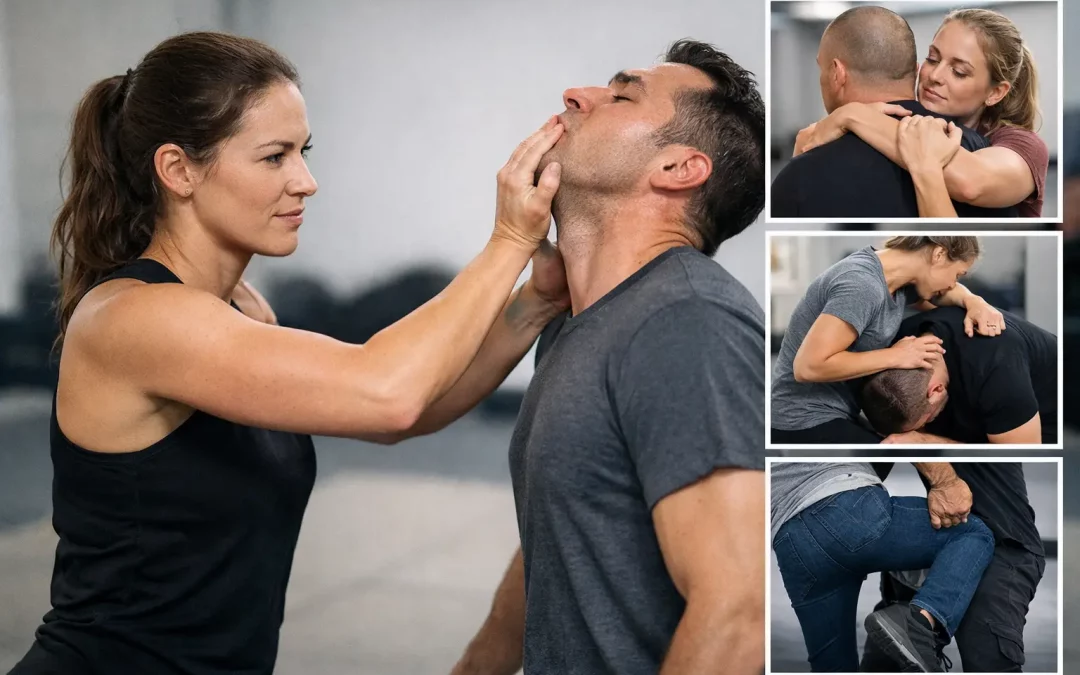
A lot of people searching for the best self defence moves expect a secret technique that works every time. Real self-defense does not work like that. What helps most is learning a small number of simple movements you can perform under pressure, along with the awareness and confidence to use them early.
That matters whether you are a parent thinking about your child’s confidence, a teenager wanting to feel less vulnerable, or an adult looking for practical skills that fit real life. The goal is not to win a fight. The goal is to create space, protect yourself, and get away safely.
What makes the best self defence moves actually useful?
The best self defence moves are usually the ones that are easiest to remember, quickest to apply, and most reliable when your heart is racing. Fine motor skills tend to drop under stress, which is why flashy techniques are often less useful than people think.
A good self-defense move should do one of three things. It should help you break free, disrupt the attacker long enough to escape, or improve your position so you are harder to control. If a move depends on perfect timing, unusual flexibility, or a big strength advantage, it is probably not the first thing a beginner should rely on.
There is also an important trade-off here. The more effective a technique is, the more important it becomes to learn it properly in a controlled setting. Good instruction teaches not just how to strike or break away, but when to act, how much force is reasonable, and how to stay calm enough to make better decisions.
1. The palm heel strike
If you only learn one strike early on, this is a strong place to start. A palm heel strike uses the bottom of the palm rather than the knuckles, which makes it more beginner-friendly and reduces the risk of injuring your hand.
The target is usually the face, especially the nose or chin area, depending on distance and angle. The aim is not to stand there trading blows. It is to shock the attacker, move them back, and give yourself a moment to leave.
This move works well because it is direct, simple, and natural. It can be thrown from a guarded position without needing a big wind-up. In training, people often find it easier to perform confidently than a closed-fist punch.
2. Elbows at close range
Close-range situations are common in real self-defense. If someone grabs you, crowds you, or closes the distance fast, long strikes become harder to use. That is where elbows can be effective.
An elbow strike is compact and powerful. It does not need much room, and it can target the head, chest, or body depending on where the opening is. For beginners, the biggest lesson is not just the strike itself but understanding distance. Many people imagine self-defense happening from several feet away, but in reality, it often gets close very quickly.
That said, elbows are not a first answer for every situation. If you can step away early, use your voice, and create distance before someone gets hold of you, that is often the safer option.
3. Knee strikes to create space
A knee strike is another practical option when someone is close. It is especially useful if an attacker is bent forward, holding on, or driving into your space.
The common target is the groin or midsection, though exact placement depends on the situation. What matters most is the purpose behind the movement. A knee is not there to continue a fight. It is there to interrupt the attacker’s control and give you a chance to move.
This is where balance matters. Throwing a knee carelessly can leave you unstable if it misses or if the attacker is still holding you. Good training helps you learn posture, timing, and how to keep your base under pressure.
4. Escaping a wrist grab
Wrist grabs are one of the most common self-defense scenarios taught to beginners, and for good reason. They are simple to practice and they teach an important principle – do not pull against strength when there is a smarter angle available.
The usual idea is to rotate your wrist toward the attacker’s thumb, where the grip is weakest, while stepping back or moving your body to help break free. Once free, you create distance immediately. You do not stay there to prove a point.
This kind of escape is helpful for both children and adults because it builds awareness as much as technique. It teaches that self-defense is often about noticing where control is weakest and acting decisively.
5. The pluck and frame against grabs
If someone grabs clothing, reaches for the neck, or tries to pull you in, one useful response is a pluck and frame. In simple terms, you remove the hands that are controlling you while using your forearms and body position to build space.
This is not a flashy move, but it is one of the more realistic ones. In self-defense, structure matters. If your posture collapses, your options shrink. If you can stand tall, bring your hands up, protect your head, and frame against the attacker, you are in a better position to break away.
A lot of beginners overlook this because it does not look dramatic. In practice, it is one of the habits that makes everything else work better.
6. The front kick to stop forward pressure
A basic front kick can be useful when someone is advancing and you have enough space to use your legs. The usual targets are lower and more practical than people expect – the shin, knee area, or midsection depending on distance and skill level.
For self-defense, lower kicks are often the smarter choice. High kicks may look impressive, but they ask for more flexibility, more timing, and more risk. A simple front kick aimed low is faster to learn and easier to recover from if things are messy.
This is one of the clearest examples of why training matters. A move can sound simple on paper and still fall apart if you have never practiced balance, distance, and control.
7. The cover and clinch for protection
Not every self-defense moment starts with you seeing everything clearly. Sometimes the first job is simply to protect yourself from wild swinging punches or sudden chaos. A basic cover with your hands up, chin tucked, and body protected can buy precious seconds.
From there, depending on the situation and your training, clinching may help you smother strikes and stop the attacker from generating power. That can create the chance to turn away, break free, or call for help.
This point is worth stressing because real self-defense is not always tidy. Sometimes the best move is not a strike at all. It is surviving the first burst safely enough to escape.
The best self defence moves are only part of the picture
Technique matters, but awareness matters first. Spotting trouble early, trusting your instincts, using your voice, and leaving before a situation turns physical are all part of self-defense.
That is especially important for children and teens. Confidence should never be confused with recklessness. Good training teaches restraint, respect, and self-control alongside physical skills. It helps students understand that strength is not about showing off. It is about staying composed and making good choices under pressure.
For adults, the same principle applies. Fitness helps. Repetition helps. Calm decision-making helps. But the most useful mindset is usually simple: avoid what you can, act clearly when you must, and get to safety as soon as possible.
How to practice the best self defence moves safely
Watching videos can give you a rough idea, but it cannot replace coached practice. Timing, distance, posture, and decision-making are hard to learn from a screen alone. Without feedback, people often build false confidence or poor habits.
A structured class gives you something more valuable than memorized techniques. It gives you pressure-tested repetition. You learn how it feels when someone resists, how to move while off balance, and how to stay focused when your body is under stress.
That is one reason family-friendly martial arts training can be so valuable. In the right environment, children build discipline and confidence, teens develop focus and resilience, and adults gain practical skills while improving fitness and wellbeing. At Taylor Martial Arts, that approach matters because self-defense is taught as part of personal development, not just fighting.
What to avoid when learning self-defense
It is easy to be drawn to complicated sequences, but more steps mean more chances for things to fail. It is also common for beginners to focus too much on striking and not enough on distance, posture, and escape.
Another mistake is assuming one move fits every situation. It depends on size, positioning, surprise, environment, and whether there is a clear path out. A wrist escape may be right in one moment, while a strong verbal boundary and quick exit may be the better answer in another.
The best progress usually comes from keeping things simple, practicing regularly, and learning from instructors who balance realism with safety and control.
If you are thinking about self-defense for yourself or your child, start with the basics and build from there. A few well-trained movements, practiced consistently in a supportive class, can do far more than a long list of techniques you never truly trust under pressure. The real value is not just knowing what to do. It is feeling calmer, stronger, and more prepared when it counts.
Recent Comments