
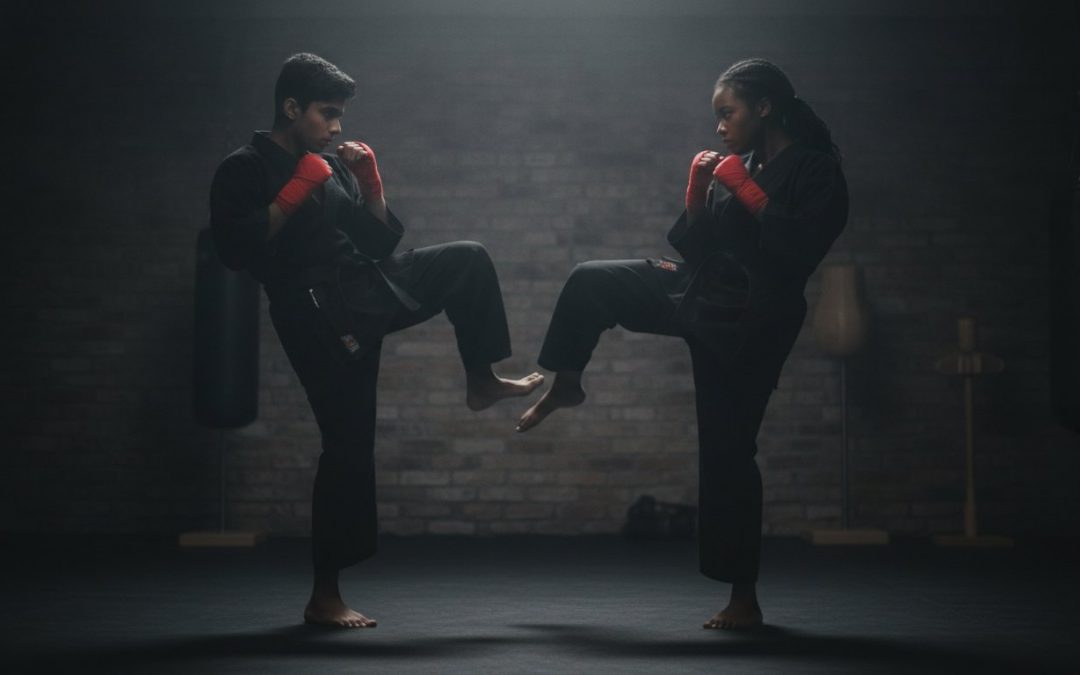
What if the secret to your teenager’s academic success isn’t more tutoring, but a completely different kind of discipline? Many parents in Carshalton feel the same worry as they watch their children face the intense pressure of GCSEs and A-Levels. It’s difficult to see your teen lose interest in hobbies or struggle with the mental toll of constant exams. You want them to be safe, confident, and focused, yet traditional sports don’t always provide the life skills they truly need.
Enrolling your child in a structured martial arts programme for teenagers offers a powerful solution to these modern challenges. Discover how this training helps local teens manage stress, build physical strength, and develop a resilient mindset that lasts a lifetime. This guide explores how a purpose-based programme improves study focus and provides a healthy social circle away from school. Learn how to bridge the gap between childhood and adulthood with practical skills that keep them safe and self-assured.
Key Takeaways
- Learn why a dedicated martial arts programme for teenagers acts as a vital bridge between childhood play and adult responsibility.
- Discover how functional strength training and technical self-defence offer a more engaging alternative to the traditional gym or local park.
- Understand how physical exertion provides a mental ‘reset’ to help your teen manage GCSE and A-Level exam stress effectively.
- See how the unique ‘individual within a group’ environment builds social confidence faster than traditional team sports.
- Get a clear overview of the enrolment process to ensure your teenager feels prepared and excited for their first session.
Why Teenagers Need a Dedicated Martial Arts Programme
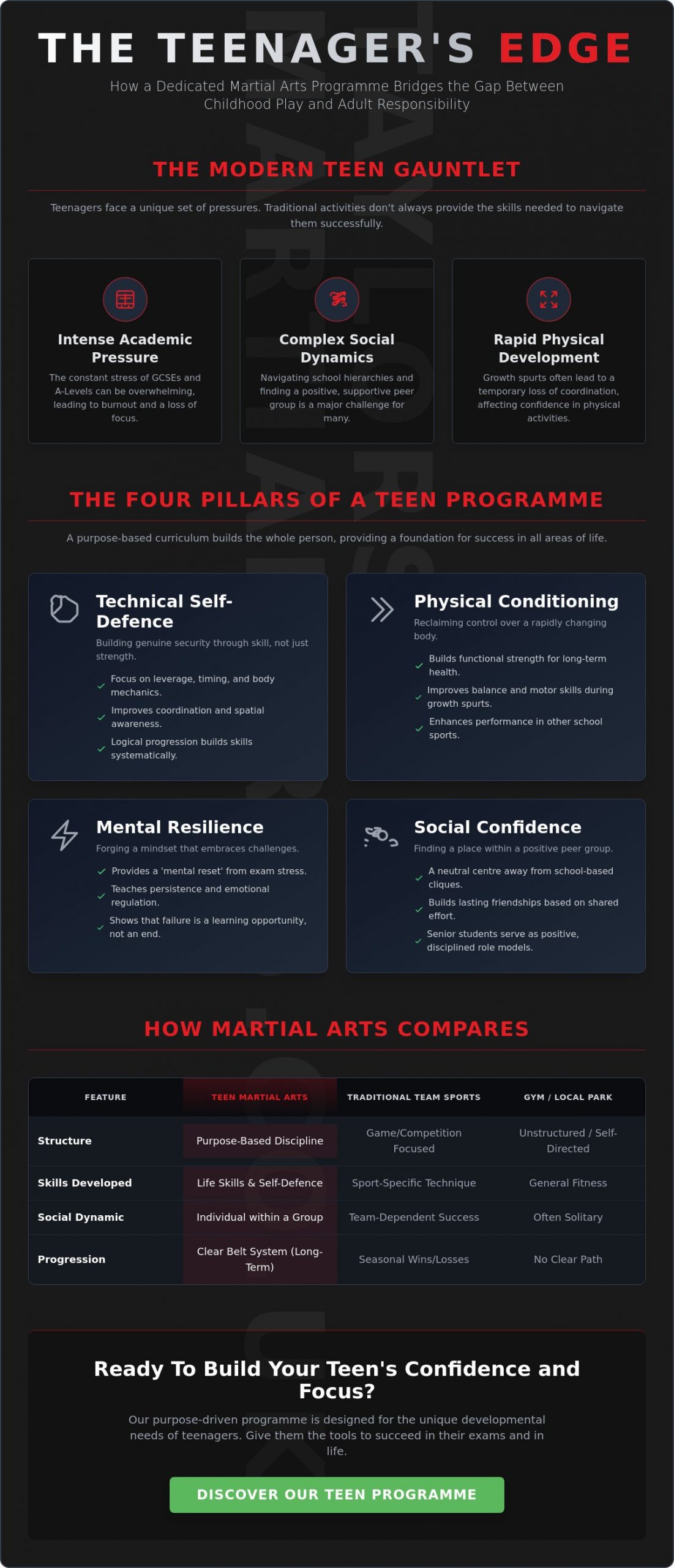
Teens often find themselves in a difficult middle ground. They’ve outgrown the games and stickers of junior classes, yet they aren’t quite ready for the full intensity of an adult environment. A dedicated martial arts programme for teenagers provides a vital bridge. It marks the transition from child-play to adult-responsibility. This is a crucial time for development. Many young people drop out of sports at this age because they feel patronised. They want to be challenged. They want to be treated with the maturity they feel inside. A teen-specific programme respects this shift and replaces “play-based” learning with “purpose-based” discipline.
Physically, the teenage years are a period of rapid change. Growth spurts often lead to a temporary loss of coordination and balance. Training in Martial arts provides the perfect solution to these physiological hurdles. It helps teens reclaim control over their bodies. They build functional strength and improve their motor skills in a way that feels rewarding rather than frustrating. This physical foundation is essential for long-term health and self-assurance.
Moving Beyond ‘Junior’ Karate
Teen programmes introduce more complex techniques and significantly higher expectations. There are no participation trophies here. Instead, students earn genuine respect through sweat and persistence. This psychological shift is powerful. When a teenager masters a difficult striking combination or a complex defensive move, they know they’ve earned it. This mature training environment prevents them from feeling patronised. It encourages them to take ownership of their progress. They learn that their success is directly linked to their effort, which is a lesson that carries over into their schoolwork and future careers.
The Social Benefit of a Positive Peer Group
School can often feel like a pressure cooker of social hierarchies and cliques. Joining a martial arts programme for teenagers offers a fresh start in a neutral centre. It breaks the school-based social structure. Here, teenagers meet peers from different backgrounds who all share the same values of respect and hard work. Shared struggle on the mats builds lasting friendships. When they train together, they support one another. They see senior students acting as positive role models. These older teens demonstrate what consistency looks like. They show that being disciplined is actually “cool”. This positive peer influence is often more effective than any lecture from a parent or teacher.
The Core Pillars of a Structured Teenager Curriculum
A high-quality martial arts programme for teenagers is built on more than just kicks and punches. It is a comprehensive system designed to develop the whole person. While junior classes focus on basic movement, a teen curriculum prioritises four essential pillars: technical mastery, physical conditioning, mental resilience, and leadership. This structure ensures that every session has a clear purpose. Students don’t just show up to “burn off energy”; they show up to improve. They learn that progress requires a combination of physical effort and mental focus. It’s about building a foundation that supports them in every area of their lives, from the classroom to the sports field.
Mental resilience is perhaps the most vital pillar for today’s youth. Training provides a safe space to fail, learn, and try again. This process is essential for enhancing well-being and emotional regulation. When a student struggles to master a complex strike, they aren’t coddled. They’re encouraged to persist. This “grit” becomes a habit. Soon, the same teenager who used to give up on a difficult maths problem finds themselves sticking with it until they find the answer. They realise that failure isn’t the end; it’s just data for their next attempt.
Technical Self-Defence and Body Awareness
Teenagers need practical skills that build a genuine sense of security. Our curriculum focuses on the mechanics of striking and self-defence, teaching students how to use leverage and timing rather than just raw strength. This deep understanding of body mechanics often translates to better performance in other school sports like rugby or athletics. Curriculum-based training is a logical progression of skills that builds over months rather than relying on random drills. It gives teens a clear roadmap for their physical development.
The Belt System and Goal Setting
The belt system is a powerful tool for teaching long-term planning. In a world of instant gratification, martial arts requires patience. Teens learn to set a goal, work towards it, and celebrate incremental victories along the way. These small wins are crucial for building self-esteem. Each new belt represents a tangible reward for their hard work and dedication. You can see the full path to black belt excellence explained in our guide to Structured Martial Arts Training Programmes in Carshalton. If you’re looking for a way to boost your child’s confidence, you might consider how a martial arts programme for teenagers can provide the structure they need to succeed.
Comparing Martial Arts to Other Carshalton Teen Activities
Carshalton families have many choices for after-school activities. From football clubs at Beddington Park to casual hangouts, the options are varied. However, a structured martial arts programme for teenagers offers a unique environment that balances individual growth with social connection. Unlike unsupervised time in local parks, a professional centre provides high levels of supervision and a positive atmosphere. It’s a safe “third space” where teens can be themselves. They escape the pressures of school and social media in a controlled, supportive setting. This disciplined approach ensures that your child is learning valuable life skills rather than just passing the time.
When you evaluate the cost-to-value ratio, martial arts stands out. Casual drop-in activities might seem cheaper initially, but they often lack a clear progression or long-term goal. A structured programme is an investment in your teen’s character and future. You’re paying for a proven curriculum that builds resilience, focus, and self-esteem. These are skills that will serve them long after they’ve finished their GCSEs. The value lies in the transformation of the individual, making it a highly effective use of a family’s activity budget.
Martial Arts vs. Team Sports
Many teenagers find team sports like football or rugby stressful. There is often intense pressure to “make the first team” or perform for the sake of the group. Martial arts is different. It’s an individual journey taken alongside others. This model is ideal for teens who don’t always fit in with traditional team dynamics. Research shows that Martial Arts Benefit Children and Adolescents by providing a sense of belonging without the fear of being “benched”.
- Every student participates: There are no sidelines. Every teen is active for the entire duration of the lesson.
- Personalised pace: Students progress based on their own effort, not the performance of their teammates.
- Physical synergy: Training improves flexibility and core strength, which actually helps teens perform better in their school-based PE lessons.
Finding the Right Centre in Carshalton
Location and atmosphere are key when choosing a facility. Carshalton is well-served by transport links, making it easy to find a centre near home or school. Look for a facility that feels welcoming and professional. The atmosphere should be high-energy but inclusive. It’s also worth looking for centres that prioritise group programmes. These sessions foster a sense of community that 1-on-1 coaching often lacks. Being close to local landmarks like Carshalton Ponds or the High Street ensures that getting to training fits easily into a busy family schedule. A good rapport between the instructor and the students is the final piece of the puzzle. It ensures your teen feels motivated to return week after week.
Managing Exam Stress and Mental Wellbeing
The pressure of GCSEs and A-Levels can feel overwhelming for many Carshalton students. Revision schedules often take over every waking hour. It is tempting to cut out all hobbies to make more room for study. However, this often leads to burnout and increased anxiety. Our martial arts programme for teenagers acts as a vital “reset button” for a brain tired from hours of textbooks. It provides a structured break that actually makes study time more effective. When a teen steps onto the mats, they have to leave their exam worries at the door. They focus entirely on the present moment. This mental shift is essential for maintaining long-term wellbeing during the most stressful years of school.
Many parents worry their child doesn’t have time for extra activities during exam season. In reality, the discipline learned in the dojo transfers directly to the desk. Teens learn how to manage their time and stay focused under pressure. They develop the “grit” needed to tackle difficult revision topics without giving up. Instead of scrolling through social media during a study break, a physical training session provides a genuine release. It clears the mind and prepares the student for their next block of learning with renewed energy.
The ‘Dojo Reset’: Physical Activity as Stress Relief
Physical exertion is a scientifically proven way to manage stress. Intense movement triggers the release of endorphins while reducing cortisol levels in the body. This chemical balance is key to staying calm during exams. A 60-minute martial arts lesson is far more restorative than 60 minutes of gaming or watching videos. While screens often leave the brain feeling wired and tired, physical training provides a deep sense of accomplishment. Studies in youth development confirm that consistent training actually improves academic focus by increasing blood flow to the brain and sharpening executive function. It turns a sluggish afternoon of revision into a productive evening.
Building Resilience Against Peer Pressure
Confidence in the dojo leads to stronger mental boundaries in daily life. When a teenager understands their physical capabilities, they feel less need to seek validation from the wrong peer groups. They learn the value of assertive behaviour. This training helps them stand their ground and say “no” when faced with negative influences. It isn’t just about physical defence; it is about emotional intelligence. Students learn how to de-escalate potential conflicts before they ever turn physical. This sense of inner calm is a powerful tool for any young person. If you want to help your teen build this level of resilience, find a martial arts programme for teenagers in Carshalton that prioritises mental strength as much as physical skill.
How to Enrol in a Carshalton Martial Arts Programme
Starting a new journey can feel daunting for any teenager. The first step towards building resilience is often just walking through the door. Most reputable schools offer a straightforward enrolment process designed to lower anxiety. It usually begins with a simple online enquiry or a phone call to book an introductory session. This initial period is vital. It allows your teen to experience the atmosphere without a long-term commitment. It’s about ensuring the martial arts programme for teenagers is the right fit for their personality and goals. We want every student to feel they belong from the very first minute.
We encourage parents to visit our centre in person. Observe a session and speak with the instructors. You’ll quickly see the difference between a high-pressure environment and a supportive community. A professional school will always welcome questions about their curriculum, safety protocols, and how they handle different learning paces. Seeing the energy of the group first-hand often helps parents feel more confident about the journey ahead. It provides peace of mind that your child is in a safe, professional, and motivating environment.
Preparing for the First Lesson
Preparation helps settle those first-day nerves. Your teen doesn’t need a formal uniform immediately. For the first few sessions, comfortable gym clothes like joggers and a t-shirt are perfect. Don’t forget a refillable water bottle; staying hydrated is essential during our high-energy drills. Arrive about ten minutes early to meet the team and get a feel for the space. Most importantly, bring an open mind and a willingness to learn. Everyone in the room started as a beginner. For a detailed breakdown of what to expect, check out our Martial Arts for Beginners UK guide. It covers everything from etiquette to basic movements to help your teen feel fully prepared.
Taking the Next Step at Taylor Martial Arts
Our Carshalton centre is built on a foundation of inclusive warmth. We provide a non-intimidating environment where local teenagers can thrive. Our group-based curriculum focuses on collective progress, ensuring no one feels left behind or singled out. We move quickly through information to keep the momentum high, but we always prioritise the emotional wellbeing of our members. This balance of challenge and support is what makes our programme unique. If you’re ready to see how a martial arts programme for teenagers can transform your child’s confidence and focus, now is the time to act. View our current programme schedule and book an introductory session today. Join a community that is as invested in your teen’s success as you are.
Empower Your Teen’s Journey in Carshalton
Building resilience is more than just physical strength. It’s about equipping your teen with the mental tools needed to navigate the challenges of modern life. Whether it’s managing GCSE stress or finding a supportive social circle outside of school, a structured martial arts programme for teenagers offers the perfect foundation. Our dedicated Carshalton training facility provides a professional and welcoming space where every student can grow at their own pace. We prioritise character development and mental resilience alongside technical skills in every single session.
Our structured curriculum-based training ensures that every lesson has a clear purpose and a tangible goal. Help your teenager move beyond junior classes and into a programme that treats them with the respect they deserve. Take the first step toward their personal transformation right now. View our Teenager Martial Arts Programme in Carshalton and book an introductory lesson today. We can’t wait to welcome you to our community and start this journey together. Let’s build their confidence one step at a time.
Frequently Asked Questions
Is my teenager too old to start martial arts as a beginner?
No, your teenager is definitely not too old to start as a beginner. Most teenagers in our Carshalton centre begin their journey with zero previous experience. Our instructors are experts at helping older students catch up quickly and feel comfortable. Starting in the teen years is actually an advantage because they have the maturity to grasp complex techniques faster than younger children. It’s never too late to gain the confidence and discipline that comes with training.
Will martial arts make my teenager more aggressive or violent?
Martial arts training actually reduces aggression by teaching emotional regulation and self-control. Our programme emphasises that physical skills are for self-defence only. Students learn to stay calm under pressure, which helps them avoid conflict in the real world. By providing a healthy outlet for frustration, we help teens manage their emotions more effectively. They gain the confidence to walk away from trouble rather than seeking it out.
How many times a week should a teenager attend the programme?
We recommend attending a martial arts programme for teenagers twice a week for the best results. This frequency allows for consistent skill development without overwhelming their school schedule. It provides a steady rhythm of physical activity that keeps them motivated and engaged. Some students choose to attend more often as they progress, but two sessions a week is the perfect starting point for most local families in Carshalton.
Can martial arts help my teen with their GCSE or A-Level stress?
Training provides a powerful mental “reset” that is incredibly effective for managing exam stress. Physical exertion triggers endorphins that lower anxiety and improve mood. The focus required during a lesson helps clear the mind of revision worries, allowing students to return to their studies with better concentration. It’s a healthy way to balance the intense academic pressure of GCSEs and A-Levels while staying physically active and mentally sharp.
What if my teenager isn’t particularly ‘sporty’ or coordinated?
Your teen doesn’t need to be naturally athletic to succeed in our classes. Martial arts is an individual journey that focuses on personal improvement rather than team competition. We break down every movement into simple, manageable steps to help students build coordination and strength at their own pace. Many of our most successful members started out feeling uncoordinated and gained significant physical confidence through regular, structured practice and encouragement.
Do I need to buy expensive equipment before they start the programme?
You don’t need to purchase any expensive equipment or specialised gear before starting. For the first few sessions, a comfortable t-shirt and joggers are all that is required. We want to make the start of their journey as easy as possible for both the student and the parents. Once your teen decides to commit to the programme, we can advise on the standard uniform and basic safety gear needed for more advanced training.
How long does it take for a teenager to see the benefits of training?
Most students feel a boost in their mood and energy after their very first lesson. Visible improvements in physical fitness and coordination usually appear within the first month of regular attendance. Deeper benefits, such as increased self-discipline and long-term resilience, develop steadily over several months. A structured martial arts programme for teenagers is designed for long-term growth, with the most significant transformations happening as they progress through the levels.
What is the difference between a teen programme and an adult martial arts course?
Our teenager programme is specifically tailored to the social and developmental needs of young people. While adult courses focus more on fitness and high-level technicality, teen classes address challenges like peer pressure, academic stress, and building self-esteem. We use a teaching style that is more engaging and mentor-led. This helps teens feel respected and understood while they develop the maturity needed to eventually transition into adult-level training sessions.
Recent Comments