
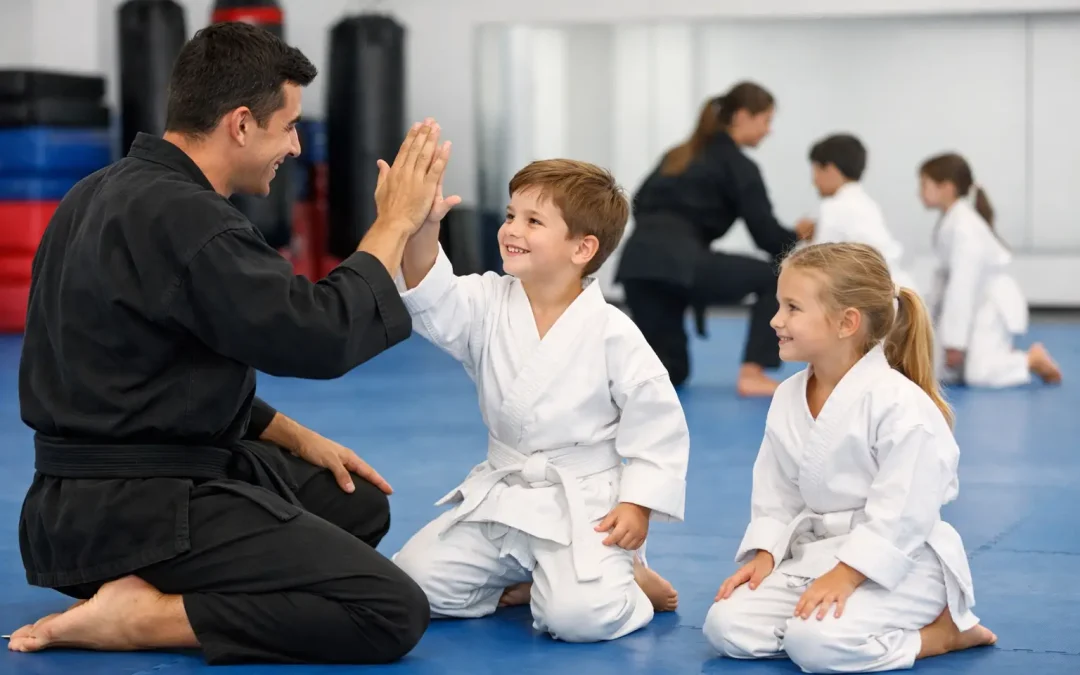
The first few minutes matter. Your child walks into a new room, sees other students training, and may feel excited, shy, or somewhere in between. A kids martial arts trial class is designed to make that first step feel manageable, positive, and fun – while giving parents a clear sense of whether the class is right for their child.
At Taylor Martial Arts, children are not expected to arrive with experience, fitness, or a perfect focus level. They are there to learn. Freestyle kickboxing provides an active, structured way for children to build confidence, discipline, respect, and practical movement skills alongside other local families.
Why a trial class is worth taking
Choosing an after-school activity can feel like a big decision. Parents want something their child will enjoy, but they also want an environment that supports healthy habits, positive role models, and real personal development. A trial gives you the chance to see those things in action rather than making a decision based on a timetable alone.
For many children, martial arts is more than an hour of exercise. It is a place to practice listening, following instructions, taking turns, and trying again after a mistake. Those skills can carry into school, home life, friendships, and other activities.
A trial class also removes pressure. Your child does not have to commit before they have experienced the atmosphere, met the instructor, and had a chance to join in at their own pace. Some children settle in immediately. Others need a little encouragement during the first session. Both are completely normal.
What happens at a kids martial arts trial class?
A well-run first class has enough structure to help children feel secure, while staying welcoming for beginners. The class will generally begin with a simple introduction, giving your child a chance to meet the instructor and understand where to stand, what to do, and how the session will work.
From there, children take part in an age-appropriate warm-up. This may include light movement, coordination drills, stretches, and games that help them get comfortable in the space. The goal is not to test who is the fittest or fastest. It is to prepare bodies and minds for training.
The instructor then introduces basic martial arts movements. Depending on the age group, this may include stance, guard position, footwork, controlled punches, kicks, and simple defensive awareness. Beginners are taught step by step, with clear demonstrations and support. Children are encouraged to focus on control and technique, not simply hitting hard or moving quickly.
Partner activities may be included, but they are carefully supervised and suited to the class. Children learn to respect personal space, work safely with others, and use equipment correctly. Martial arts training should build confidence without encouraging aggression. The difference is in the teaching: students learn self-control, responsibility, and when physical skills should and should not be used.
The session usually ends with a cool-down, a recap of what was learned, and a respectful close. This routine helps children leave feeling calm, proud, and aware of their progress, even after only one class.
Your child does not need to be “sporty”
One of the biggest concerns parents share is that their child is not naturally athletic. They may be quiet, reluctant to join team sports, easily distracted, or worried about getting something wrong. These are often the children who can benefit greatly from a supportive martial arts setting.
Freestyle kickboxing is individual in its progress, even when children train as part of a group. Your child can improve their own balance, coordination, confidence, and focus without being compared to the strongest student in the room. There is room for the energetic child who needs a positive outlet and the reserved child who needs time to grow comfortable.
That said, every child is different. A trial class is a chance to see whether the pace, group dynamic, and teaching style suit them. A child who feels nervous on day one may become more confident after a few sessions. Another may decide a different activity is a better fit. The important thing is giving them a supported opportunity to try.
What should your child wear and bring?
There is no need to buy a uniform before a trial. Comfortable sports clothes that allow easy movement are usually the best choice. Avoid jeans, restrictive clothing, or loose items that could get in the way during training. Children should also bring water and arrive ready to listen and take part.
A few simple preparations can make the first visit easier:
- Arrive a few minutes early so your child does not feel rushed.
- Let the instructor know about any injuries, medical needs, or concerns.
- Remind your child that nobody expects them to know the moves already.
- Encourage them to do their best, listen carefully, and enjoy trying something new.
Parents often find that the best approach is calm and positive. Avoid placing too much pressure on the session by asking whether your child will be “good at it.” Instead, ask whether they enjoyed it, what they learned, and how they felt afterward.
The life skills behind the kicks and punches
Children are drawn to martial arts because it is active and exciting. Parents often value it for deeper reasons. Regular training can help children create a healthy routine, develop body awareness, and learn that progress comes through consistent effort.
Discipline is not about being harsh. It is about learning to keep going, pay attention, and take responsibility for your actions. Respect is not just a word said at the beginning or end of class. It is shown by listening to instructors, treating training partners well, caring for equipment, and responding positively to correction.
Focus grows through practice too. A child who struggles to concentrate for a full class at first may gradually learn how to follow a sequence, wait for instructions, and complete a task. These small wins matter. Confidence is built when children see that they can learn something unfamiliar through patience and effort.
For older children and teenagers, martial arts can also offer a constructive alternative to screen time and a reliable place to release stress. Training provides physical challenge, but it also gives young people a sense of belonging and a community that expects their best behavior while encouraging their progress.
Questions parents should ask after the class
The journey home can be the most useful part of the trial. Rather than relying only on a quick “Did you like it?”, try asking what made them smile, which move they remember, or whether they felt comfortable asking for help. Their answers can reveal far more about their experience.
You can also consider whether the class felt organized, whether the instructor communicated clearly, and whether children were treated with patience and respect. Look for a setting where safety, encouragement, and standards work together. Children should be able to have fun, but they should also understand that martial arts involves listening, effort, and self-control.
A strong club welcomes beginners without lowering expectations. It gives children achievable challenges and recognizes improvement, whether that is better balance, more confidence speaking up, or the willingness to try a new drill.
A first step that can grow with your child
A free trial is not about finding instant perfection. It is about giving your child a safe place to move, learn, and discover what they are capable of. For families in Carshalton, Croydon, and nearby South London areas, it can be the beginning of a positive weekly routine built around fitness, friendship, focus, and respect.
Let your child come as they are. With the right encouragement and a welcoming class around them, one session can be enough to show them that confidence is not something they have to wait for – it is something they can practice.
Recent Comments