
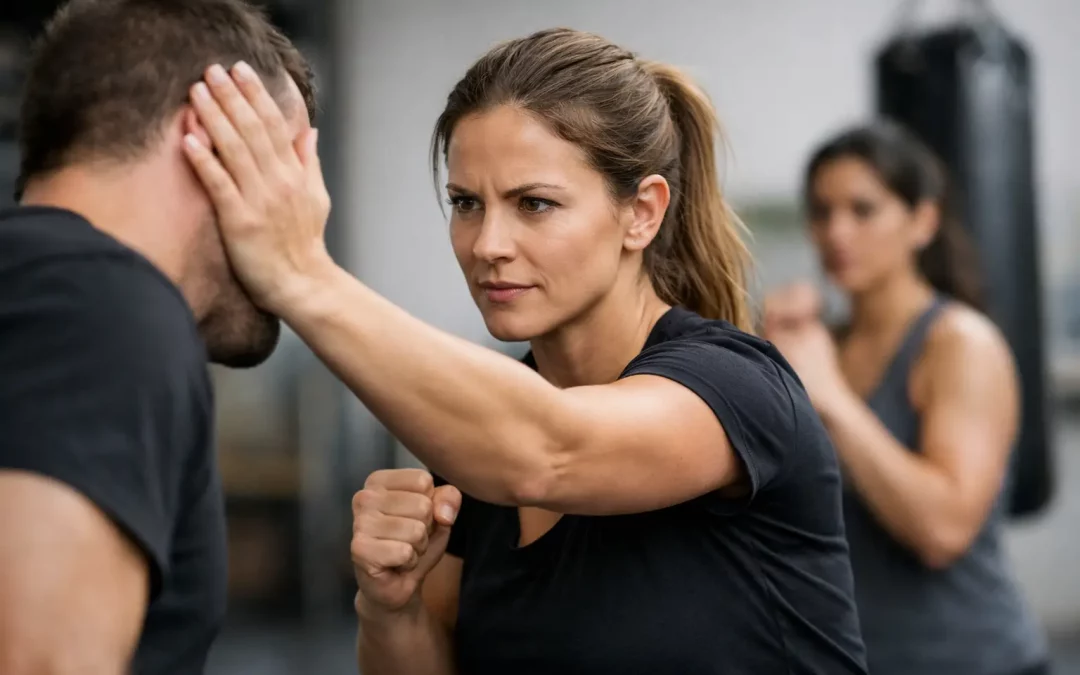
Most women are not looking to become fighters. They want to feel more prepared walking to the car after work, traveling alone, or answering the door when something feels off. That is why self defence skills for women should be practical, realistic, and built around confidence as much as technique.
The biggest misconception is that self-defense starts with punches and kicks. In reality, it starts earlier. Good training teaches you how to spot risk, create space, use your voice, and stay calm enough to make decisions under pressure. Physical skills matter, but they work best when they are part of a bigger mindset.
What real self defence skills for women look like
Real self-defense is not about flashy moves. It is about doing simple things well when your heart is racing and time is short. That includes awareness, posture, decision-making, and a few reliable physical responses that can be used under stress.
A lot of people picture self-defense as a one-move solution. That is rarely how real situations unfold. Most incidents involve confusion, surprise, and very little time to think. The women who benefit most from training are not the strongest or fastest. They are usually the ones who have practiced enough that their first response is clear and decisive.
This is one reason structured martial arts training is so valuable. In a supportive class, you do not just learn techniques. You build habits. You learn how to move with purpose, how to stay balanced, and how to respond instead of freezing.
Awareness comes first
The first layer of self-defense is awareness. This is not about living in fear. It is about paying attention to what is happening around you so you can make better choices earlier.
That might mean noticing who is nearby in a parking lot, choosing a well-lit route, keeping your phone away while walking, or trusting your instincts when something feels wrong. Many women ignore that uneasy feeling because they do not want to seem rude or overreact. In practice, listening to your instincts is often one of the smartest safety habits you can build.
Awareness also includes boundaries. If someone invades your space, asks personal questions, or continues to approach after you have stepped back, that behavior matters. A lot of self-defense begins by recognizing that you do not need to wait until a situation becomes physical to take action.
Confidence changes how you carry yourself
Confidence is often dismissed as a soft skill, but it has real value in self-defense. The way you stand, walk, speak, and make eye contact can affect how others read you. Someone who appears alert and assertive is usually a less appealing target than someone who seems distracted or uncertain.
This does not mean confidence guarantees safety. It does mean that body language can support your awareness and decision-making. Martial arts training helps because it gives you repeated experience being present in your body. Over time, people tend to stand taller, move more deliberately, and communicate more clearly.
That kind of confidence also helps in the moment. If you need to say no, create distance, or draw attention to a threat, a strong voice and steady posture matter. For many women, that is a skill that improves with practice, not personality.
Physical self-defense should be simple and repeatable
When people search for self defense skills for women, they often want to know which techniques are best. The honest answer is that the best techniques are the ones you can remember and perform under pressure.
Simple striking basics can be effective when taught properly. Palm strikes, elbows, knees, and low kicks are often more practical than complicated combinations because they rely on natural movement and can create space quickly. Escapes from common grabs and holds also matter, especially when they focus on leverage, balance, and immediate action rather than strength alone.
There is always a trade-off here. Watching a technique once can make it look easy. Performing it while startled, off-balance, and under pressure is very different. That is why repetition matters so much. You do not need dozens of techniques. You need a smaller number of reliable responses practiced often enough that they become familiar.
Why strength is helpful but not the whole answer
A common concern is whether self-defense can work for smaller women or those with no athletic background. The answer is yes, but with the right expectations. Training can improve your ability to strike, move, and break free, but no honest instructor should pretend technique removes every disadvantage.
Size and strength do matter. So do timing, surprise, determination, and skill. The goal of training is not to promise control over every situation. It is to improve your chances, help you act sooner, and give you more options when seconds matter.
That is also why good self-defense training includes fitness. Better balance, coordination, stamina, and core strength all support your ability to move well under pressure. You do not need to be in peak condition to begin. You build those qualities through regular practice.
Training under pressure matters more than memorizing moves
One of the biggest gaps in self-defense education is the difference between knowing a move and being able to use it. Stress changes everything. Fine motor skills drop. Breathing gets shallow. Your field of vision can narrow. That is why realistic practice matters.
In a well-run class, techniques are introduced safely and clearly, then repeated enough to become usable. You learn distance, timing, and how to stay balanced while moving. You also learn how to reset if the first attempt does not work. That is a more honest and useful approach than pretending every situation has a clean answer.
This is where freestyle kickboxing can be especially valuable. It builds movement, reactions, striking ability, and composure. Just as importantly, it does so in a structured environment where beginners can progress step by step. At Taylor Martial Arts, that approach helps students build practical skills without feeling overwhelmed.
The right class should feel supportive, not intimidating
A lot of women delay training because they assume martial arts classes will be intense, overly competitive, or filled with experienced students. In reality, the right club feels organized, respectful, and welcoming from day one.
That matters because consistency is where results come from. If a class is too intimidating, people stop coming. If it is supportive and well-structured, they keep training long enough to gain real confidence and skill.
For beginners, a good instructor will focus on fundamentals, explain why techniques work, and create an environment where questions are welcome. Progress should feel earned but achievable. Discipline and respect matter, but so does encouragement.
Self defense skills for women are built over time
There is no single class that makes someone fully prepared. Self-defense is a process. You build awareness first, then movement, then confidence under pressure. Over time, the pieces start working together.
That process is often more empowering than people expect. Women usually begin because they want to feel safer, but they stay because training improves far more than self-defense. It can sharpen focus, support fitness, reduce stress, and create a stronger sense of self-trust.
It also helps to train in a community. When you are surrounded by people working toward similar goals, showing up becomes easier. You improve faster, stay accountable, and gain confidence in a setting that feels positive rather than fearful.
How to choose the right place to train
If you are considering classes, look beyond marketing. Ask whether the training is beginner-friendly, whether instructors teach with clarity, and whether the environment feels respectful. You want practical instruction, but you also want a place where you can develop steadily.
It is worth paying attention to how the class balances technique, fitness, and control. A good program should challenge you without making you feel unsafe or out of place. The best clubs help students grow in skill and confidence at the same time.
If possible, try a class before committing. You will learn a lot from how the instructor runs the session, how students treat each other, and whether the teaching style suits you. The right fit can make all the difference.
Feeling safer rarely comes from hoping for the best. It comes from building habits, learning practical skills, and giving yourself the chance to grow stronger with each session.
Recent Comments