
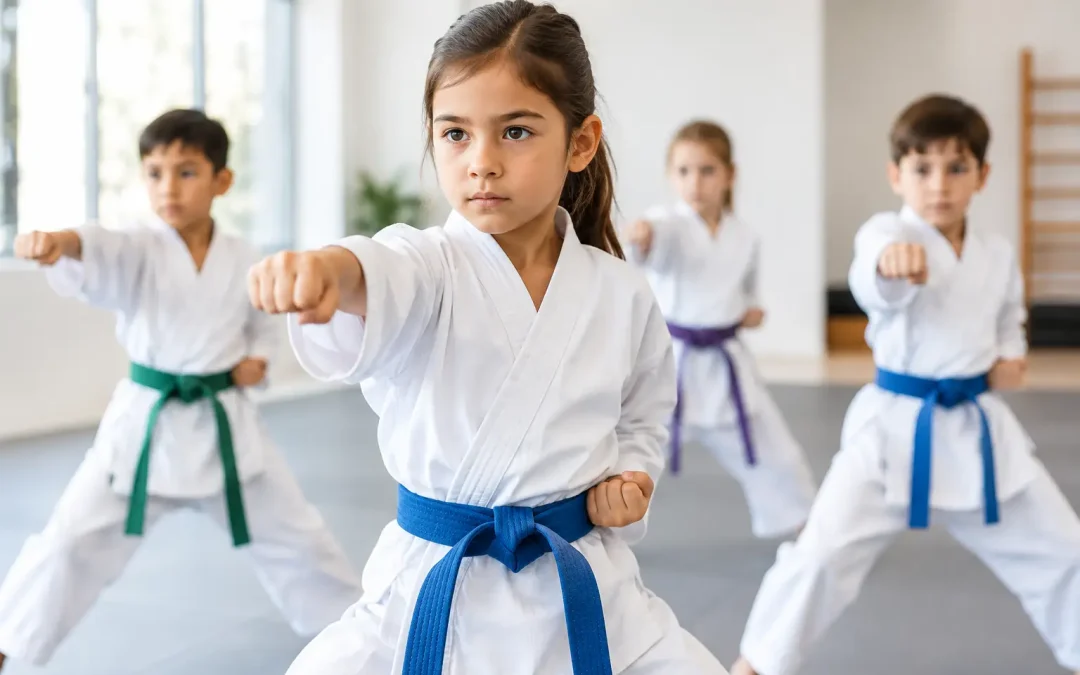
A child who struggles to sit still, follow directions, or finish a task is not necessarily lacking effort. Often, they need a positive place to practice these skills in a way that feels active and achievable. Children gaining focus through martial arts are not expected to become perfectly calm overnight. They learn, one class at a time, how to listen, reset, try again, and take pride in steady progress.
For many families, that progress shows up beyond the training floor. A child may begin getting ready for school with fewer reminders, sticking with homework for longer, or handling frustration with more control. Freestyle kickboxing gives children a constructive outlet for energy while teaching the habits that support focus in everyday life.
Focus Is a Skill Children Can Practice
Focus is often treated as something a child either has or does not have. In reality, it is a skill that develops through repetition, clear expectations, and encouragement. Martial arts classes create a setting where children can practice paying attention without being asked to sit quietly for long periods.
They listen for an instructor’s command, watch a movement, copy it, and receive feedback. Then they repeat the movement with more care. This simple cycle helps children connect attention with action. When they focus, they understand the task better, improve their technique, and feel the satisfaction of getting it right.
The structure matters. Classes have a beginning, a purpose, and clear boundaries. Students line up, warm up, learn skills, practice safely, and finish together. For children who find unstructured activities distracting or overwhelming, that predictable rhythm can be reassuring.
Small Instructions Build Stronger Attention
Martial arts instruction breaks larger challenges into manageable steps. Rather than telling a child to “concentrate,” an instructor might ask them to keep their guard up, place their feet correctly, or wait for the next command. Each instruction is specific and immediate.
As children become more comfortable, they learn to hold several details in mind at once. They may need to remember a stance, a sequence, and a safety rule while working with a partner. This is where attention starts becoming more durable. They are not just using energy. They are directing it.
How Martial Arts Turns Energy Into Focus
Children have different energy levels, learning styles, and confidence levels. A good martial arts class does not expect every child to respond in the same way. It gives them a shared framework while allowing them to progress at their own pace.
Physical movement is a key part of that framework. A child who has spent a full school day sitting at a desk may find it easier to listen after they have warmed up, moved their body, and released some tension. Kickboxing drills require coordination, balance, timing, and control. They are engaging enough to hold attention, but structured enough to build discipline.
Training also teaches children that control is a strength. A powerful kick is useful only when it is performed safely and with good technique. A fast combination works best when the student remains balanced and aware. Over time, children see that rushing does not always lead to better results. Careful practice does.
This can be especially valuable for children who become frustrated when something feels difficult. In martial arts, mistakes are expected. Missing a step, losing balance, or forgetting a sequence is not a reason to give up. It is a chance to pause, listen, and try again. That mindset supports resilience as much as focus.
The Confidence Connection
Focus and confidence often grow together. Children are more likely to stay with a task when they believe they can improve. Martial arts provides regular, visible evidence of progress. A student might perform a technique more accurately than last week, remember a longer sequence, or feel comfortable speaking up in class.
Recognition should be earned, not simply handed out. When children know that effort, respect, and consistency matter, achievement feels meaningful. They begin to understand that improvement comes from showing up and practicing, even when a skill is new or challenging.
This is one reason a supportive class environment is so important. Children need to feel safe enough to make mistakes, ask questions, and keep trying. They also need clear standards. Encouragement without accountability can feel vague, while strictness without warmth can make a child shut down. The right balance helps students feel capable and responsible.
At Taylor Martial Arts, that balance is part of a family-focused approach. Children are encouraged to work hard, treat others with respect, and recognize their own progress without comparing themselves to everyone else in the room.
Signs Focus Is Growing Outside Class
The benefits of training may not always appear as a sudden change in behavior. More often, parents notice small shifts that build over time. A child may respond more quickly when asked to do something, recover faster after disappointment, or take more care with routines at home.
You may also hear them use language from class. They might talk about practicing, keeping calm, or trying again. These are meaningful signs because they show that the lessons are becoming part of how they think, not just what they do during training.
That said, martial arts is not a replacement for support a child may need at school or from a health professional. Every child develops differently, and focus can be affected by sleep, stress, learning needs, and family routines. Training works best as one positive part of a wider support system.
What Parents Should Look for in a Class
Not every martial arts program is designed with young children in mind. For focus-building benefits, look beyond flashy moves or competitive pressure. The instructor, class structure, and atmosphere make a real difference.
A strong children’s program should use age-appropriate instruction and give students regular chances to succeed. Younger children often need shorter explanations, clear demonstrations, and plenty of movement. Older children and teenagers can take on more detailed technique, responsibility, and goal-setting.
Pay attention to how instructors correct students. Good coaching is firm but respectful. Children should understand what to improve and how to improve it. They should also learn that listening, safety, and respect for training partners are just as important as physical ability.
It helps when a class welcomes beginners. A child does not need to be naturally athletic, confident, or outgoing before starting. In fact, many children benefit most when they are given a patient introduction and time to settle into the routine.
Helping the Lesson Continue at Home
Parents do not need to turn home into another martial arts class. Simple consistency is enough. Ask your child what they practiced, praise effort rather than only results, and help them attend regularly when possible.
You can also connect class values to ordinary moments. If your child is getting frustrated with homework, remind them how they approach a new technique: slow down, listen, break it into steps, and keep trying. If they are preparing their bag for class, encourage them to take responsibility for their uniform and water bottle. These small routines reinforce independence and follow-through.
Avoid expecting instant transformation. Some children become more settled quickly, while others need time before they feel comfortable enough to engage fully. Regular attendance, patient support, and a class they enjoy are more valuable than pushing for quick results.
A first class can be a useful starting point. It gives children the chance to experience the routine, meet the instructor, and see that focus does not mean being still all the time. It means learning where to place their attention, even when something feels new. With the right encouragement, that is a skill they can carry into school, home, friendships, and every new challenge ahead.
Recent Comments