
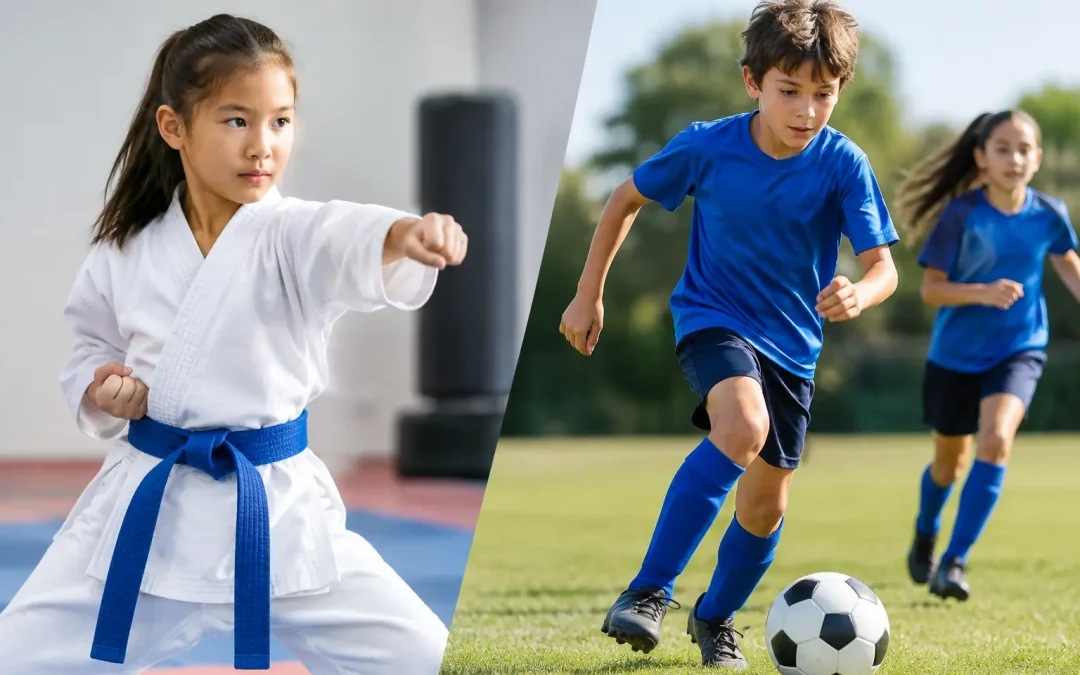
A child who hangs back during soccer practice may become focused and confident in a kickboxing class. Another child who loves individual progress may light up when they score a goal with friends. Choosing between martial arts or team sports is not about picking the “better” activity. It is about finding an environment where your child feels motivated to show up, work hard, and grow.
Both paths can build fitness, friendships, resilience, and healthy routines. The difference lies in how children learn, what motivates them, and the kind of confidence they need most right now.
Martial Arts or Team Sports: Start With Your Child
Parents often feel pressure to choose the perfect activity. In reality, the right choice can change as your child grows. A quiet 6-year-old, a high-energy 10-year-old, and a self-conscious teenager may all need something different from their weekly activity.
Team sports are often a strong fit for children who enjoy being part of a group, sharing a goal, and reacting quickly to others. They can learn communication, cooperation, and how to support teammates through wins and losses. For many children, the social side is the main reason they keep coming back.
Martial arts can be especially valuable for children who benefit from clear structure and personal goals. Progress is based on their own effort, attendance, focus, and willingness to learn. They do not need to be the fastest runner or the most naturally coordinated child in the room to make meaningful progress.
Ask yourself what your child is drawn to. Do they enjoy working with a group, or do they take pride in improving a skill step by step? Do they need an outlet for extra energy, a boost in confidence, or a place where they can focus without comparison? Their answers matter more than what their friends are doing.
What Team Sports Can Teach
Team sports create a powerful sense of belonging. Whether it is soccer, basketball, baseball, or another group activity, children learn that their choices affect the people around them. They practice passing, listening, communicating, and taking responsibility for their role.
They also learn to handle unpredictable situations. A game can change in seconds. A child may need to recover after a missed shot, adapt to a new position, or encourage a teammate who is disappointed. These are useful lessons in resilience and cooperation.
For some families, team sports are also a natural social hub. Weekend games, practice sessions, and shared celebrations can help parents meet other local families while children build friendships outside school.
There are trade-offs, though. Playing time can vary, especially as children get older and competition increases. A child may work hard at practice but still spend much of a game on the sidelines. Team dynamics, coaching styles, and the pressure to win can also affect how a child feels about the experience.
That does not make team sports a poor choice. It simply means parents should look beyond the sport itself. Watch a practice, meet the coach, and notice whether the environment encourages effort and good character alongside performance.
What Martial Arts Can Teach
Martial arts gives children a clear path forward. They learn skills in stages, practice them repeatedly, and see their effort turn into progress. For a child who needs proof that hard work matters, that process can be deeply encouraging.
In a well-run class, children are expected to listen, follow instructions, show respect, and keep trying when a technique feels difficult. Those expectations are not harsh. They are consistent. Over time, consistency helps children develop discipline, focus, and accountability.
Freestyle kickboxing also gives students a practical physical outlet. They can improve coordination, balance, flexibility, stamina, and body awareness while learning controlled striking and self-defense skills. The goal is never to encourage aggression. It is to teach control, confidence, and responsible decision-making.
One of the biggest benefits is that martial arts progress is personal. A child is not judged by whether their team wins. They can measure success by showing better focus, improving their technique, earning a new grade, or having the courage to try something they found difficult last week.
At Taylor Martial Arts, that individual progress happens within a supportive class community. Students train alongside others, encourage each other, and learn to respect partners of different ages and abilities. They gain the benefits of belonging without relying on a scoreboard to define their success.
Confidence Looks Different in Each Setting
Both martial arts and team sports can build confidence, but they often build different kinds of confidence.
In team sports, confidence may come from contributing to a shared result. A child learns, “My effort helped my team.” That is a valuable feeling, especially for children who thrive on connection and collaboration.
In martial arts, confidence often comes from self-trust. A student learns, “I can stay calm, listen, practice, and improve.” This can be particularly helpful for children who are shy, easily discouraged, or worried about getting something wrong in front of others.
For teenagers, martial arts can offer a steady environment during a period when confidence can feel fragile. They have a positive routine, physical challenge, and practical skills that do not depend on social status or athletic popularity. They are encouraged to become stronger versions of themselves, not copies of somebody else.
Consider Practical Family Life Too
The best activity is one your family can realistically sustain. A child benefits far more from a class they attend consistently than from an activity that becomes stressful because of travel, costs, or an overloaded schedule.
Team sports can involve changing game schedules, weekend commitments, travel, and equipment costs. Some families enjoy that rhythm. Others find it difficult to balance with work, siblings, and other responsibilities.
Martial arts classes often offer a more predictable routine. Students can train regularly, work toward individual goals, and build a healthy habit that fits into the week. For families with more than one child, age-appropriate classes can also make it easier for siblings to train in the same community while following programs suited to their development.
It is also worth considering what happens when your child has a difficult week. In a team environment, they may feel pressure not to let others down. In martial arts, they can still train at their own level, reset, and leave class feeling that they accomplished something positive.
You Do Not Have to Choose Forever
The question is not always martial arts or team sports. Many children enjoy both at different stages. A child might play a seasonal sport and train in martial arts year-round. Another may begin with a team activity, then discover that they prefer the structure and personal challenge of kickboxing.
The key is not to overschedule them. Children need time to rest, play freely, do schoolwork, and spend time with family. One activity they genuinely enjoy is more valuable than several activities that leave everyone exhausted.
Pay attention to the signs. Are they excited to get ready? Do they talk about what they learned afterward? Are they becoming more confident, more active, and more willing to handle challenges? Those are stronger measures of success than trophies, rankings, or what other families are doing.
Give Your Child Room to Find Their Strength
A good class or team should make your child feel challenged, supported, and welcome. They should leave knowing that effort matters, respect matters, and improvement is possible.
If your child needs a structured place to build focus, confidence, fitness, and practical self-defense skills, a free martial arts trial can be a simple way to see how they respond. Let them step onto the mat, meet the instructors, and experience the encouragement for themselves. The right activity is the one that helps them stand a little taller when they walk back out.
Recent Comments