
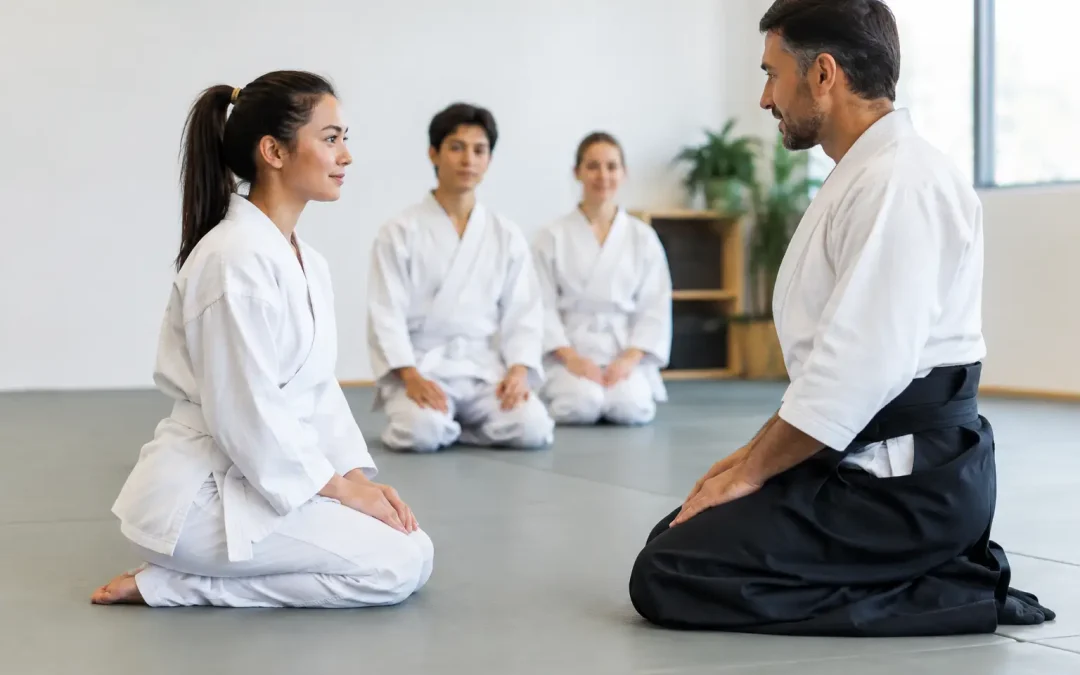
The first thing a new student notices in a martial arts class is not usually a punch or a kick. It is the way people treat the room, the instructor, and one another. Martial arts etiquette gives every class that sense of order. It helps children feel secure, gives adults a clear starting point, and creates a safer place for everyone to train, improve, and belong.
For families, etiquette is not about making training stiff or intimidating. It is about learning habits that carry beyond the mat: listening carefully, controlling emotions, showing respect, and taking responsibility for your actions. Those lessons are part of the training from the very first class.
What Martial Arts Etiquette Really Means
Martial arts etiquette is the shared standard of respectful behavior in a class. The details can vary between schools and styles, but the purpose stays the same. Students follow instructions, care for training partners, look after the space, and give their full attention when it matters.
In freestyle kickboxing, this is especially practical. Students may work with pads, practice controlled combinations, or train alongside people of different ages and experience levels. Good etiquette helps everyone know what is expected before the activity gets faster or more challenging.
Respect is not something a student earns only after reaching a certain belt or level. Beginners deserve patience. More experienced students deserve focused partners. Instructors deserve attention because they are responsible for everyone’s progress and safety. When that respect goes both ways, confidence grows naturally.
Before Class: Start With Respect
Good habits begin before warm-up. Arriving a few minutes early gives students time to settle in, use the restroom, get their equipment ready, and begin class calmly. Rushing in late can happen sometimes, especially for busy families, but it should be the exception rather than the routine.
Students should come in clean training clothes, with nails trimmed and jewelry removed where appropriate. These small details reduce distractions and help prevent accidental scratches or injuries during partner work. Long hair should be tied back securely so students can see clearly and move safely.
For children, parents can make this simple by creating a quick pre-class check: water bottle, uniform or comfortable sportswear, required protective equipment, and a positive attitude. The goal is not perfection. It is helping children learn that preparation is part of discipline.
When students enter the training space, they should follow their instructor’s routine. Some classes may line up, greet the instructor, or wait quietly for class to begin. These moments teach focus. They also give students a clean break from the noise of school, work, traffic, and daily life.
Listening Is a Skill, Not Just Good Manners
One of the strongest signs of martial arts etiquette is listening the first time. When an instructor is explaining a drill, students should stop side conversations, face forward, and give the instruction their attention. This keeps class moving and means less time is spent repeating safety guidance.
For younger students, listening can take practice. Children may be excited to see friends or eager to try the next activity. A supportive instructor will help them refocus, but children also learn that self-control is a skill they can build. Each time they pause, listen, and follow a direction, they are strengthening discipline.
Adults benefit from the same approach. Even if you have trained before, every instructor and class structure may be different. Ask questions at the right time, but avoid talking over demonstrations or trying to teach fellow students unless you have been asked to help. A humble mindset makes learning faster.
Training Partners Deserve Care
Martial arts are built on partnership. You cannot practice timing, distance, defense, or controlled contact well without another person helping you learn. That makes your training partner just as important as your own performance.
Control is the key. A good partner does not throw techniques harder simply to prove a point. They match the pace and intensity set by the instructor, especially when working with a beginner, a younger student, or someone returning after time away. Training is not a fight. The purpose is to improve skill while keeping each other safe.
If you accidentally make contact too hard, step back and check on your partner. A quick, sincere apology shows maturity. Then adjust. Everyone makes mistakes while learning, but repeating the same mistake without changing your behavior is not acceptable.
The same applies when holding pads. Hold them securely, pay attention to the drill, and avoid looking away or joking around while your partner is striking. Good pad holding is active teamwork. It gives your partner confidence to practice correctly and helps both students get more from the session.
Respect the Space and Equipment
A clean, organized training area tells students that the class matters. It is everyone’s responsibility to help keep it that way. Put equipment back where it belongs, pick up any water bottles or belongings, and report damaged gear to an instructor.
Students should also avoid eating in the training area unless the class rules allow it. Spills and clutter can create hazards, while a tidy space helps everyone stay focused. This may seem like a small part of martial arts etiquette, but it reinforces an important message: shared spaces work best when everyone contributes.
At Taylor Martial Arts, the aim is to create a welcoming environment where beginners and experienced students can train with confidence. Looking after the room and equipment is one way students show respect for that community.
How Parents Can Support Etiquette Without Pressure
Parents play a valuable role, particularly when children are new to martial arts. The best support is calm and consistent. Encourage your child to arrive prepared, listen to their instructor, and treat other students kindly. After class, ask what they enjoyed or what they learned rather than focusing only on whether they performed perfectly.
It is also helpful to let instructors lead during class. Children often respond differently when a parent gives instructions from the side, and too much coaching can make it harder for them to focus. Save detailed questions for before or after the session, unless there is an urgent safety concern.
Some children take to class immediately. Others need several weeks to become comfortable with routines, noise, and new physical challenges. That is normal. Etiquette gives them a dependable structure while their confidence catches up.
Etiquette When You Feel Frustrated
Every student has difficult days. A technique may not work. A fitness drill may feel tough. A child may lose a game, or an adult may feel behind more experienced classmates. Martial arts etiquette matters most in these moments because it teaches students how to respond without giving up or taking frustration out on others.
Take a breath, reset your stance, and listen for the next instruction. If you need help, ask respectfully. If you need a short break, tell the instructor rather than walking away. Learning to manage disappointment is a real part of self-defense and personal development.
Students should also celebrate others. A simple “good job” after partner work or applause for someone’s achievement can make a major difference, especially for a nervous new student. A strong class is not one where everyone is the same. It is one where people encourage each other to keep improving.
What New Students Should Remember
You do not need to know every custom before your first class. A good martial arts school will explain its routines clearly and give you time to learn. Start with a willingness to listen, work hard, and treat people well.
If you are unsure about something, ask. If a drill feels too intense, speak up. If you make a mistake, learn from it and try again. Those are not signs that you do not belong. They are signs that you are taking your training seriously.
The best students are not always the loudest, fastest, or strongest. They are the ones who show up ready to learn, help make training safer for others, and carry respect with them long after class ends. That is a habit worth practicing one session at a time.
Recent Comments