
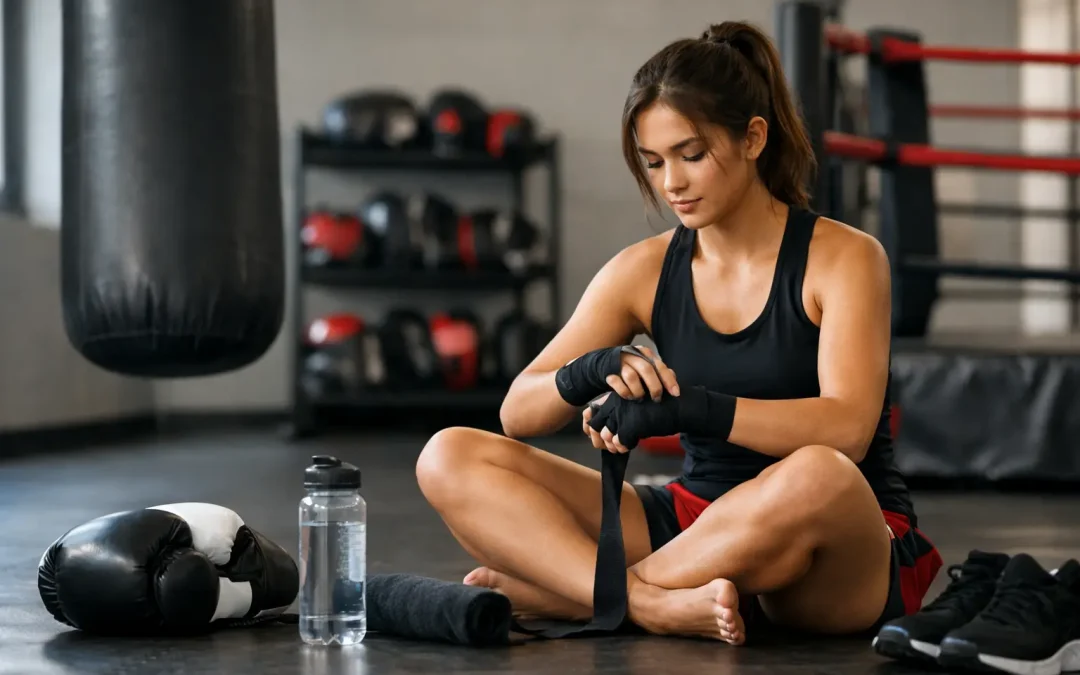
The first few minutes of a kickboxing class can feel like a lot: new movements, new people, and an instructor calling combinations you have not heard before. Knowing how to prepare for kickboxing class takes away much of that uncertainty. You do not need to arrive already fit, flexible, or experienced. You only need to arrive ready to listen, work at your own level, and give yourself a fair first session.
Prepare for Kickboxing Class With the Right Mindset
A beginner class is not a test of whether you belong. It is where you begin building fitness, coordination, self-defense awareness, discipline, and confidence. Everyone starts somewhere, and experienced students remember what it felt like to learn a basic stance or throw their first punch.
Set one simple goal for your first class: stay focused and learn. You may not remember every technique, and that is completely normal. Pay attention to the instructor, ask when you are unsure, and avoid comparing yourself with someone who has trained for months or years. Progress in martial arts comes from regular practice, not from trying to be perfect on day one.
For children, parents can help by explaining that class is a place to try, listen, and keep going when something feels unfamiliar. A positive approach before leaving home can make a big difference. Remind them that respect, effort, and focus matter just as much as a high kick or fast combination.
What to Wear to Your First Kickboxing Class
Comfortable clothing makes it easier to move and helps you feel at ease. Choose clean workout clothes that allow you to lift your knees, bend, twist, and raise your arms without restriction. Athletic shorts, leggings, joggers, and a T-shirt are usually good choices for a first session.
Avoid clothing with large zippers, hard buttons, or loose jewelry. Remove rings, watches, necklaces, and hoop earrings before training, as they can catch during drills or cause injury. Tie back long hair securely so it does not fall into your face while you are practicing.
If the club has a uniform, your instructor will explain when and how to get one. There is no need to buy specialist equipment before a trial class unless the club asks you to. Most beginner programs introduce equipment gradually, once you know what you need and how to use it safely.
Bring these four practical items with you:
- A water bottle
- A small towel if you tend to sweat
- Any required medication, such as an inhaler
- A light layer for before and after class
Some classes train barefoot, while others may have different requirements depending on the venue and program. Ask in advance if you are unsure. Starting with clean feet and trimmed toenails is a small but thoughtful part of training safely with others.
Eat and Drink for Steady Energy
What you eat before class should help you feel energized, not overly full. A large, heavy meal right before kicking, moving, and doing conditioning drills can leave you uncomfortable. Try to have a normal meal two to three hours before class when possible.
If you need something closer to training, choose a light snack about 30 to 60 minutes beforehand. A banana, yogurt, toast, or a small handful of nuts can work well. The right choice depends on your body, your schedule, and any dietary needs. Children may do best with a simple after-school snack and water before an evening class.
Drink water through the day rather than trying to catch up just before training. Take small sips during class when needed. Sports drinks are usually unnecessary for a standard beginner session, though they may have a place during longer or especially intense training. Water is the dependable starting point.
Arrive Early and Let the Instructor Know You Are New
Arriving 10 to 15 minutes early gives you time to settle in without rushing. You can find the changing area, meet the instructor, and learn where to put your belongings. It also gives your child time to take in the room and feel comfortable before class begins.
Tell the instructor if this is your first kickboxing class. Mention any injuries, medical conditions, or concerns that could affect training, including knee pain, asthma, back issues, or a recent sprain. This is not about sitting out unnecessarily. It helps the instructor offer sensible adjustments and keep training safe.
You should also speak up if you have never exercised regularly or are returning after a long break. Kickboxing can be adapted. A lower kick, slower pace, extra rest, or reduced range of motion is often the right choice while your fitness and confidence build.
Understand What a Beginner Session May Include
A structured kickboxing class often starts with a warm-up to prepare your muscles and joints for movement. You may then work on stance, footwork, punches, blocks, kicks, and simple combinations. Conditioning exercises can be part of the session too, but they are there to develop your fitness over time, not to push you past your limits on day one.
You might practice on pads, work through drills with a partner, or shadowbox in your own space. In beginner-friendly training, control comes before power. Learning to keep your hands up, balance your weight, and make safe contact is more valuable than trying to hit hard.
If partner work is included, remember that your training partner is there to help you learn. Be controlled, respectful, and responsive to instructions. Do not worry if you feel awkward at first. Timing and coordination improve through repetition, and every student has to learn the rhythm of training.
Focus on Safety, Not Speed
Good technique begins with control. Keep your guard up when instructed, pay attention to spacing, and stop immediately if the instructor calls for a break. Never copy advanced movements before you understand the basics. A simple punch thrown with balance and proper form will serve you better than a fast, uncontrolled combination.
Listen carefully during demonstrations. If the instructor shows a movement on one side, take a moment to check which foot and hand you should use. It is fine to ask for clarification. Asking questions shows focus and helps prevent small errors from becoming habits.
For parents, it is worth reinforcing that martial arts skills are for training and self-defense, never for showing off or settling disagreements. Respect is part of every good kickboxing class. Children and teens learn that strength includes self-control, good judgment, and the ability to walk away from trouble.
Plan for the Day After Your First Class
It is common to feel muscles you did not know you had used, particularly in your legs, shoulders, and core. Mild soreness after a new activity is normal. A gentle walk, light stretching, regular meals, water, and good sleep can all support recovery.
Do not judge kickboxing after one class based only on how tired you feel. The first session asks your body to learn unfamiliar movements, so it can be challenging. With consistent attendance, the warm-up becomes easier, your balance improves, and techniques start to feel more natural.
Try to protect time in your weekly routine for training. For adults, this may mean treating class as an appointment that supports your wellbeing. For children, packing clothes and water ahead of time can make the journey from school to class calmer. Discipline is often built through these small preparations.
Give Yourself Permission to Be a Beginner
Kickboxing is not only about getting stronger or learning practical skills. It is also a chance to build confidence through steady effort. Each class gives you another opportunity to focus, move with purpose, and see what you can do when you do not give up at the first difficult moment.
At Taylor Martial Arts, beginners are welcomed into a supportive environment where children, teens, and adults can develop at their own pace. Your first class does not require a perfect kick or a fighter’s fitness. Bring a willingness to learn, respect the people around you, and let the next session be one small step toward becoming your best self.
Recent Comments