
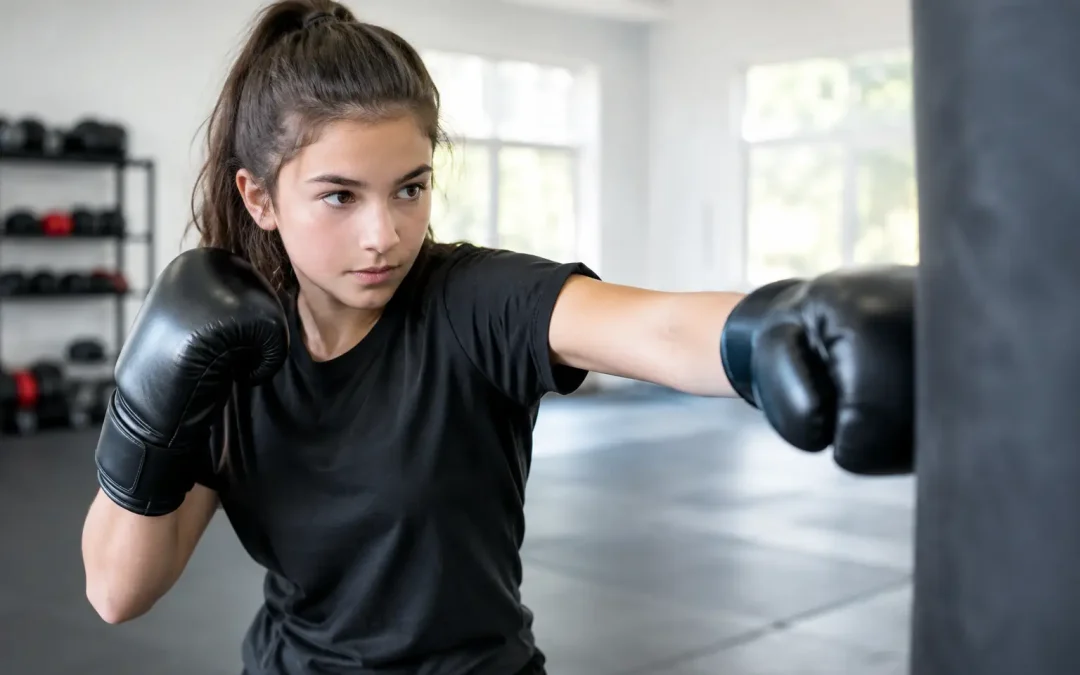
A teenager does not need to be the loudest person in the room to become confident. Often, confidence starts quietly: showing up for class, learning a new combination, keeping their guard up, and realizing they can do something difficult. Teen kickboxing gives young people a positive place to build that belief in themselves, one session at a time.
For parents, the teenage years can bring big changes in mood, routine, friendships, and self-esteem. A structured activity that challenges the body and mind can make a real difference. For teens, kickboxing is a chance to move, learn practical skills, make friends, and feel proud of steady progress without needing to be an elite athlete.
Why Teen Kickboxing Is About More Than Fitness
Kickboxing is energetic, but a good teen class is never simply about throwing punches and kicks. It teaches students how to listen, control their body, respect their training partners, and stay focused when they feel tired or frustrated. Those are useful habits far beyond the training floor.
Fitness is a clear benefit. Regular training can improve coordination, balance, flexibility, stamina, and overall strength. Because classes are varied, teens are less likely to feel as though they are repeating the same workout every week. They may practice footwork, pad work, defensive movement, conditioning, and controlled technique, with each element building toward greater confidence and ability.
Just as valuable is the sense of progress. A teen who initially struggles to remember a combination can learn it through repetition. A student who feels nervous about working with a partner can become more comfortable over time. Martial arts shows young people that improvement is earned through consistent effort, not instant perfection.
Confidence Without the Pressure to Perform
Many teenagers feel pressure to look confident even when they do not feel it. Social media, school expectations, and sports environments can make it difficult to try something new without worrying about being judged. A welcoming martial arts class gives them space to be beginners.
The right instructor sets a clear standard while keeping the atmosphere encouraging. Students are expected to listen, train safely, and give their best effort. At the same time, mistakes are treated as part of learning. That balance matters. Teenagers need encouragement, but they also benefit from knowing that discipline and responsibility are expected of them.
Confidence in kickboxing is not about becoming aggressive or trying to dominate others. It is about standing taller because you know you can stay calm, follow instructions, and handle a challenge. Over time, that confidence can show up at school, at home, and in new social situations.
Learning Respect and Self-Control
Martial arts training is built on respect. Teens learn to respect their instructors, training partners, the rules of the class, and their own potential. This is especially important in partner work, where control matters as much as technique.
A well-run class teaches students that power without control is not skill. They learn to use appropriate contact, wear the correct safety equipment, and pay attention to the person training with them. This creates a safer, more supportive environment where students can develop without feeling intimidated.
That focus on self-control can be valuable for teens who have a lot of energy, as well as those who tend to hold back. One student may learn to slow down and concentrate. Another may learn to speak up, take space, and commit to a movement. Both are making progress.
Practical Self-Defense Skills for Teenagers
Parents often ask whether kickboxing can help with self-defense. The answer is yes, when it is taught responsibly. Teenagers can learn awareness, balance, distance, movement, and how to respond with composure under pressure. These skills support personal safety and can help a young person feel less vulnerable.
However, practical self-defense is not about encouraging confrontation. The first goal is always to avoid danger where possible, leave an unsafe situation, and get help. Physical techniques are only one part of personal safety. Good training reinforces judgment, awareness, and the importance of using skills responsibly.
It also helps teens understand the difference between confidence and risk-taking. They do not need to prove themselves in an argument or respond to every challenge. Real strength often means walking away, staying calm, and making a smart decision.
What Parents Should Look for in a Teen Kickboxing Class
Not every kickboxing program is designed with teenagers in mind. A class should offer clear structure, age-appropriate coaching, and an instructor who understands how to motivate young people without pushing them beyond safe limits.
Look for a program that groups students appropriately and introduces techniques in stages. Beginners should not be expected to know everything on day one. They need time to learn stance, movement, guard position, and basic combinations before moving on to more complex work.
The class culture matters just as much as the curriculum. Teens are more likely to keep attending when they feel known, respected, and included. A positive club gives students room to work toward personal goals, whether that means getting fitter, improving focus, gaining confidence, or simply finding an activity they enjoy.
Parents should also ask how safety is managed. Quality instruction includes warm-ups, supervised partner drills, controlled contact, and clear expectations around protective equipment. Training should feel challenging, but it should never feel careless.
Is Kickboxing Right for Every Teen?
Teen kickboxing can suit a wide range of personalities and fitness levels, but every young person is different. Some teens will enjoy the physical challenge immediately. Others may need a few classes to settle in, especially if they are shy or have not played sports before.
A free trial can be a helpful way to see whether the class feels like the right fit. It lets a teen experience the instructor’s approach, meet other students, and try the training for themselves. Parents can also see whether the environment matches the values they want for their child.
There is no need for a teenager to arrive already fit, flexible, or confident. The purpose of training is to develop those qualities. What matters most is a willingness to learn and the consistency to keep showing up.
Building a Routine That Supports Wellbeing
Teenagers benefit from having something positive in their week that is not school, homework, or screen time. A regular kickboxing class provides structure and a healthy outlet for stress. After a demanding day, focused physical activity can help students reset their minds and use their energy constructively.
The routine itself is powerful. Packing their kit, arriving on time, listening carefully, and working toward goals all strengthen personal responsibility. Small commitments add up. When a teen sees that regular effort leads to better technique and improved fitness, they begin to trust their ability to follow through.
At Taylor Martial Arts, young people train in a supportive community where discipline, respect, and encouragement go together. The aim is not to turn every teenager into a competitor. It is to help them become stronger, more focused, and more confident in everyday life.
A teenager may first come to class because they want to get fit or try something new. Give them time, and they may leave with better posture, a calmer mindset, new friends, and a stronger belief in what they can achieve. The next step can be as simple as trying a class and letting them discover that progress for themselves.
Recent Comments