
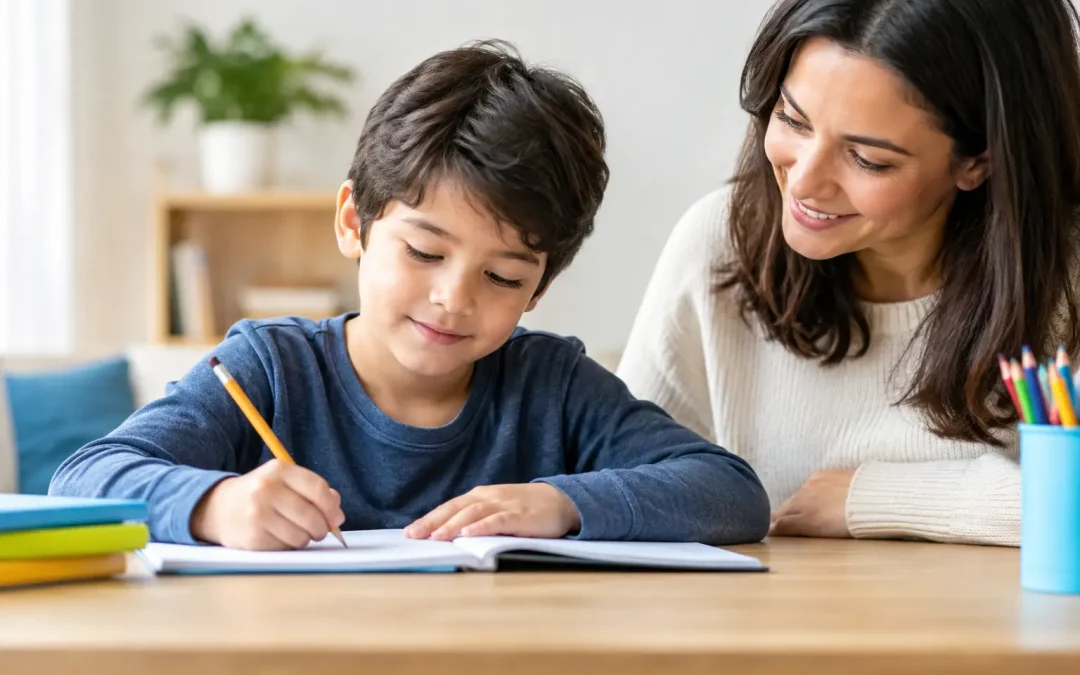
A child who refuses to put shoes on, leaves homework until the last minute, or gives up when a task feels difficult is not necessarily being lazy or disrespectful. They are still learning how to manage feelings, attention, and responsibility. Knowing how to build discipline in children starts with that understanding: discipline is not about making children obedient through fear. It is about helping them develop the habits and inner strength to do what needs to be done, even when they do not feel like it.
For parents, the goal is not a perfectly behaved child. It is a child who can listen, try again, follow through, and recover after mistakes. Those skills grow through calm leadership, clear expectations, and regular practice.
Start With Connection and Clear Expectations
Children are more likely to cooperate when they feel secure, seen, and respected. That does not mean every request needs a long negotiation. It means taking a moment to connect before correcting behavior, especially after school, during a stressful morning, or when emotions are already high.
Keep expectations simple and specific. “Be good” is too vague for most children to act on. “Put your backpack by the door, wash your hands, then come to the table” gives them a clear path to follow. Younger children may need one instruction at a time, while older children can manage a short routine independently.
Consistency matters more than a perfect speech. If screen time happens after homework on Monday, but before homework on Tuesday because everyone is tired, children quickly learn that boundaries are flexible when they push hard enough. There will be exceptions, of course. The key is making exceptions the exception, not the rule.
How to Build Discipline in Children Through Routine
A predictable routine removes many daily power struggles. When children know what happens next, they spend less energy arguing and more energy practicing responsibility. Morning routines, homework time, bedtime, and getting ready for activities are the best places to start.
Try creating a short visual or written checklist for the part of the day that causes the most stress. A young child may need pictures showing clothes, breakfast, teeth, and shoes. An older child may use a checklist for homework, packing their bag, chores, and preparing for the next day. The point is not to control every minute. It is to make responsibility visible and repeatable.
At first, stay nearby and guide them through the routine. Then slowly step back. Instead of repeatedly reminding a child to pack their sports gear, ask, “What do you need to check before we leave?” This builds ownership. It may take longer in the beginning, but it saves time and arguments over the long term.
Use Consequences That Teach, Not Shame
Every child tests limits. It is part of growing up. The most useful consequences are calm, related to the behavior, and delivered without humiliation.
If a child throws a toy after being asked to stop, the toy can be put away for a period of time. If they delay getting ready and miss part of a preferred activity, that is a natural result of the delay. If they speak disrespectfully, they can pause, calm down, and try their words again.
Avoid consequences that are too big, unrelated, or impossible to enforce. Taking away every privilege for a week because a child forgot a chore often creates resentment rather than learning. A smaller consequence that happens consistently is usually more effective.
It also helps to separate the child from the behavior. Say, “That choice was not respectful,” rather than, “You are disrespectful.” Children need to understand that they can make a poor choice and still be capable of making a better one next time.
Praise Effort, Follow-Through, and Respect
Praise can support discipline when it is specific and honest. Rather than only saying, “Good job,” name the behavior you want your child to repeat. You might say, “You started your homework without arguing,” or, “You kept practicing even when that was frustrating.”
This teaches children that discipline is built through action. They do not have to be naturally organized, talented, or confident to improve. They need to keep showing up, making an effort, and learning from setbacks.
Be careful not to praise only outcomes. A child who receives attention only for winning, getting top grades, or performing perfectly may begin to avoid challenges that could expose mistakes. Notice courage, patience, preparation, and persistence too. Those are the qualities that carry children through difficult moments at school, at home, and with friends.
Let Children Practice Responsibility
Discipline cannot grow if adults do everything for a child. Giving age-appropriate responsibility sends a powerful message: “You are capable, and your contribution matters.”
A younger child can help put away toys, feed a pet with supervision, or bring their laundry to the basket. School-age children can set the table, organize their bag, help prepare a meal, and manage a simple weekly chore. Teenagers can take greater ownership of school deadlines, household tasks, and planning ahead.
They will not always do these jobs perfectly. That is part of the learning process. Resist the urge to redo every task in front of them. If the bed is not neatly made or the dishwasher is loaded imperfectly, offer one helpful tip and let practice do the rest. High standards are valuable, but progress comes before perfection.
Model the Discipline You Want to See
Children notice far more than they are told. If adults regularly lose their temper, abandon commitments, or ignore household rules, children receive mixed messages. No parent gets this right every day, but showing your own effort matters.
Let your child see you prepare for the day, finish a task you would rather avoid, apologize when you make a mistake, or take a short pause when you are frustrated. These are practical lessons in self-control.
When you do lose patience, repair the moment. A simple, sincere apology teaches accountability: “I was frustrated, but I should not have shouted. I am sorry. Let’s try that again.” This does not weaken your authority. It shows that respect applies to everyone in the family.
Give Children a Place to Work Toward Goals
Children often develop discipline more naturally when they have a meaningful activity that asks them to practice, listen, and improve over time. Sports, music, dance, team activities, and martial arts can all provide that structure. The right activity depends on your child’s personality, interests, and comfort level.
Freestyle kickboxing, for example, gives children clear routines, achievable goals, and regular feedback. They learn to arrive prepared, pay attention, respect instructors and training partners, and keep trying when a technique takes time to learn. The physical challenge can be especially helpful for children who have plenty of energy but need a positive place to direct it.
At Taylor Martial Arts, children are encouraged to build focus, confidence, respect, and self-control in a supportive class environment. Progress is earned through regular effort, not by being the loudest, fastest, or most experienced person in the room.
Keep the Long View
Discipline is not built through one strict rule, one consequence, or one successful week. It grows in ordinary moments: putting shoes away, trying homework again, speaking respectfully after being corrected, and turning up to practice when motivation is low.
Some seasons will feel harder than others. A tired child, a family schedule change, school stress, or a developmental stage can affect behavior. When that happens, return to the basics: fewer instructions, clearer routines, calm consequences, and plenty of encouragement for effort.
The child who learns that they can pause, reset, and try again is building something far more valuable than compliance. They are learning to trust their own ability to handle challenges, one small responsible choice at a time.
Recent Comments