
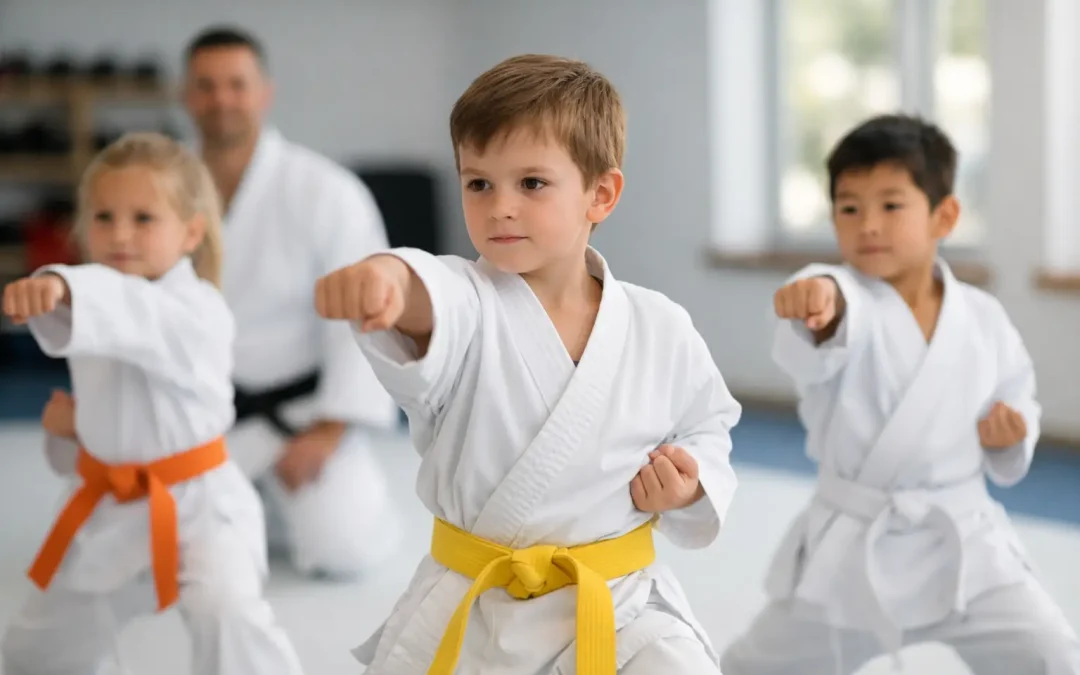
A child who finds it hard to sit still at school may need a positive place to move with purpose. A quiet child may need opportunities to speak up, try something challenging, and see their own progress. Parents looking for structured martial arts programmes for children are often looking for more than a weekly activity. They want a routine that helps their child grow stronger, calmer, more confident, and more responsible.
Freestyle kickboxing can provide that structure when it is taught in an age-appropriate, supportive setting. Children learn practical movement and self-defense skills, but they also learn how to listen, follow instructions, manage emotions, and keep working when something feels difficult. Those lessons can carry into home, school, friendships, and every new challenge ahead.
Why structure matters in children’s martial arts
Children thrive when they know what is expected of them. A well-run martial arts class has a clear beginning, middle, and end. Students arrive, line up, warm up, practice specific skills, work with partners safely, and finish with a sense of achievement. This routine gives children security while still keeping training active and enjoyable.
Structure is not about making every child the same. It is about giving each student a reliable framework in which to improve. The child with lots of energy learns to channel it. The child who lacks confidence gets small, manageable chances to step forward. The child who gives up quickly learns that progress comes from practice, not perfection.
At the same time, structure should never mean pressure without encouragement. Children need coaching that is firm, fair, and positive. They need to understand why rules matter, especially when practicing kicks, punches, movement, and partner drills. Respect for instructors, training partners, and the class environment makes training safer and helps children feel part of something bigger than themselves.
What structured martial arts programs for children should include
A good program does more than teach a collection of techniques. It builds skills in the right order and gives children goals they can understand. Beginners should not be expected to perform advanced moves before they have learned stance, balance, coordination, control, and safe practice.
Age-appropriate coaching
A preschool-aged child and a teenager do not learn in the same way. Younger children benefit from short activities, simple instructions, movement games, and lots of praise for effort. Their training may focus on balance, coordination, awareness, listening, and taking turns.
As children grow, they can handle more detailed technique, greater physical challenges, and stronger personal responsibility. Older students can work on combinations, controlled partner drills, fitness, practical self-defense awareness, and leadership in class. The best programs meet children where they are rather than expecting them to fit one pace or teaching style.
Clear goals and visible progress
Children are motivated when they can see that their effort leads somewhere. Belt or grade progression can be valuable because it gives students a clear goal to work toward. More importantly, it teaches that recognition is earned through attendance, attitude, focus, effort, and developing skill over time.
A grade should not be treated as a quick reward for simply showing up. It should represent progress that a child can feel proud of. That balance matters. Goals should be challenging enough to build resilience, but achievable enough that students remain encouraged and engaged.
Safe, controlled partner work
Martial arts training is not about teaching children to be aggressive. It is about teaching them control. In a structured class, students learn when to use techniques, how to work at the right level of contact, and why protecting their partner is part of being a good martial artist.
Partner drills can be especially helpful for confidence. A child learns to hold pads, communicate clearly, judge distance, and stay calm while another student moves toward them. These are practical skills, but they also help children become more aware, composed, and respectful in everyday situations.
Consistency and accountability
Real confidence is built through repetition. Attending one class can make a child feel excited. Attending regularly gives them time to improve their fitness, sharpen their coordination, and develop a stronger mindset.
This is where parents play an important role. A regular class time, prepared kit, and positive conversation after training help children understand that their commitment matters. Some weeks will feel easy, while others may bring frustration or tiredness. Showing up through both is a valuable lesson in discipline.
The benefits parents often notice outside class
The changes children make in martial arts do not always arrive loudly. A child may not suddenly become outgoing or perfectly organized. More often, parents notice gradual changes: better listening, a willingness to try, improved posture, more patience, or a calmer response when things do not go their way.
Confidence is one of the biggest benefits, but it should be understood properly. Confidence is not about being the loudest person in the room. It is the belief that a child can handle a challenge, ask for help, recover from mistakes, and keep going. Martial arts gives children regular proof that they can do hard things.
Focus can improve too. During training, children must listen for instructions, remember a sequence, watch their space, and respond at the right moment. These demands are active and practical, which can make focus easier to develop than in a purely seated setting. Results vary from child to child, and martial arts is not a replacement for professional support where that is needed. Still, many families find that a positive physical routine supports concentration and emotional wellbeing.
Fitness is another clear benefit. Kickboxing training develops coordination, mobility, balance, stamina, and body awareness. For children who do not enjoy traditional team sports, martial arts can offer a different route into regular activity. Progress is personal, so a child does not need to be the fastest or strongest to feel successful.
Choosing the right class for your child
The right martial arts school should feel welcoming from the first visit. Your child should be able to join as a beginner without feeling embarrassed for not knowing the moves. Instructors should set clear boundaries while taking time to explain, encourage, and notice individual effort.
Ask how classes are divided by age and experience, how safety is managed, and what students are expected to do to progress. Look for a club that values behavior and respect alongside physical ability. A highly competitive environment can suit some children, but it is not the best fit for every family. For many, a community-focused class with clear standards offers the strongest foundation.
It also helps to watch how instructors speak to children when they make mistakes. Correction should be direct, but never humiliating. Children need to understand that mistakes are part of training. The goal is not to get every technique right immediately. The goal is to learn, adjust, and return stronger next time.
Building confidence one class at a time
At Taylor Martial Arts, children are encouraged to train with purpose, support their classmates, and take pride in steady improvement. Freestyle kickboxing gives them an energetic outlet, while structured coaching gives that energy direction. From their first stance to their next grade, students learn that discipline and confidence are built through consistent action.
The best first step is simply to let your child experience a class. Give them the space to move, learn, and be encouraged by a supportive group. A free trial can help your family see whether the routine, coaching, and community feel right – and it may be the start of a habit that helps your child become their best self.
Recent Comments