
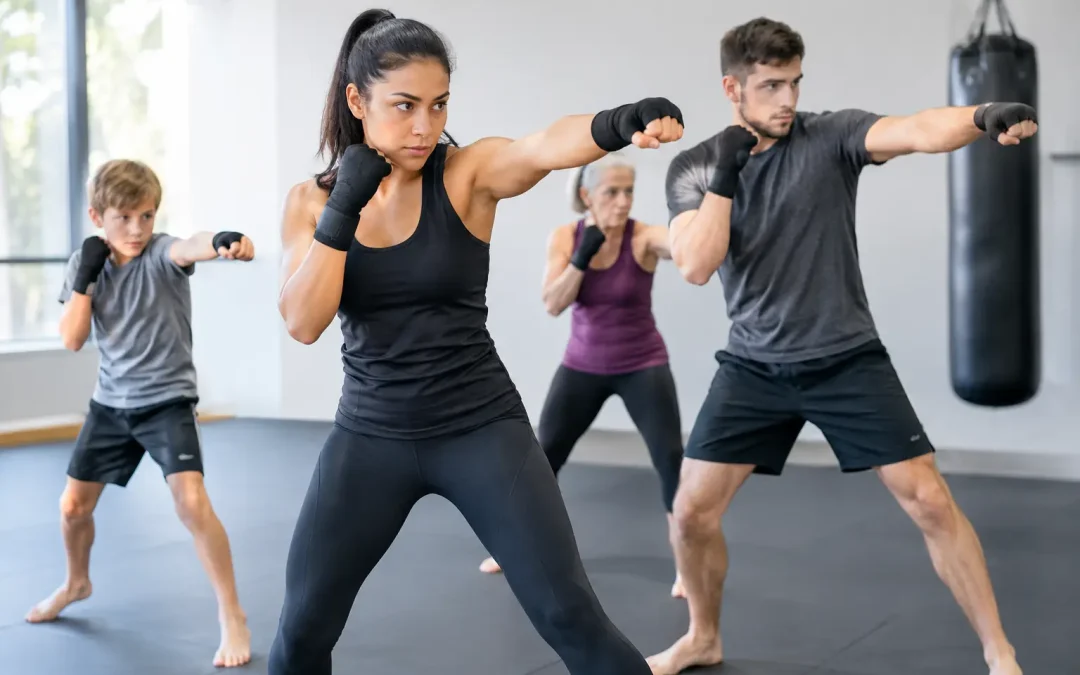
A roundhouse kick only looks simple once the body has learned to work as one unit. The standing foot turns, the hips rotate, the core stays engaged, the hands remain up, and the eyes stay focused. That is where the real kickboxing coordination benefits begin: not in throwing harder techniques, but in learning to control movement with purpose.
For children, teens, and adults, this kind of training can make everyday movement feel more confident and capable. It also creates a valuable habit – paying attention, following instruction, practicing patiently, and improving one small detail at a time.
Why kickboxing builds coordination
Coordination is the ability to make different parts of the body work together at the right time. In freestyle kickboxing, students are regularly asked to combine footwork, hand techniques, kicks, defensive movements, posture, and awareness of space. The brain has to plan the action while the body carries it out.
A beginner may start by practicing a simple jab while standing in a balanced stance. As confidence grows, that jab can be combined with a step, a cross, a defensive block, or a kick. Each new combination asks the student to stay calm and organized rather than rushing ahead.
This is one reason kickboxing is so rewarding for people at different stages of life. Children develop fundamental movement patterns through age-appropriate drills. Teenagers can improve body awareness during a period of rapid growth. Adults can challenge routines that may have become too sedentary or repetitive.
The coordination skills developed in class
Balance and body control
Strong coordination starts with balance. Before a student can kick effectively, they need to support their body weight on one leg without leaning, hopping, or losing their guard. Controlled kicking drills teach students to shift weight smoothly, stabilize their core, and return to a safe stance after each technique.
Better balance is useful beyond martial arts. It can support posture, movement confidence, and physical independence at every age. For children, it may mean feeling more sure-footed during games and school activities. For adults, it can mean greater awareness of how they move through daily life.
Balance does not improve by forcing high kicks too early. In a well-structured class, students build it through correct stance, controlled repetitions, and techniques suited to their current ability. Progress is earned, and that is part of the lesson.
Hand-eye and foot-eye coordination
Punching pads, reacting to a target, and placing a kick accurately all require timing. Students learn to judge distance, choose the right technique, and make contact with control. The goal is not wild speed. It is accurate movement with attention to safety.
Pad work is particularly useful because it gives immediate feedback. If a punch lands off-center or a kick is mistimed, the student can adjust on the next repetition. Over time, those adjustments become more natural. Students begin to recognize where their body is in relation to a target without having to stop and think through every step.
Timing and rhythm
Kickboxing has rhythm. A student might step, punch, punch, then move away. They may block, counter, and reset. Learning these patterns develops a sense of timing that cannot be built by standing still.
This is especially valuable for children who find it difficult to slow down or follow sequences. A combination gives them a clear task: listen, remember, move, and finish with control. They learn that getting the order right matters just as much as effort.
Adults often benefit from this challenge too. Coordinated combinations demand focus, offering a break from screens, work pressures, and the mental clutter of a busy week. For an hour, the next movement becomes the priority.
Left-right awareness and coordination
Many people naturally favor one side. Kickboxing encourages students to practice both sides, whether they are punching with the lead hand, kicking with the rear leg, or moving in either direction. This helps prevent training from becoming one-sided and improves awareness of how both sides of the body work.
Working on the less comfortable side can feel frustrating at first. That is normal. The weaker side is often where students learn the most about patience, concentration, and consistent practice. Nobody needs to be perfect on day one. They simply need to keep showing up and giving both sides their attention.
Kickboxing coordination benefits for children
For young children, coordination training should feel positive, active, and achievable. They do not need complex fighting skills. They need safe opportunities to run, stop, balance, follow direction, use both hands and feet, and learn how to manage their energy.
Martial arts classes give those movements structure. A child is not simply told to move around. They are shown how to stand with confidence, how to listen for a command, how to take turns, and how to use their body respectfully. This can be particularly helpful for parents who want an activity that supports physical development alongside character growth.
As children move into youth classes, coordination becomes linked with responsibility. They learn to hold their guard, keep an appropriate distance from a partner, control the power of a technique, and remain focused when a drill becomes more challenging. These are practical skills, but they also reinforce discipline and respect.
Confidence often grows quietly. A child who once struggled to remember a combination may later lead it with clear focus. A student who hesitated to kick a pad may begin to move with real purpose. Those moments matter because they show children that improvement comes from practice, not from being naturally good at something straight away.
Benefits for teens and adults
Teenagers need physical outlets that feel purposeful. Kickboxing can provide a positive challenge while helping them build coordination, fitness, and self-belief. As techniques become more detailed, teens learn to respond thoughtfully rather than react impulsively. They also have the chance to train alongside others in an environment built on mutual respect.
For adults, coordination training can be a welcome change from exercise that feels repetitive. Punching and kicking combinations engage the whole body while requiring concentration. Rather than counting down minutes on a machine, students stay involved in each drill.
The benefits depend on consistency and the type of class. Someone training once a week may notice improved awareness, movement confidence, and enjoyment. Someone training more regularly may develop sharper timing and more controlled technique. Neither approach has to be all-or-nothing. A sustainable routine is more valuable than an intense start that is impossible to maintain.
Coordination supports practical self-defense
Self-defense is not about performing a complicated sequence under pressure. It is about awareness, balance, controlled movement, and making sensible decisions. Coordination supports all of these.
When students practice keeping their hands up, moving away from a target, maintaining a stable stance, and responding to instruction, they are developing habits that can support personal safety. Practical self-defense also includes confidence, boundary awareness, and the ability to stay composed.
Training should always be responsible. Students need to understand that martial arts skills are taught for protection, discipline, and personal growth – not for showing off or starting conflict. A respectful class culture makes this message clear from the beginning.
How to get more from coordination training
The best results come from practicing with attention. Students should focus on correct technique before trying to go faster. A controlled low kick with good balance is more valuable than a high kick that causes the student to fall out of position.
It also helps to be patient with the learning process. Some combinations will feel awkward at first, especially when changing stance or using the non-dominant side. Regular practice turns unfamiliar movements into familiar ones.
At Taylor Martial Arts, classes are designed to help beginners and experienced students progress in a supportive setting. Instructors can adapt drills so that each student has a clear challenge without feeling overwhelmed. Children, teens, and adults can build skills at a pace that supports long-term confidence.
A free trial is a simple way to see how kickboxing feels in practice. The first class is not about proving anything. It is about taking that first focused step, meeting a welcoming community, and giving your body and mind something positive to work toward.
The next time a combination feels difficult, stay with it. One well-balanced stance, one accurate punch, and one controlled kick can become the foundation for stronger movement, sharper focus, and confidence that carries well beyond the training floor.
Recent Comments