
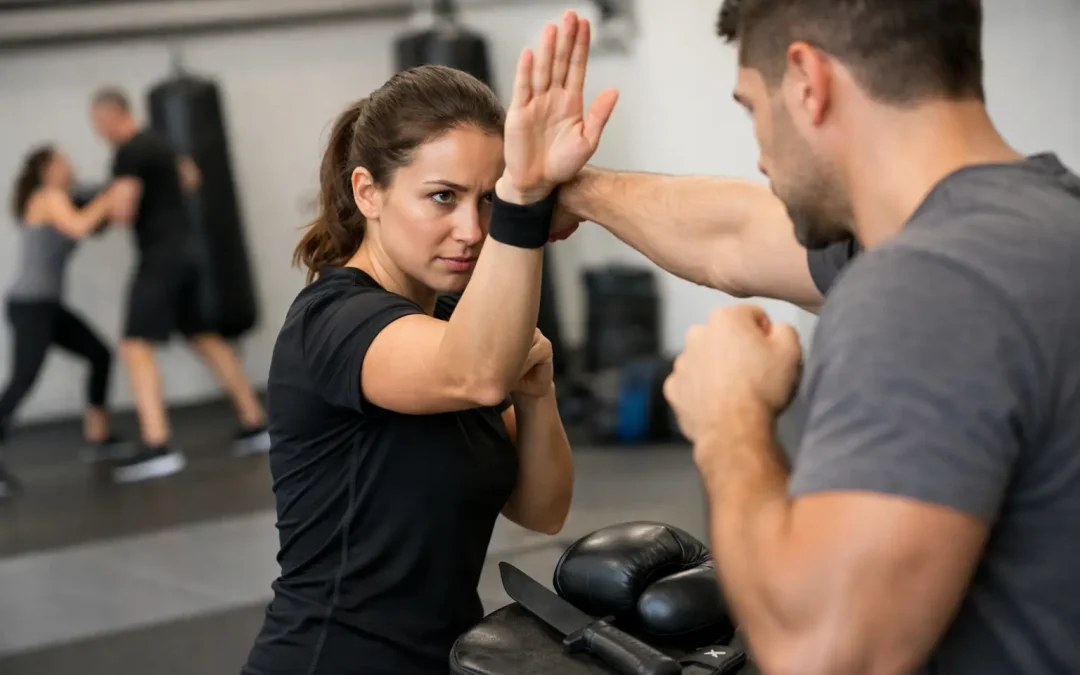
Most adults do not need to become fighters. They need a clear guide to self defence for adults that helps them recognize trouble early, make confident decisions under pressure, and leave safely when something feels wrong. Real self-defense starts long before a punch or kick. It starts with awareness, boundaries, and the belief that your safety is worth protecting.

For many people, the hardest part is not a lack of strength. It is uncertainty. What should you say when someone is making you uncomfortable? When should you walk away? What can you realistically do if someone grabs you? Practical training replaces panic with simple habits you can build over time.

Self-defense begins with awareness

Awareness is not about being frightened or suspicious of everyone around you. It is about staying present. When you are walking to your car, using public transportation, or arriving home after work, look up, notice who is nearby, and keep your phone away when possible.

Pay attention to behavior rather than trying to judge people by appearance. Someone who keeps closing the distance after you move away, blocks your path, ignores a clear answer, or pressures you to go somewhere else is giving you useful information. Trust that information.

Small choices can create more options. Park in a well-lit area when you can. Let someone know your plans if you are meeting a new person. Keep one ear free if you wear headphones outdoors. Know where the exits are when you enter a café, gym, or venue. These are not dramatic measures. They are calm, practical habits that make it easier to act early.

Use your voice and set a boundary

A strong boundary is often one of the most useful self-defense tools an adult can have. You do not owe a stranger a smile, an explanation, or a polite conversation when you feel unsafe. Clear language can interrupt unwanted behavior, draw attention from people nearby, and give you a moment to move away.

Keep your words short and direct: “Stop.” “Back up.” “Do not touch me.” “I said no.” Say them loudly enough to be heard, without getting drawn into an argument. The goal is not to win a debate or prove that the other person is wrong. The goal is to create distance and get to safety.

Your posture matters too. Stand balanced, with your hands naturally held in front of your body as you speak. This can look non-aggressive while helping you protect your personal space and react quickly if necessary. Avoid letting someone trap you against a wall, car, doorway, or corner. Move toward open space, other people, staff, security, or an exit.

Make leaving the goal, not winning

Movies can make self-defense look like a contest with a clear winner. Real situations are unpredictable. There may be uneven ground, poor lighting, more than one person involved, or a weapon you cannot see. Even a trained person can be injured in a confrontation.

That is why the best outcome is usually escape. If you can run, move toward people, get behind a locked door, call emergency services, or hand over property without being physically harmed, those are successful choices. A wallet, bag, or phone can be replaced. Your health cannot be treated so casually.

This does not mean adults should feel helpless. It means you should train with the right priorities. Physical self-defense is there to help you break contact, create space, protect yourself while moving, and get away. It is not about seeking a fight or staying involved longer than necessary.

Learn simple skills under realistic pressure

A useful guide to self defence for adults should focus on skills that are simple enough to remember when your heart is racing. Fancy combinations may look impressive, but under stress most people rely on what they have practiced repeatedly.

In a well-run adult martial arts class, beginners can learn how to stand with balance, move without crossing their feet, manage distance, and use their hands to protect their head and body. They can also practice responding to common problems such as an unwanted grab, someone crowding their space, or being pushed off balance.

The most valuable training is controlled and progressive. At first, you might practice slowly with a cooperative partner so you understand the movement. As your confidence grows, drills can add safe resistance, verbal pressure, movement, and decision-making. The aim is not to make training intimidating. It is to make your response more reliable.

Freestyle kickboxing can be particularly helpful for adults because it develops timing, footwork, coordination, fitness, and composure. You learn that distance changes quickly and that staying balanced matters. You also learn that effective movement does not need to be complicated. Consistent practice makes a difference.

Build fitness that supports your safety

Self-defense is not only about technique. Your ability to move matters. Being able to walk or run away, get up from the floor, keep your balance, and recover your breath can give you valuable options.

You do not need to arrive at class already fit. In fact, many adults begin martial arts because they want a more enjoyable reason to exercise. Regular training can improve cardiovascular fitness, mobility, strength, and coordination while giving each session a purpose beyond counting repetitions.

Focus on steady progress. One or two sessions each week can build real momentum when paired with walking, basic strength work, and enough recovery. If you have an injury, limited mobility, or a health condition, let your instructor know. Good training can be adapted, but pretending discomfort does not exist is never a sign of toughness.

Choose a class where beginners are respected

The right environment can shape whether you continue training long enough to gain confidence. Look for an instructor who explains why a skill matters, teaches safely, and does not make beginners feel embarrassed for asking questions. You should expect structure, clear expectations, and respect between training partners.

A supportive class does not mean an easy class. You will be challenged to focus, practice consistently, and take responsibility for your progress. But challenge should come with encouragement. Everyone in the room, from the newest adult student to the most experienced practitioner, should understand that control and respect are part of martial arts.

At Taylor Martial Arts, adult training is built around practical progress, personal discipline, and a welcoming community. You do not need previous experience to start. The first step is simply showing up, learning the basics, and giving yourself permission to be a beginner.

Understand the limits of self-defense

No class, technique, or guide can guarantee safety in every situation. Stress affects memory, judgment, and physical ability. An attacker may be bigger, may have help nearby, or may be carrying a weapon. This is why awareness, avoidance, and escape remain central.

It is also wise to understand the laws where you live. Self-defense laws vary by location, but the general principle is that force should be necessary and proportionate to the immediate threat. Training should make you more responsible, not more likely to take risks or escalate conflict.

After any incident, get somewhere safe, contact emergency services if needed, and seek medical care even if you think you are fine. Adrenaline can hide pain. If you have been shaken by what happened, speak with someone you trust or seek professional support. Looking after your wellbeing is part of recovery.

Practice until confidence feels natural

Confidence is not pretending that danger cannot happen. It is knowing you have a plan: notice early warning signs, use your voice, move toward safety, and rely on simple skills if you have no other choice. That confidence grows quietly through repetition.

Start with one practical action this week. Take a beginner class, practice speaking a firm boundary out loud, or make a habit of looking up and noticing your surroundings on your next walk. A safer, stronger version of you is built one focused session at a time.

Most adults do not need to become fighters. They need a clear guide to self defence for adults that helps them recognize trouble early, make confident decisions under pressure, and leave safely when something feels wrong. Real self-defense starts long before a punch or kick. It starts with awareness, boundaries, and the belief that your safety is worth protecting.

For many people, the hardest part is not a lack of strength. It is uncertainty. What should you say when someone is making you uncomfortable? When should you walk away? What can you realistically do if someone grabs you? Practical training replaces panic with simple habits you can build over time.

Self-defense begins with awareness

Awareness is not about being frightened or suspicious of everyone around you. It is about staying present. When you are walking to your car, using public transportation, or arriving home after work, look up, notice who is nearby, and keep your phone away when possible.

Pay attention to behavior rather than trying to judge people by appearance. Someone who keeps closing the distance after you move away, blocks your path, ignores a clear answer, or pressures you to go somewhere else is giving you useful information. Trust that information.

Small choices can create more options. Park in a well-lit area when you can. Let someone know your plans if you are meeting a new person. Keep one ear free if you wear headphones outdoors. Know where the exits are when you enter a café, gym, or venue. These are not dramatic measures. They are calm, practical habits that make it easier to act early.

Use your voice and set a boundary

A strong boundary is often one of the most useful self-defense tools an adult can have. You do not owe a stranger a smile, an explanation, or a polite conversation when you feel unsafe. Clear language can interrupt unwanted behavior, draw attention from people nearby, and give you a moment to move away.

Keep your words short and direct: “Stop.” “Back up.” “Do not touch me.” “I said no.” Say them loudly enough to be heard, without getting drawn into an argument. The goal is not to win a debate or prove that the other person is wrong. The goal is to create distance and get to safety.

Your posture matters too. Stand balanced, with your hands naturally held in front of your body as you speak. This can look non-aggressive while helping you protect your personal space and react quickly if necessary. Avoid letting someone trap you against a wall, car, doorway, or corner. Move toward open space, other people, staff, security, or an exit.

Make leaving the goal, not winning

Movies can make self-defense look like a contest with a clear winner. Real situations are unpredictable. There may be uneven ground, poor lighting, more than one person involved, or a weapon you cannot see. Even a trained person can be injured in a confrontation.

That is why the best outcome is usually escape. If you can run, move toward people, get behind a locked door, call emergency services, or hand over property without being physically harmed, those are successful choices. A wallet, bag, or phone can be replaced. Your health cannot be treated so casually.

This does not mean adults should feel helpless. It means you should train with the right priorities. Physical self-defense is there to help you break contact, create space, protect yourself while moving, and get away. It is not about seeking a fight or staying involved longer than necessary.

Learn simple skills under realistic pressure

A useful guide to self defence for adults should focus on skills that are simple enough to remember when your heart is racing. Fancy combinations may look impressive, but under stress most people rely on what they have practiced repeatedly.

In a well-run adult martial arts class, beginners can learn how to stand with balance, move without crossing their feet, manage distance, and use their hands to protect their head and body. They can also practice responding to common problems such as an unwanted grab, someone crowding their space, or being pushed off balance.

The most valuable training is controlled and progressive. At first, you might practice slowly with a cooperative partner so you understand the movement. As your confidence grows, drills can add safe resistance, verbal pressure, movement, and decision-making. The aim is not to make training intimidating. It is to make your response more reliable.

Freestyle kickboxing can be particularly helpful for adults because it develops timing, footwork, coordination, fitness, and composure. You learn that distance changes quickly and that staying balanced matters. You also learn that effective movement does not need to be complicated. Consistent practice makes a difference.

Build fitness that supports your safety

Self-defense is not only about technique. Your ability to move matters. Being able to walk or run away, get up from the floor, keep your balance, and recover your breath can give you valuable options.

You do not need to arrive at class already fit. In fact, many adults begin martial arts because they want a more enjoyable reason to exercise. Regular training can improve cardiovascular fitness, mobility, strength, and coordination while giving each session a purpose beyond counting repetitions.

Focus on steady progress. One or two sessions each week can build real momentum when paired with walking, basic strength work, and enough recovery. If you have an injury, limited mobility, or a health condition, let your instructor know. Good training can be adapted, but pretending discomfort does not exist is never a sign of toughness.

Choose a class where beginners are respected

The right environment can shape whether you continue training long enough to gain confidence. Look for an instructor who explains why a skill matters, teaches safely, and does not make beginners feel embarrassed for asking questions. You should expect structure, clear expectations, and respect between training partners.

A supportive class does not mean an easy class. You will be challenged to focus, practice consistently, and take responsibility for your progress. But challenge should come with encouragement. Everyone in the room, from the newest adult student to the most experienced practitioner, should understand that control and respect are part of martial arts.

At Taylor Martial Arts, adult training is built around practical progress, personal discipline, and a welcoming community. You do not need previous experience to start. The first step is simply showing up, learning the basics, and giving yourself permission to be a beginner.

Understand the limits of self-defense

No class, technique, or guide can guarantee safety in every situation. Stress affects memory, judgment, and physical ability. An attacker may be bigger, may have help nearby, or may be carrying a weapon. This is why awareness, avoidance, and escape remain central.

It is also wise to understand the laws where you live. Self-defense laws vary by location, but the general principle is that force should be necessary and proportionate to the immediate threat. Training should make you more responsible, not more likely to take risks or escalate conflict.

After any incident, get somewhere safe, contact emergency services if needed, and seek medical care even if you think you are fine. Adrenaline can hide pain. If you have been shaken by what happened, speak with someone you trust or seek professional support. Looking after your wellbeing is part of recovery.

Practice until confidence feels natural

Confidence is not pretending that danger cannot happen. It is knowing you have a plan: notice early warning signs, use your voice, move toward safety, and rely on simple skills if you have no other choice. That confidence grows quietly through repetition.

Start with one practical action this week. Take a beginner class, practice speaking a firm boundary out loud, or make a habit of looking up and noticing your surroundings on your next walk. A safer, stronger version of you is built one focused session at a time.