
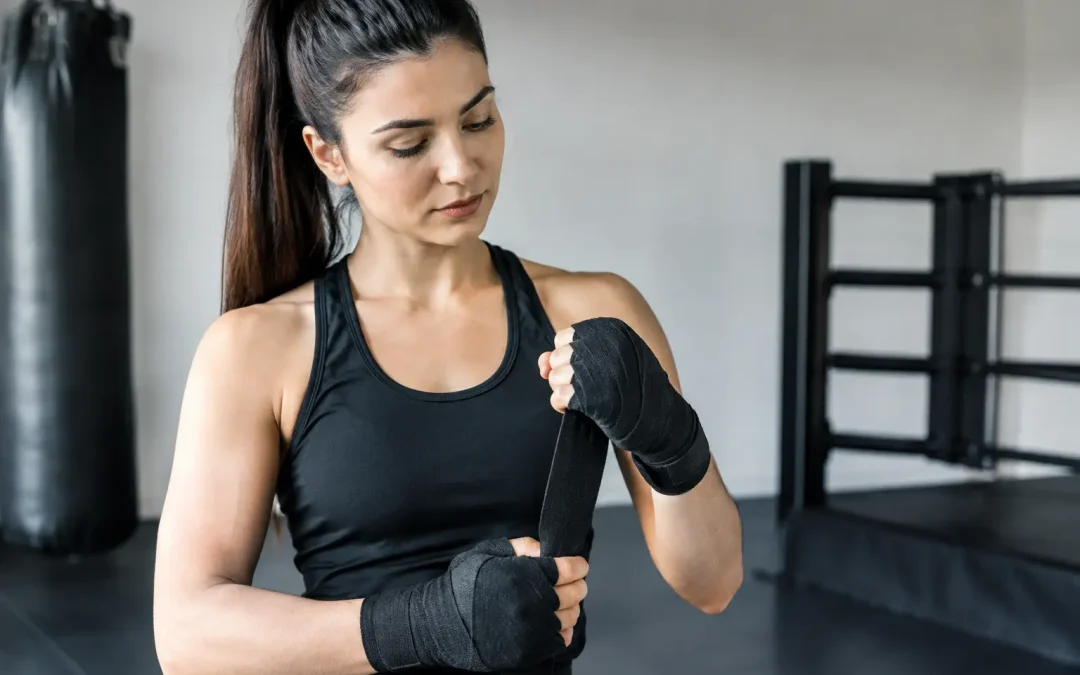
A good hand wrap should feel secure, not restrictive. Learning how to wrap hands safely is one of the first practical habits that helps kickboxing students train with confidence. It protects the small bones in the hand, supports the wrist, and gives your gloves a more comfortable fit – but only when it is done properly.
For beginners, wrapping can seem fiddly at first. That is normal. Take your time, ask your instructor to check your technique, and focus on comfort as much as tightness. A few extra minutes before class can help you train with better focus and fewer avoidable aches afterward.
Why Hand Wrapping Matters in Kickboxing
Your hands and wrists absorb force whenever you strike pads, a bag, or gloves. The knuckles are made up of small bones, while the wrist needs to stay aligned behind the fist. Hand wraps add a layer of support that helps keep everything in position when you punch with correct technique.
They also provide light compression around the hand and wrist. This can make your hands feel more stable inside boxing gloves, particularly during longer classes where sweat and repeated impact can affect your grip.
Hand wraps are not a substitute for good punching form, quality gloves, or controlled training. If your wrist bends when you strike, wrapping tighter will not solve the problem. Slow down, listen to your coach, and work on keeping your knuckles, fist, and forearm in a straight line.
Choose the Right Wraps Before You Start
Most adult kickboxing students use traditional cotton or elastic wraps that are around 180 inches long. They provide enough material to support the wrist, cover the knuckles, and create a comfortable layer between the hand and glove. Shorter wraps can work well for smaller hands and younger students, but they may not offer the same amount of coverage.
Start with clean, dry wraps that have no tears or stretched-out areas. Fasten the hook-and-loop closure before rolling them up after each use so they do not tangle. Fresh wraps are also more hygienic. Gloves can hold moisture, so washing your wraps regularly is a simple sign of respect for your training partners and yourself.
If you are buying your first pair, ask your instructor what length and style is suitable for your age, hand size, and class. At Taylor Martial Arts, students are encouraged to build safe habits from the beginning, rather than rushing through the basics.
How to Wrap Hands Safely Step by Step
Before you begin, hold your hand open with your fingers relaxed and slightly spread. Do not wrap with a clenched fist. A wrap that feels fine while your hand is open can become painfully tight when you make a fist inside a glove.
1. Secure the thumb loop
Place the loop over your thumb, with the wrap traveling across the back of your hand. Check that the material is not twisted. The thumb loop is there to anchor the wrap, not to pull tightly against the thumb joint.
2. Support the wrist first
Bring the wrap around your wrist two or three times. Keep it smooth and firm, but do not pull as hard as possible. You should be able to move your wrist normally, even though it feels supported.
A wrap that is too loose will slide around during class. One that is too tight can cause tingling, cold fingers, or numbness. Aim for secure and comfortable.
3. Cover the knuckles
From the wrist, bring the wrap diagonally across the back of your hand and over the knuckles. Wrap around the knuckles two or three times, depending on the length of your wrap and the size of your hands.
Keep your fingers spread gently while doing this. The padding should sit across the main knuckles, not high up on the fingers or down in the palm. This is the area that needs cushioning when you make contact with pads or bags.
4. Return to the wrist
Bring the wrap back down across the back of your hand and around the wrist once. This creates a supportive connection between the knuckle padding and the wrist support. Keep each layer flat. Bunched material can become uncomfortable very quickly inside a glove.
5. Wrap between the fingers carefully
Many kickboxing wrapping methods use passes between the fingers to help hold the knuckle padding in place. Bring the wrap from the wrist, between the ring finger and little finger, then across the back of the hand and around the wrist. Repeat between the middle and ring fingers, then between the index and middle fingers.
Do not pull hard between the fingers. The material should lie flat and feel secure, not cut into the skin. If this part feels awkward, it is worth asking for hands-on guidance after class. There are several safe wrapping styles, and your instructor may teach a version that suits the club’s training approach.
6. Give the thumb light support
Wrap once around the base of the thumb, then bring the material back across the hand. Avoid wrapping directly around the thumb joint several times. Your thumb needs support, but it also needs room to move naturally.
7. Finish at the wrist
Use the remaining length to make smooth passes around the wrist. Fasten the closure firmly on the underside or side of the wrist, where it will not rub against your glove. Never place the closure across the knuckles.
Make a fist, open your hand, and rotate your wrist gently. Your hand should feel protected without pressure points, pinching, or loss of movement.
Check Your Wraps Before Putting on Gloves
A quick safety check takes less than a minute. Make sure your fingertips are warm and their normal color. If you feel numbness, tingling, throbbing, or a strong pulse in your hand, unwrap and start again with less tension.
Look at the knuckle padding, too. It should stay centered when you close your fist. If it slides toward one side, the wrap may not protect you evenly. Rewrap it now rather than hoping it will settle once class starts.
Finally, put your gloves on and close your fists. If the gloves suddenly feel far too tight, do not force them. You may have added too many layers around the palm or wrapped the knuckles too heavily for the glove size. Hand wraps should support your hands, not make your gloves uncomfortable.
Common Hand-Wrapping Mistakes to Avoid
The most common mistake is pulling every pass as tightly as possible. More pressure does not mean more protection. Tight wraps can restrict circulation and distract you from training. Consistent, even tension is safer than force.
Another mistake is leaving the wrist unsupported while using all the material around the knuckles. Padding matters, but a stable wrist is just as important for safe punches. Build support from the wrist first, then cover the knuckles, and finish by reinforcing the wrist.
Avoid wrapping over jewelry, watches, or bandages that create lumps. Remove rings before training, even if they feel small or secure. Also, do not continue training through sharp pain in the hand, wrist, or thumb. Stop, tell your instructor, and seek appropriate medical advice if pain persists or follows an injury.
Helping Children Learn to Wrap Their Hands
Children may need help wrapping their hands before class, especially when they are new to kickboxing. Keep the process calm and consistent. A parent or instructor can help younger students learn the order: wrist, knuckles, wrist, fingers, thumb, and finish.
For children, comfort matters even more than a tightly packed wrap. Check their fingers after wrapping and encourage them to speak up if anything feels sore, itchy, or numb. As they grow in confidence, learning to wrap independently can become a small but valuable lesson in discipline, preparation, and personal responsibility.
A safe hand wrap is part of showing up ready to learn. Practice the routine, ask questions when you need help, and let each careful step reinforce the habits that make training safer, stronger, and more enjoyable.
Recent Comments