
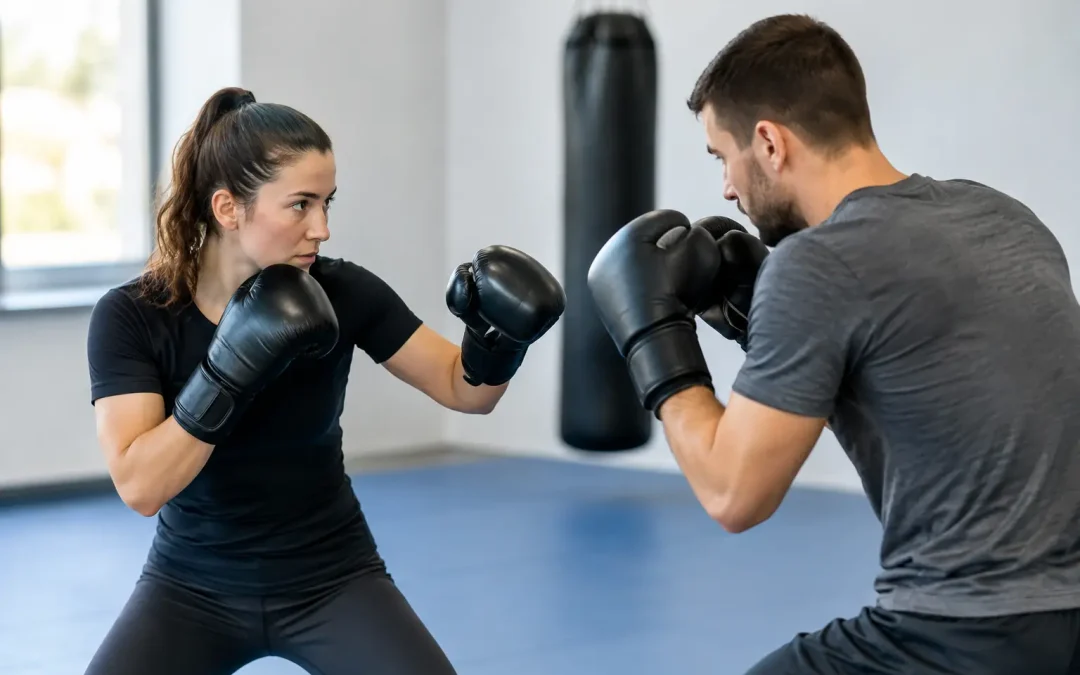
Sparring should never feel like a test of who can hit hardest. In a good martial arts class, it is a chance to use what you have learned while staying calm, respectful, and aware of your partner. Learning how to practise controlled sparring helps children, teens, and adults develop real confidence because they can apply their skills without fear or unnecessary risk.
Controlled sparring is not about pretending the contact is not real. It is about making smart choices: choosing the right speed, keeping your technique clean, responding to your partner, and stopping when the instructor calls time. Those habits support safer training and stronger martial arts skills for life.
What controlled sparring is meant to teach
Pads and drills help you build technique. Sparring teaches you what happens when another person moves, changes distance, and gives you something to react to. It develops timing, balance, decision-making, composure, and respect under pressure.
For younger students, that pressure may be very light. A child might work on moving safely, recognizing a simple opening, and touching a target with control. Teenagers and adults may add more combinations, defense, and movement. The level changes, but the purpose stays the same: train with a partner, not against an enemy.
A controlled round also teaches self-discipline. You may feel excited after landing a clean technique or frustrated when your partner catches you off guard. Sparring is where students learn to reset, listen, and make a better choice on the next exchange. That is a valuable skill inside and outside the training room.
How to practise controlled sparring before you begin
Good sparring starts before anyone throws a technique. Arrive focused, wear the required protective equipment, and make sure it fits properly. Gloves, shin guards, mouthguards, and other equipment used in class are there to reduce risk, but equipment does not replace control.
Listen carefully to the rules for that session. Your instructor may set limits on contact, targets, techniques, or speed. Those limits are not there to make sparring less useful. They give everyone a clear framework in which they can learn confidently.
It also helps to check in with your partner. A simple question such as, “Would you like to go light?” sets the right tone. If one person is new, smaller, returning after time away, or feeling nervous, adjust to them. The strongest training partners are not the ones who overwhelm others. They are the ones who help others improve.
Match the pace before you match the technique
Start slower than you think you need to. At a controlled pace, you can see openings, protect yourself, and notice when your partner is uncomfortable. When speed rises too quickly, technique often becomes messy and people begin reacting emotionally rather than thoughtfully.
A useful goal is to make every technique clear enough that your partner can recognize it. A light, accurate touch is more valuable than a wild strike thrown at full speed. As control improves over time, your instructor may ask you to work at a faster pace. Progress should be earned, not rushed.
Use control in every exchange
Control is more than pulling a punch at the last second. It begins with good posture, balance, and distance. If you are leaning forward, swinging widely, or chasing your partner around the floor, it becomes harder to stop safely.
Keep your guard up, move with purpose, and use techniques you can perform correctly. A simple jab, front kick, or defensive step done with balance will teach more than a complicated combination you cannot yet control. This is especially true for beginners, who may feel pressure to do too much too soon.
Aim for appropriate targets and follow the class rules at all times. Do not use extra force because you have been hit. Do not throw a technique after the call to stop. If your partner turns away, loses balance, or needs to adjust their gear, give them space immediately.
Think of each round as a conversation. Your partner attacks, you respond. You create an opening, they make an adjustment. Neither of you needs to “win” the round for it to be productive. When both people are learning, the whole class gets better.
Breathe, stay relaxed, and avoid panic
Many students hold their breath when they first spar. This makes them tense, tired, and more likely to rush. Focus on steady breathing and relaxed shoulders. You will see more, move better, and have more control over your power.
If you feel yourself becoming frustrated, take a breath and return to the basics. Use your footwork. Keep your guard in place. Choose one or two clean techniques rather than trying to answer everything at once. Calm focus is a skill that grows through repetition.
Choose partners with respect
Training with different people is valuable because every partner brings a different height, reach, rhythm, and level of experience. However, sparring partners should be matched thoughtfully. An instructor may pair students by age, size, experience, and confidence level, particularly in children’s classes.
Being paired with a more experienced student can be helpful when they know how to lead responsibly. They can move at a suitable pace, create safe opportunities to practice, and offer encouragement. Likewise, a newer student deserves patience, clear boundaries, and the chance to learn without feeling intimidated.
If a round feels too hard, too fast, or too physical, speak up. Telling an instructor is not quitting or complaining. It is a responsible choice that protects your training and your partner. Respect includes communicating clearly when something is not right.
Learn from each round instead of judging it
The best question after sparring is not, “Did I win?” Ask, “What did I learn?” Perhaps you noticed that you drop your hands after kicking, step back in a straight line, or hesitate when someone moves forward. Those observations give you a clear focus for your next drill.
Pick one small goal at a time. You might work on maintaining distance, using your lead hand, defending a front kick, or staying balanced after a combination. This makes sparring less overwhelming and gives each round a purpose.
Parents can support younger students by praising the right things. Notice their listening, bravery, manners, focus, and willingness to try again. A child who learns to stay composed and respectful in sparring is building confidence that reaches far beyond martial arts.
Keep feedback simple and kind
If your instructor invites partner feedback, keep it useful. You might tell a partner that their footwork made them difficult to reach, or that a particular technique was well controlled. Avoid turning the conversation into criticism or advice you are not qualified to give.
Your instructor sees the bigger picture and can correct technique safely. Students should stay open to that guidance, even when it is challenging. Discipline means being willing to improve, not needing to be perfect.
When to slow down or stop
There are times when sparring should pause. Stop right away if an instructor calls stop, if equipment comes loose, if someone is hurt, or if either partner feels unwell. Never continue simply because the round has not ended.
You should also slow down when control starts to disappear. This may happen when people become tired, competitive, or overly excited. A brief reset can turn an unhelpful round into a positive one. In a family-focused martial arts community, looking after one another matters as much as individual progress.
At Taylor Martial Arts, sparring is introduced as part of structured training, with safety, respect, and age-appropriate progress at the center. Students build their skills step by step, supported by instructors and training partners who want to see them succeed.
Controlled sparring can feel challenging at first, and that is perfectly normal. Keep showing up, listen closely, and focus on being a safe, respectful partner. Every calm decision you make in a round is another step toward greater confidence, stronger technique, and becoming your best self.
Recent Comments