A good punch should feel connected, balanced, and controlled – not like you are throwing your whole body forward. Whether you are a parent helping your child begin kickboxing or an adult returning to exercise, learning how to improve punching technique safely creates a stronger foundation for fitness, practical self-defense, and confidence.
Power is not the first goal. Clean movement is. When students learn to stand well, protect themselves, and strike with correct alignment, speed and power can develop naturally over time. That approach also makes training more enjoyable and helps reduce avoidable injuries to the wrists, shoulders, and hands.
How to Improve Punching Technique Safely
The safest way to improve is to practice the basics slowly before trying to hit hard. A punch begins at the feet, travels through the legs and hips, and finishes with a controlled hand position. If one part is out of place, the punch can lose power and place unnecessary stress on the body.
Start with a balanced fighting stance. Your feet should be far enough apart to give you stability without making it difficult to move. Keep your knees softly bent, your weight centered, and your hands up near your face. Your chin should be slightly lowered, with your eyes looking forward rather than down at the floor.
For most beginners, the lead hand is used for the jab and the rear hand for the cross. The jab is quick and direct. It helps you judge distance, create space, and stay balanced. The cross uses a little more rotation from the rear foot, hip, and shoulder, but it should never pull you off balance.
A useful rule is simple: return your hand to guard as soon as the punch lands. This protects your face and encourages discipline. It also stops students from reaching forward and leaving themselves exposed.
Build Each Punch From the Ground Up
Many people focus only on what the fist is doing. In reality, safe punching starts below the waist. Your feet provide the base, your legs help drive movement, and your hips and shoulders turn together to transfer energy.
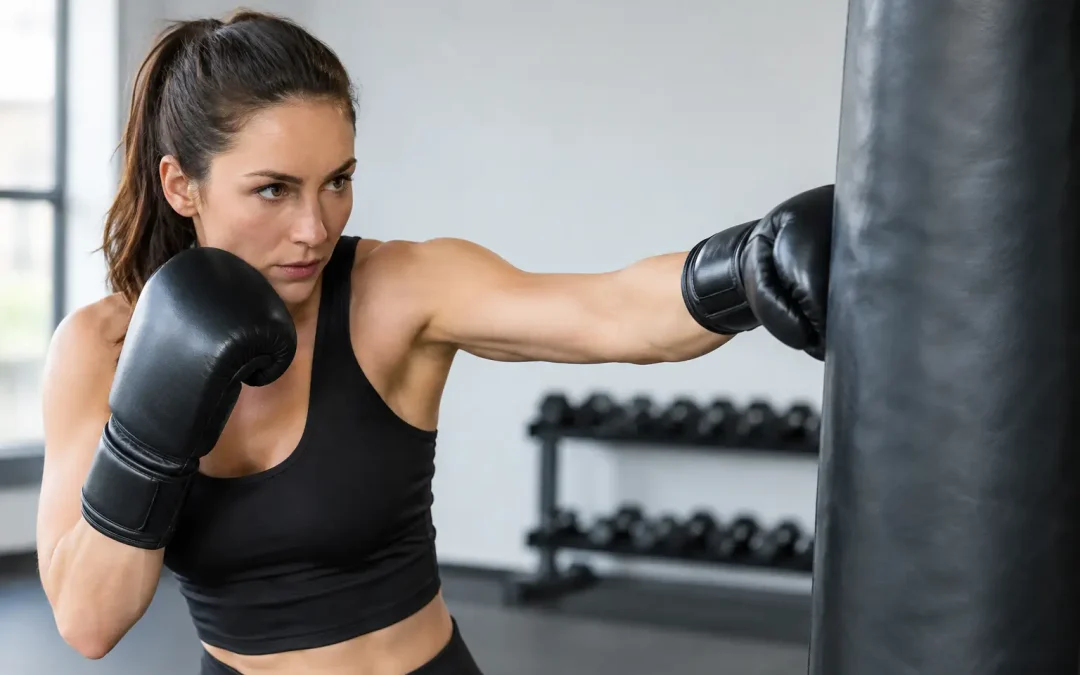
When throwing a jab, take a small extension from the lead shoulder without lifting it toward your ear. Rotate the fist so the knuckles line up at the point of contact, while keeping the wrist straight. The opposite hand stays home to protect the face.
For a cross, allow the rear heel to turn naturally as the hip and shoulder rotate forward. Do not twist your knee aggressively or spin so far that you lose your stance. Your rear hand travels in a straight line toward the target, then comes straight back to guard. Think of the body working as one unit rather than the arm doing all the work.
Children often benefit from simple cues such as “feet planted, hands up, punch straight, come back.” Adults may understand the mechanics more quickly, but they need the same reminders. The basics do not become less important as you gain experience. They become more valuable.
Keep Your Wrist and Knuckles Aligned
Hand and wrist alignment is one of the biggest safety priorities in punching practice. A bent wrist can lead to pain or injury, especially when striking a heavy bag or pads. Make a firm fist by curling the fingers in tightly and placing the thumb outside the fingers, not tucked inside them.
Aim to land with the large knuckles of the index and middle fingers, keeping the wrist in a straight line with the forearm. If the wrist bends backward, sideways, or downward on impact, stop and reset your technique before continuing.
Hand wraps and suitable boxing gloves add protection, but they do not fix poor form. They work best when paired with good coaching, controlled practice, and appropriate equipment. Young students should always use equipment that fits properly and suits their age and activity.
Slow Practice Creates Better Technique
Fast punches can look impressive, but rushing often hides mistakes. Slow shadowboxing is one of the best ways to build safe habits because there is no impact to distract you. Practice in front of a mirror when possible, checking that your hands return to guard, your shoulders stay relaxed, and your stance remains balanced.
Begin with short combinations, such as jab-cross, and focus on doing every repetition correctly. Breathe out gently as each punch goes out. Holding your breath can make your body tense and cause you to tire more quickly.
As control improves, pad work with a qualified instructor can help you learn timing, distance, and accuracy. Pads provide a moving target and allow an instructor to correct small details before they become habits. Heavy bag work can build conditioning and confidence too, but it should be introduced with supervision and sensible intensity.
Do not try to make every punch your hardest punch. A useful training session includes light technical rounds, moderate work for rhythm and combinations, and only occasional stronger strikes when your body position is sound. Control is a skill, and it matters just as much as power.
Protect Your Shoulders, Elbows, and Balance
Punching places repeated demands on the shoulders and elbows. Before training, warm up with light movement, arm circles, shoulder rolls, gentle torso rotations, and easy shadowboxing. A few minutes of preparation helps the body move more freely and gives students time to focus their attention.
Avoid locking the elbow at the end of a punch. Your arm should extend without snapping straight or forcing the joint. Keep the shoulder relaxed until the moment of the strike, then return to a comfortable guard position. If you feel a sharp pain, numbness, or continuing discomfort in the hand, wrist, elbow, or shoulder, stop training and seek advice from an appropriate health professional.
Balance is also a form of protection. If a punch makes you stumble forward, lean backward, or cross your feet, reduce the speed and return to the basics. A controlled punch leaves you ready to move, defend, or throw the next technique. An uncontrolled punch leaves you vulnerable.
Learn Distance Before Adding Power
A common beginner mistake is standing too close and crowding the punch, or standing too far away and reaching. Both can affect alignment. Good distance allows your arm to extend naturally while your body stays upright and balanced.
This is why partner drills should be introduced carefully. Partners need clear rules, appropriate protective equipment, and mutual respect. Light contact and controlled movement are far more useful for learning than trying to overwhelm someone. In family-focused martial arts training, students learn that discipline includes looking after their training partners.
For children and teens, safe technique also means training at the right pace for their development. Their coordination, attention, and confidence are still growing. Clear structure, positive correction, and age-appropriate drills help them improve without feeling pressured to perform beyond their current level.
Adults should take the same patient approach. Previous sports experience can be helpful, but it does not replace good technique. If you are new to martial arts, coming back after a break, or managing an old injury, tell your instructor early. Small adjustments can make training safer and more productive.
Practice With Purpose and Consistency
Improvement does not require hours of hard hitting. Two or three focused sessions each week can make a real difference when you pay attention to stance, guard, alignment, breathing, and recovery. Between classes, spend a few minutes rehearsing clean punches in the air rather than practicing uncontrolled strikes on unsuitable surfaces.
Set one simple goal for each session. You may focus on keeping your rear hand up, turning your hip on the cross, or maintaining a straight wrist. Small goals are easier to remember and give you a clear way to recognize progress.
At Taylor Martial Arts, students are encouraged to develop skill with patience, respect, and focus. The aim is not to look tough for one round. It is to build the confidence and control that carry into training, school, work, and everyday life.
The next time you practice, slow down enough to feel your feet, check your guard, and bring every punch back with control. Those quiet repetitions are where safe, confident technique begins.
Recent Comments