
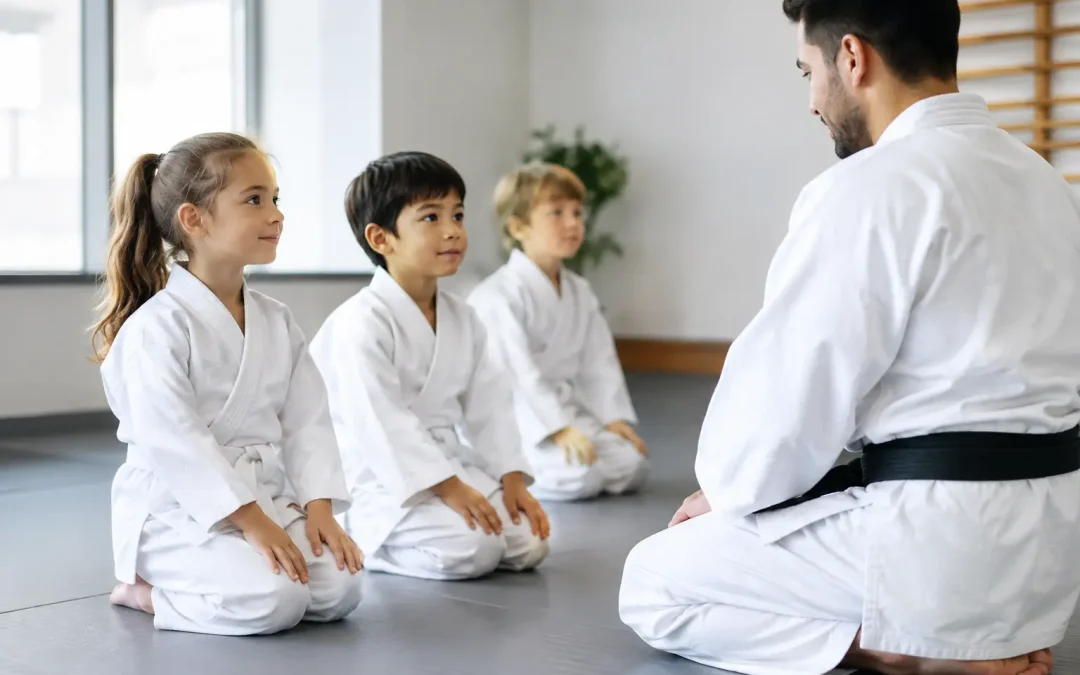
A child holds the door open for a parent, listens when a coach is speaking, or takes responsibility after making a mistake. Those moments can look small, but they reveal something meaningful. How children learn respect is not about forcing perfect manners. It is about helping them understand that their actions affect other people, their family, and their own progress.
Respect grows through repetition, clear expectations, and adults who model the behavior they want to see. At home, at school, and in a structured activity such as martial arts, children learn that respect is not a rule they switch on for grown-ups. It is a habit that helps them become more confident, thoughtful, and responsible.
Respect Starts With What Children See
Children are always watching. They notice how adults speak to one another when they are stressed, how they respond to mistakes, and whether they follow through on what they say. Telling a child to use kind words has less impact if they regularly hear shouting, sarcasm, or dismissive comments around them.
That does not mean parents have to be perfect. In fact, owning a mistake is one of the strongest lessons you can give. If you lose patience, apologize clearly: “I should not have spoken to you like that. I was frustrated, but I can handle that better.” This shows children that respect includes accountability.
The same is true of everyday interactions. Saying please and thank you, greeting neighbors, listening without interrupting, and speaking calmly during disagreements all give children a practical picture of what respect looks like.
How Children Learn Respect Through Clear Boundaries
Respect is not built by being overly strict, and it is not built by allowing every behavior to pass without correction. Children feel more secure when boundaries are calm, predictable, and fair. They need to know what is expected, what happens when they cross a line, and that adults will guide them without humiliating them.
A clear boundary might sound like: “You can be upset, but you cannot call people names.” This separates the feeling from the behavior. Children learn that emotions are normal, while also learning that they are responsible for how they express them.
Consistency matters more than long lectures. If a child ignores an instruction, a calm consequence that is connected to the behavior is usually more effective than shouting. For example, if they throw a toy after being asked to put it away, the toy can be put aside for the rest of the day. The message is simple: choices have outcomes.
This approach takes patience. Some children test limits more often, especially when they are tired, overwhelmed, or adjusting to a change at home or school. The goal is not instant obedience. The goal is to help them develop self-control over time.
Give Respect to Earn Respect
Children should be expected to show respect, but they also need to receive it. Speak to them firmly without speaking down to them. Let them explain what happened before deciding on a consequence. Offer choices when choices are appropriate, such as whether they complete homework before or after a snack.
Being respectful does not mean letting a child take charge. It means treating them as a person whose feelings and voice matter. When children experience this balance, they are more likely to offer it to others.
Why Martial Arts Is a Strong Place to Practice Respect
A good martial arts class gives children regular opportunities to practice respect in action. They learn to line up, listen closely, wait their turn, follow instructions, and work safely with partners. These are simple routines, yet they develop focus and awareness of others.
In freestyle kickboxing, children also learn that strength comes with responsibility. A technique is not about showing off or hurting someone. It must be controlled, practiced carefully, and used with discipline. Respect for the instructor, training partner, and class rules keeps everyone safe and helps every student improve.
There is an important difference between fear and respect. Fear may produce short-term compliance, but it rarely builds confidence. In a supportive martial arts setting, children are encouraged to try, make mistakes, and keep working. They learn to accept correction without giving up and to recognize that effort matters.
At Taylor Martial Arts, age-appropriate classes help children develop these habits in a welcoming group environment. A child may arrive feeling shy, distracted, or unsure. With regular training, they can learn the value of showing up on time, paying attention, and supporting the people training beside them.
Respect Is More Than Saying “Yes, Sir” or “Yes, Ma’am”
Polite words can be part of respect, but they are not the whole picture. A child who uses excellent manners but mocks a sibling, refuses to accept feedback, or blames others when things go wrong still has more to learn.
Real respect shows up in behavior. It means taking care of equipment, keeping hands and feet to yourself, accepting a loss without a meltdown, and encouraging a teammate who is struggling. It means understanding that another person may have different feelings, abilities, or opinions.
This is why group activities can be so valuable. Children meet people of different ages and confidence levels. They learn that everyone deserves patience, whether they are the fastest student in the room or just starting out.
Help Children Handle Disagreement Respectfully
Disagreements are part of family life. The aim is not to stop children from disagreeing. It is to teach them how to disagree without becoming cruel or disrespectful.
Give them useful language to practice. Instead of “That is stupid,” they can say, “I do not agree,” or “I am frustrated because I wanted a turn.” Instead of walking away in anger, they can learn to take a breath and return to the conversation when they are calmer.
Young children will need help with this repeatedly. Older children and teenagers may need room to talk through their point of view. Listen first, then hold the boundary if needed. Feeling heard does not mean they get their way, but it can make correction easier to accept.
Build Respect Into Everyday Routines
Respect grows best when it is part of normal family life, not a special lesson saved for bad behavior. A few consistent routines can make a real difference. Ask children to greet people when they arrive, help with an age-appropriate task at home, and put away what they use. Encourage them to thank a coach, teacher, or family member who has helped them.
Praise the behavior you want to see, but be specific. Rather than only saying “good job,” try: “I noticed you waited while your sister finished talking,” or “You were disappointed, but you stayed calm and tried again.” Specific encouragement helps children connect their choices to the value they are building.
It also helps to avoid labeling a child as disrespectful. Correct the action instead. “That comment was disrespectful” leaves room for improvement. “You are disrespectful” can make a child feel stuck in a negative role.
When Respect Is a Struggle
Some behavior is developmentally normal. A preschooler may interrupt constantly because they are still learning impulse control. A teenager may challenge rules as they seek more independence. These moments call for guidance, not a quick judgment that the child is rude.
However, ongoing aggression, extreme anger, or major changes in behavior may signal that a child is struggling with something deeper. Stress, bullying, learning difficulties, anxiety, and family changes can all affect behavior. Stay curious. Ask what is going on beneath the reaction, and seek extra support when needed.
Respect is learned slowly, through hundreds of small moments. Every calm correction, honest apology, challenging class, and encouraging conversation gives a child another chance to practice. Keep expectations high, keep your guidance steady, and let them see that respect is one of the ways they become their best selves.
Recent Comments