
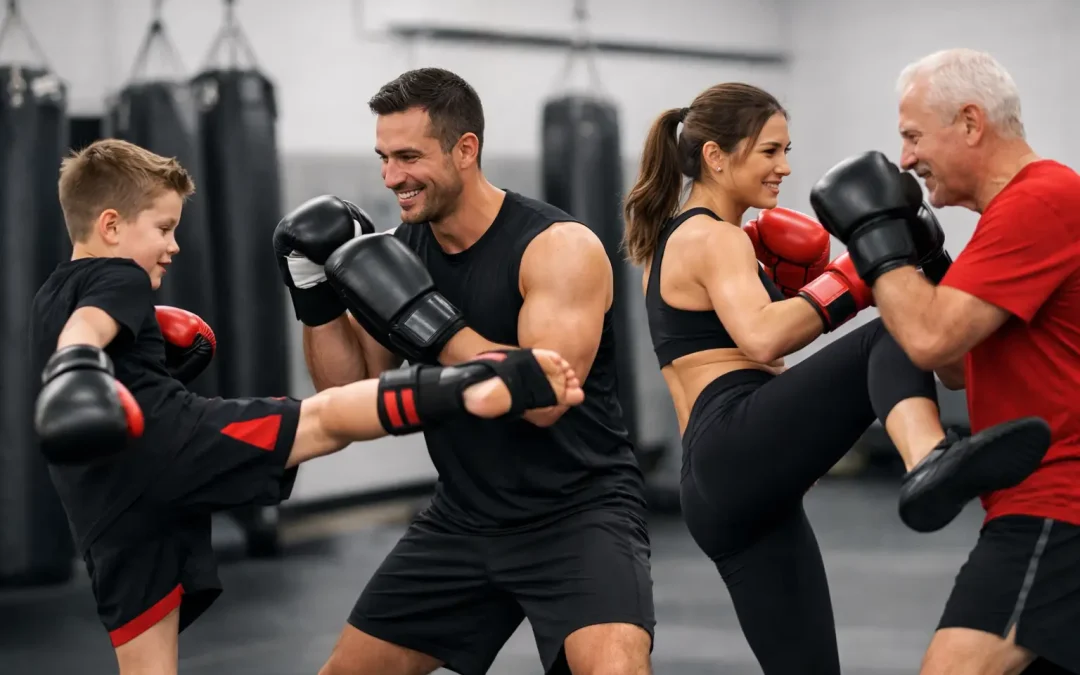
A child who walks into class quietly, unsure where to stand, can leave with a smile, a new skill, and a real sense of achievement. That is the value of Carshalton freestyle kickboxing when it is taught in a supportive, structured setting. It is not simply about learning to punch and kick. It is about building confidence, improving fitness, practicing respect, and developing the focus to keep trying when something feels difficult.
For families in Carshalton and the surrounding South London area, martial arts can become a positive part of the week: time away from screens, a healthy routine, and a place where children, teens, and adults can work toward personal goals together.
What Is Freestyle Kickboxing?
Freestyle kickboxing is a practical martial arts style that combines hand techniques, kicks, movement, fitness training, and self-defense awareness. Training is structured so students can develop sound technique while also improving coordination, balance, strength, and stamina.
The word “freestyle” does not mean unstructured. Good instruction gives students a clear path to follow. Beginners start with the fundamentals: stance, guard, movement, controlled punches, basic kicks, and safe training habits. As confidence grows, students can progress to more detailed combinations, pad work, partner drills, and grading goals.
For many people, that balance is what makes the style appealing. Classes are active and enjoyable, but every exercise has a purpose. You are not expected to arrive already fit, flexible, or experienced. You build those qualities through consistent training.
Why Carshalton Freestyle Kickboxing Works for Families
A family-friendly club understands that a four-year-old, a teenager, and an adult beginner need different things from their training. Younger children need clear boundaries, short activities, encouragement, and plenty of opportunities to practice listening and coordination. Teenagers often benefit from a constructive outlet, physical challenge, and the confidence that comes from seeing steady progress. Adults may be looking for fitness, stress relief, practical self-defense skills, or a new hobby that feels more engaging than a standard gym routine.
Age-appropriate classes help every student learn at the right pace. Rather than comparing themselves with others, students are encouraged to focus on their own effort, technique, and improvement. This creates a welcoming environment for beginners while still giving more experienced students new challenges to work toward.
For parents, the benefits often show up beyond the training floor. Children can become more confident speaking up, more willing to persevere with schoolwork, and more aware of the importance of respect and self-control. Martial arts does not replace good parenting or school support, but it can reinforce the values families already want to build.
More Than a Fitness Class
Kickboxing is a full-body activity. Students use their legs, core, shoulders, and arms while practicing movement, combinations, and drills. Over time, regular attendance can support better cardiovascular fitness, mobility, coordination, and general strength.
Yet the value goes further than physical exercise. A student must listen carefully, remember instructions, manage their energy, and stay composed when a technique takes several attempts to learn. Those are useful life skills, especially for children who need a positive setting in which to practice patience and focus.
There is also a difference between being loud and being confident. Martial arts training aims to develop calm confidence: knowing how to stand well, communicate respectfully, make sensible choices, and handle challenges without needing to prove anything to anyone. Practical self-defense is part of that picture, but avoidance, awareness, and self-control matter just as much as physical techniques.
What a First Class Usually Feels Like
Trying a new activity can feel like a big step, particularly for a child who is shy or an adult who has not exercised in a while. A well-run first class should feel organized, friendly, and manageable. Students are shown where to stand, how to warm up safely, and how to practice the basics with control.
Nobody needs to know complicated combinations on day one. The goal is to get moving, learn a few techniques, and experience the atmosphere of the class. Instructors should give clear direction and individual encouragement, while helping students understand that progress comes from regular practice rather than perfection.
Parents should also feel comfortable observing how the class is run. Look for a setting where students are treated with patience and respect, safety rules are consistently followed, and instructors can keep the group focused without making training intimidating. Energy and discipline should work together.
Choosing the Right Kickboxing Class in Carshalton
Not every martial arts class has the same purpose. Some are heavily focused on competition, while others prioritize fitness. Neither approach is wrong, but families should choose a program that matches their goals.
If your priority is personal development alongside physical training, ask how classes are divided by age and ability. Find out whether beginners have a clear starting point, how students progress, and what values are reinforced in each session. It is also worth asking how self-defense is taught. Effective training should be practical and responsible, with an emphasis on awareness, control, and avoiding unnecessary conflict.
Schedule and location matter too. The best class is one your family can attend consistently. Training once can be fun; training regularly is where students begin to notice real changes in fitness, confidence, and technique. A local club with a welcoming community can make that routine much easier to maintain.
Progress Is Built One Class at a Time
Martial arts can be especially rewarding because improvement is visible. A student may begin by struggling to coordinate a simple punch-and-kick combination. A few weeks later, they may perform it with better balance, sharper focus, and far more confidence. Gradings and belts can give students useful milestones, but the everyday wins matter too: attending when they feel nervous, remembering a new skill, or showing respect to a training partner.
There will be difficult sessions. Some techniques take time. Fitness develops gradually. Children can have days when they are distracted, and adults may need to work around busy schedules or old aches. That is normal. The aim is not to be perfect at every class. It is to return, listen, learn, and keep moving forward.
At Taylor Martial Arts, students are supported through that process in a community built around discipline, respect, focus, and encouragement. Training is designed to be accessible for complete beginners while providing a clear path for those who want to keep developing.
A Positive Routine for Children, Teens, and Adults
For children, freestyle kickboxing can provide a healthy place to use energy while learning how to channel it with control. For teenagers, it can offer structure and belonging during a stage of life when confidence can rise and fall quickly. For adults, it can be a practical way to improve wellbeing, challenge the body, and spend time with people working toward similar goals.
Some families choose classes because they want self-defense skills. Others come for fitness or confidence. Most discover that the strongest benefit is the combination of all three. Training develops physical ability, but it also creates habits: turn up on time, pay attention, encourage others, and take pride in earned progress.
A free trial is a sensible way to see whether a class feels right. Wear comfortable clothing, arrive ready to learn, and allow yourself or your child to be a beginner. The first step does not need to be dramatic. It simply needs to be taken, then followed by another.
Recent Comments