
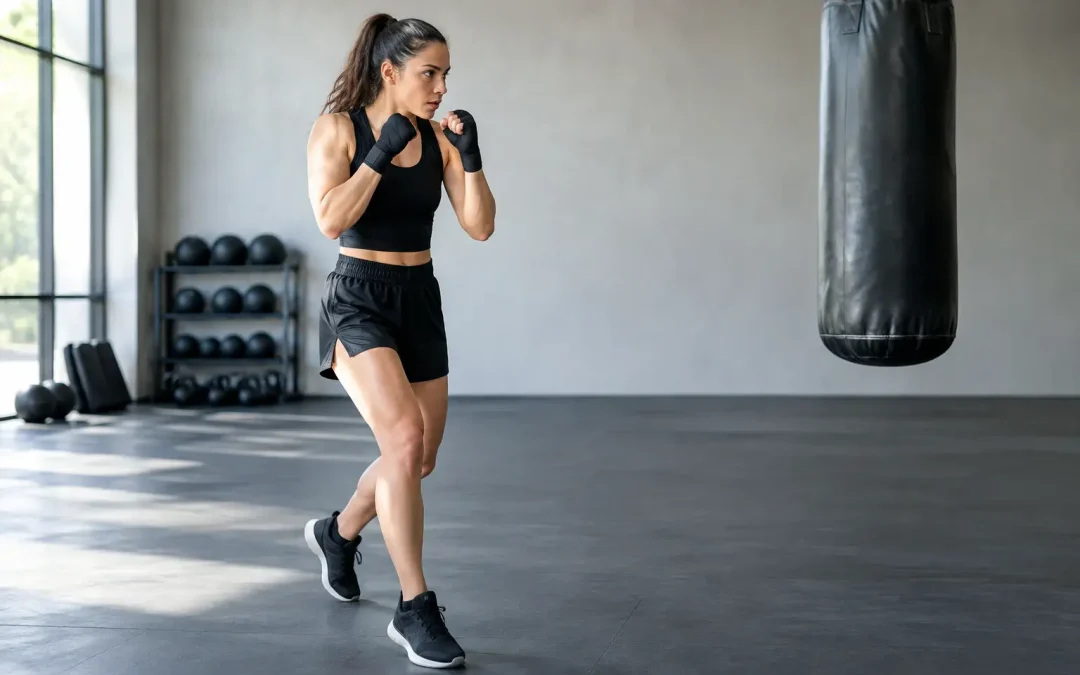
A kick can be powerful, but it will not land well if your feet are stuck in place. Good movement helps you keep your balance, create distance, and respond calmly when an opponent moves. When you practice kickboxing footwork with purpose, every punch, kick, block, and step becomes more controlled.
For beginners, footwork can feel like an extra thing to think about. You are already learning your stance, guard, combinations, and breathing. The good news is that the basics are simple, and regular practice builds confidence quickly. For children, teens, and adults alike, better footwork also develops focus, coordination, fitness, and self-discipline.
Start With a Strong Fighting Stance
Footwork begins before you take a step. A balanced kickboxing stance gives you a stable base while allowing you to move quickly in any direction. If you are right-handed, many students feel comfortable with their left foot forward. If you are left-handed, a right-foot-forward stance may feel more natural. Your instructor can help you find what works best for you.
Keep your feet about shoulder-width apart, with your knees softly bent rather than locked. Your weight should be shared evenly enough that you can move without leaning or crossing your feet. Stay light on the balls of your feet, but do not bounce so much that you lose control.
Your hands should remain up to protect your head as you move. It is common for beginners to let their guard drop while concentrating on their feet. Treat your stance as one complete position: feet ready, knees relaxed, core engaged, chin tucked, and hands up.
Practice Kickboxing Footwork One Step at a Time
The main rule of kickboxing movement is straightforward: move the foot closest to the direction you are traveling first. If you step forward, your front foot moves first, then your back foot follows. If you step backward, your back foot moves first, then your front foot follows. This helps you keep the same balanced stance instead of bringing your feet too close together or too far apart.
When moving left or right, lead with the foot on that side. Step left with your left foot first, then bring your right foot across enough to restore your stance. Step right with your right foot first, then let the left foot follow. Avoid dragging your feet. Each step should be light, deliberate, and quiet.
Do not cross your feet during basic movement drills. Crossing them might feel quicker at first, but it makes you easier to push off balance and slower to defend yourself. There are advanced situations where fighters change stance or use crossover steps, but those techniques need good timing and coaching. Build the reliable basics first.
Four Drills That Build Better Movement
You do not need a large training space to improve your footwork. A clear section of floor, comfortable training clothes, and a few focused minutes are enough. Always practice with awareness of your surroundings, especially when training at home.
1. Forward and Back Steps
Start in your fighting stance. Take one small step forward, bringing your rear foot with you to reset your stance. Then take one small step backward, moving your rear foot first. Keep your hands up throughout.
Work slowly for 30 seconds, then rest and repeat. Your goal is not speed. Focus on maintaining the same distance between your feet after every step. Once that feels natural, add a jab as you move forward and a defensive guard as you move back.
2. Side-to-Side Movement
Imagine you are staying just outside an opponent’s reach. Step left, reset your stance, then step right and reset again. Keep your shoulders relaxed and face forward instead of turning your body sideways.
This drill teaches you not to stand directly in front of someone. Moving to the side can help you create a better angle for a counterattack, or simply give you space to reset. For self-defense, the ability to move away from danger while staying balanced is far more useful than relying on one technique.
3. The Square Drill
Use four markers on the floor, such as tape, cones, or small household items placed safely apart. Stand in the center and move forward, right, back, and left around the square. Return to your starting position and repeat in the other direction.
Keep the steps small. This is a coordination drill, not a race. It encourages you to stay aware of where your feet are while changing direction. Children often enjoy this as a challenge, while adults quickly notice how much it improves leg endurance and concentration.
4. Shadowboxing With Movement
Shadowboxing is one of the best ways to connect footwork to your techniques. Stand in front of a mirror if you have one, or picture an opponent in front of you. Move forward behind a jab, step to the side after a combination, and move back after throwing a kick.
Do not throw long combinations just to look busy. Pick two or three techniques and make every movement intentional. For example, step in with a jab-cross, step out to your right, then reset. This teaches a valuable habit: do not remain still after you strike.
Match Your Footwork to the Technique
Your feet should support what you are trying to do. When you punch, a small forward step can help you reach without overextending. When you kick, your standing foot needs to be stable enough to let your hips turn and your guard stay in place. When you defend, a step back or to the side may be safer than trying to block everything.
This is why footwork is not just about moving faster. It is about moving at the right time. A student who takes calm, controlled steps will often perform better than someone who is constantly bouncing and rushing. Control creates options.
There is also a trade-off to consider. Large steps cover more distance, but they can leave you off balance and slow to recover. Small steps keep you ready, but they will not help if you need to quickly create space. In class, you will learn when each choice makes sense. For now, make your default movement small, balanced, and controlled.
Common Footwork Mistakes to Watch For
A few habits can make kickboxing feel harder than it needs to be. The first is standing too tall with straight legs. This makes it difficult to react quickly and can place extra strain on your knees. Keep a slight bend so your body is ready to move.
The second is letting your feet come together after every step. A narrow base weakens your balance, especially when you punch or kick. Check that your stance stays approximately the same width as you move.
The third is watching the floor. It is natural to look down when learning, but your attention should be forward. Keep your eyes level and use your awareness to feel where your feet are. Finally, do not sacrifice your guard for speed. Fast feet are only helpful if the rest of your body stays protected.
Build Footwork Into Your Weekly Routine
Footwork improves through repetition, not one long session. Five to ten minutes of focused practice two or three times a week can make a real difference. Add a short drill before class, after a warm-up, or at home on a day when you want to stay active.
For young students, make it positive and achievable. Set a simple goal such as completing three rounds without crossing the feet or keeping hands up for a full minute. Praise effort and improvement, not just speed. These small wins build confidence and teach the discipline of regular practice.
Adults can use footwork drills as a practical fitness session. The movement raises your heart rate, strengthens your legs, and improves coordination without needing complicated equipment. If you are returning to exercise after time away, start gently and give your body time to adapt.
At Taylor Martial Arts, students learn these foundations in a supportive setting where progress matters more than perfection. Ask questions, listen carefully to coaching, and give yourself permission to be a beginner.
The next time you train, pay attention to your feet before you think about throwing a harder punch or higher kick. A calm stance, one controlled step, and a strong guard can change the way every technique feels. Keep showing up, practice with focus, and let your movement become a source of confidence both on and off the mat.
Recent Comments