
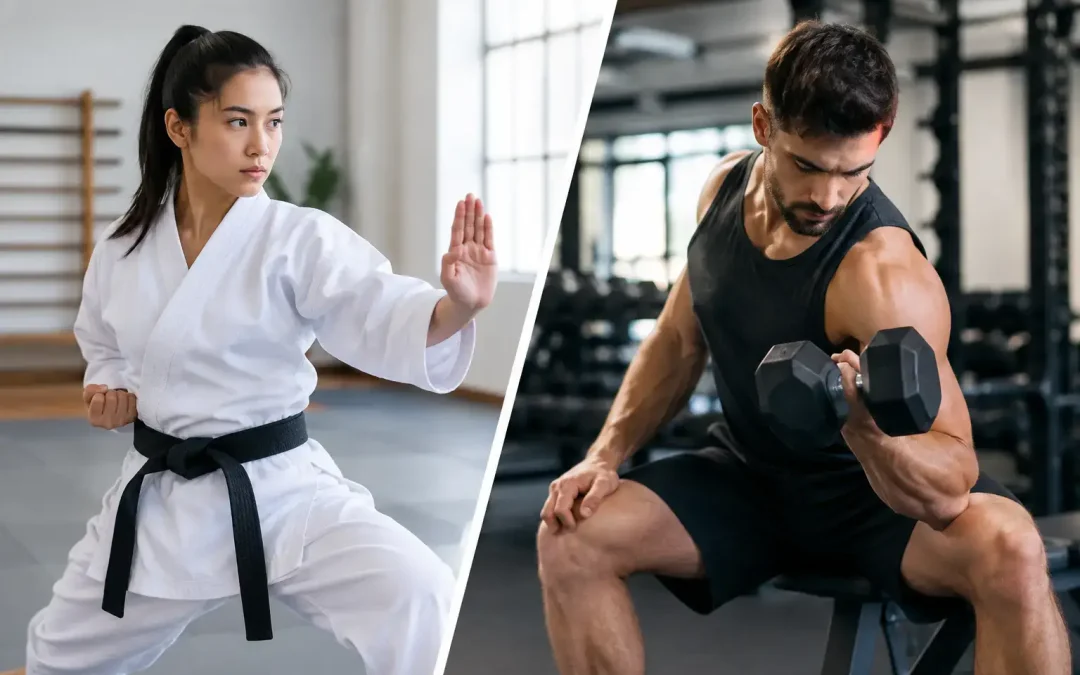
A gym membership can look like the obvious route to getting fitter. You can train when it suits you, choose your own exercises and work at your own pace. But when people compare martial arts versus gym training, they often find the decision is about much more than calories burned or muscles built. It is about motivation, confidence, practical skills and whether exercise becomes a routine that genuinely lasts.
For children, teenagers and adults alike, the best choice depends on what you want from your training. A gym can be excellent for independent fitness goals. Martial arts offers a structured, social and purposeful way to improve your body and mind at the same time.
Martial Arts Versus Gym: The Main Difference
The biggest difference is structure. In a gym, you are usually responsible for planning your workout, maintaining good technique and pushing yourself consistently. Some people enjoy that freedom. Others arrive without a clear plan, repeat the exercises they know, or stop going once early motivation fades.
In a martial arts class, the session has a purpose from the moment you step onto the mat. You are guided through a warm-up, technique practice, fitness drills and skill development by an instructor. There is a clear progression to work towards, whether that means improving your movement, developing your kickboxing combinations or working towards your next grade.
That structure matters. It removes the question of what to do when you arrive and replaces it with a positive challenge. You still work hard, but you do so as part of a class that keeps you focused and accountable.
Fitness: Two Different Ways to Get Results
A gym can be a very effective place to build strength, improve cardiovascular fitness and support specific goals such as weight management or muscle gain. If you have a well-designed programme and enjoy training independently, it gives you plenty of choice. You can focus on weights, running, cycling, classes or a mixture of all three.
Freestyle kickboxing is also a full-body workout, but it develops fitness through movement and application. Punching, kicking, footwork, pad work and controlled drills can improve stamina, coordination, mobility, balance and core strength. A class moves at a pace that keeps the body working while the mind stays engaged.
The difference is often enjoyment. Running on a treadmill may suit one person perfectly, while another finds that learning a new combination makes them forget they are exercising at all. If you are more likely to keep turning up because training feels interesting, that is a meaningful advantage.
Consistency Beats the Perfect Plan
The best exercise plan is rarely the most complicated one. It is the one you can follow week after week. A gym membership that is used twice in January and then forgotten is less valuable than a weekly martial arts class you look forward to attending.
Martial arts creates a regular appointment with yourself. Your instructor, training partners and classmates notice your progress. That sense of belonging can be particularly helpful for adults returning to exercise and for children building healthy habits early.
Self-Defence and Practical Confidence
This is where a gym and martial arts are not offering the same thing. Gym training can make you stronger and fitter, which may support confidence in everyday life. However, it does not usually teach you how to move under pressure, create distance, use awareness or practise controlled defensive techniques.
Martial arts training gives students practical skills alongside fitness. At Taylor Martial Arts, freestyle kickboxing is taught in a controlled, age-appropriate environment where students learn to listen, react, move with purpose and respect the responsibility that comes with martial arts knowledge.
For adults, self-defence training can bring reassurance and a stronger sense of personal capability. For children, it is not about encouraging confrontation. It is about teaching awareness, self-control and the confidence to handle challenging situations calmly.
What Children Gain Beyond Exercise
For a child, the martial arts versus gym question is usually more straightforward. Most gyms are designed around adult independence, while martial arts classes are built around guided learning, participation and development.
Children need more than a workout after school. They need a place where they can use their energy positively, learn to follow instructions and experience the satisfaction of earning progress through effort. Martial arts gives them clear boundaries and clear encouragement.
A good class helps children develop discipline without making training feel like a lecture. They learn to line up, take turns, stay focused and show respect to instructors and classmates. Over time, those habits can carry into school, home life and friendships.
Confidence That Is Earned
Real confidence is not simply being told you are brilliant. It comes from trying something difficult, making mistakes, practising and noticing that you can do more than you could last month.
A quieter child may begin by standing at the back and copying others. With patient coaching, they may start calling out combinations, working with a partner and taking pride in a new grade. A child with lots of energy may learn to channel it with control and focus. Both are valuable forms of progress.
Social Support and Community
Gym training can be social, particularly in group exercise sessions, but many members train alone with headphones on. There is nothing wrong with that, especially if quiet independent exercise is what you need.
Martial arts is naturally more connected. Students train alongside people with shared goals, encourage one another through difficult drills and celebrate milestones together. Families often value this welcoming class environment because it gives children and adults a positive local community outside school and work.
You do not need to be naturally sporty, flexible or confident to start. Beginners train alongside people who remember what it was like to be new. The important thing is a willingness to listen, practise and keep going.
Is the Gym Ever the Better Choice?
Yes. A gym may be the better fit if you prefer complete flexibility, have a very specific strength programme or need to train at unusual times. It can also complement martial arts well. Some experienced martial artists use gym sessions to build strength or support recovery alongside their regular classes.
Cost, timetable and personal preference also matter. The right activity should fit realistically around family life, work and school commitments. There is no benefit in choosing an option that looks good on paper but feels difficult to maintain.
For some people, a combination works best: martial arts for skill, community and structured fitness, with occasional gym sessions for individual goals. There is no rule that says you must choose only one form of exercise forever.
How to Choose the Right Path for You
Start by asking what you want to feel and achieve after a few months. If your priority is building a personal workout routine with maximum flexibility, a gym could suit you well. If you want to get fitter while learning a practical skill, meeting supportive people and developing discipline, martial arts may offer more.
Parents can ask a similar question for their child. Do you want an activity that simply uses up energy, or one that also develops focus, respect, resilience and confidence? A well-run martial arts class can provide all of those benefits in a setting children enjoy.
The easiest way to decide is to experience a class for yourself. A free trial gives you or your child the chance to meet the instructor, see the atmosphere and discover whether kickboxing feels like the right fit. Small steps taken consistently can lead to stronger bodies, calmer minds and confidence that reaches far beyond the training hall.
Recent Comments