Choosing a martial art as an adult is less about finding the “best” style and more about finding the class you will enjoy returning to. When comparing kickboxing vs taekwondo adults classes, think beyond impressive kicks or intense workouts. Consider your goals, your current fitness level, the type of instruction you enjoy, and whether the class feels like a community where you can grow.
Both kickboxing and taekwondo can improve fitness, focus, confidence, and coordination. The right choice depends on what you want from your time on the mat.
Kickboxing vs Taekwondo for Adults: The Main Difference
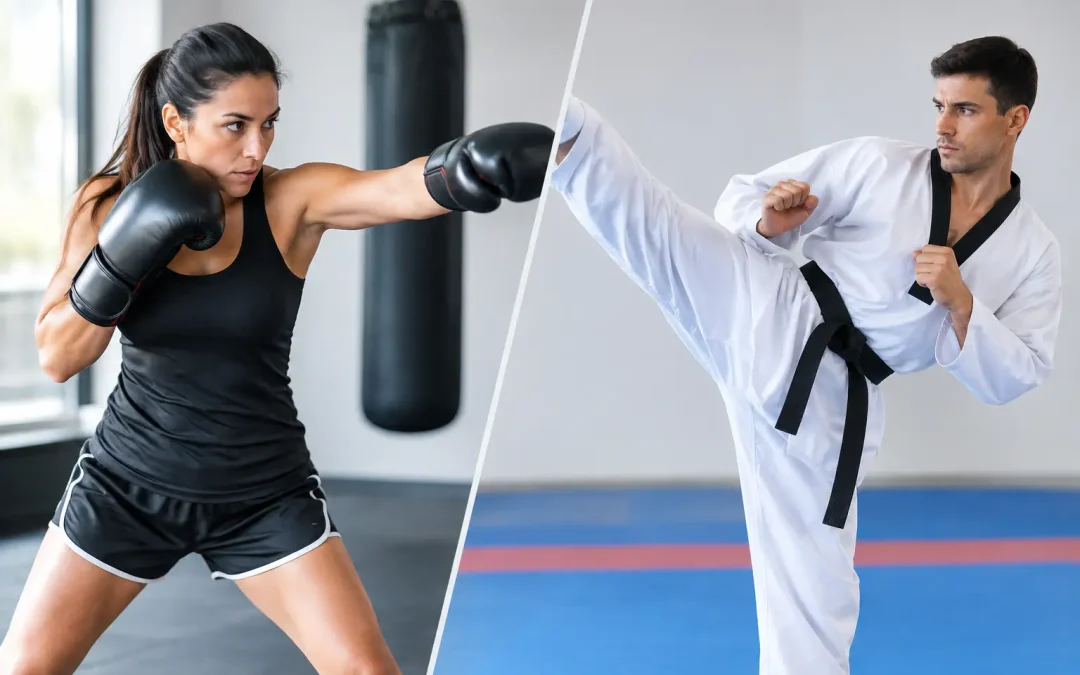
The simplest difference is the balance of techniques and the training focus. Taekwondo is a traditional Korean martial art known for its fast, precise kicking techniques, patterns, and structured progression through belts. Kickboxing blends punches, kicks, movement, fitness conditioning, and practical striking skills.
An adult taekwondo class may place more emphasis on technique, flexibility, forms, and developing controlled, often high-level kicks. An adult kickboxing class usually gives equal attention to hands and feet, with combinations that develop timing, stamina, movement, and close-range confidence.
That does not mean every class looks the same. Taekwondo schools vary in how much they focus on sport sparring, self-defense, or traditional training. Kickboxing programs can also range from fitness-only sessions to competitive fight training. The instructor, class culture, and curriculum matter just as much as the name on the door.
Why Adults Choose Kickboxing
Kickboxing is often a strong fit for adults who want a full-body workout while learning useful martial arts skills. You will typically practice punches, kicks, defensive movement, pads, controlled partner drills, and combinations that challenge both body and mind.
Because the hands are used as much as the legs, beginners do not need exceptional flexibility before they start. You can build mobility over time while developing a solid stance, better balance, and the confidence to throw techniques with control. Training sessions can be energetic, but a good beginner-friendly class gives you options to work at an appropriate pace.
For adults interested in practical self-defense, kickboxing can feel especially relevant. Learning how to keep distance, move with purpose, cover up, and use simple striking combinations can help you feel more capable. Responsible training also teaches awareness, calm decision-making, and avoiding conflict whenever possible.
The fitness benefits are another major draw. Regular kickboxing can improve cardiovascular endurance, core strength, coordination, and stress management. After a long workday, focusing on combinations and pad work can provide a healthy reset. You are not just exercising – you are learning a skill with every session.
Why Adults Choose Taekwondo
Taekwondo appeals to adults who enjoy clear structure, technical precision, and the challenge of developing impressive kicking ability. It can be particularly rewarding for people who value tradition and want a defined path of progression.
Classes often include stances, blocks, kicking drills, forms, partner work, and sparring, depending on the school. The belt system gives many adults a motivating sense of direction. Each grade represents more than memorizing techniques. It asks for patience, discipline, focus, and consistent effort.
Taekwondo can also be an excellent way to improve flexibility, posture, balance, and body control. Its kicks demand accuracy and control, so students learn to move with intention rather than simply relying on power. For adults who enjoy setting technical goals and seeing gradual progress, that process can be highly satisfying.
If you are returning to exercise after a break, ask how the school adapts drills for adult beginners. High kicks are not a requirement on day one. A supportive instructor will help you work within your current range of motion and build safely from there.
Fitness, Self-Defense, and Confidence
Both arts can make you fitter, but they may challenge you in different ways. Kickboxing commonly uses continuous combinations, pad work, footwork, and conditioning rounds. This can create a fast-paced workout that develops endurance and strength alongside striking skills.
Taekwondo also provides an effective workout, particularly through repeated kicking drills, movement practice, and sparring. Its physical demands can be significant, especially as flexibility, speed, and technical control improve.
For self-defense, neither style should be judged only by its techniques. A useful adult program teaches distance, awareness, composure, boundaries, and safe decision-making. Kickboxing may offer more regular practice with punches and close-to-mid-range combinations. Taekwondo may offer valuable timing, movement, and powerful kicking skills. The most practical training is taught by instructors who explain when a technique is appropriate and prioritize control over ego.
Confidence grows through repetition in either style. The first time you complete a challenging class, learn a sequence, or work calmly with a partner, you prove something to yourself. Over weeks and months, that progress carries into daily life. You stand taller, handle pressure better, and become more comfortable trying things that once felt unfamiliar.
Which Class Environment Suits You?
Your experience will depend heavily on the environment. Some adults want traditional etiquette, detailed forms, and a clear belt journey. Others prefer a class centered on fitness, practical skills, and varied combinations. Neither preference is wrong.
If you are considering kickboxing, look for instructors who teach technique before intensity. You should feel challenged without being thrown into hard contact before you are ready. Partner work should be controlled, respectful, and adapted to experience level.
If you are considering taekwondo, look for a school that welcomes adult beginners rather than treating adults as an afterthought. Ask whether the program includes separate adult instruction, what progression looks like, and how the instructor supports people with different mobility or fitness levels.
The atmosphere matters, too. A good class is not about trying to prove you are tougher than everyone else. It is about showing up, listening, working hard, and encouraging the people around you. Adults often stay with martial arts because the training becomes part of their routine and the people in the room notice when they improve.
How to Choose Between Kickboxing and Taekwondo
Start by being honest about what will keep you motivated. If you want to improve your overall fitness, learn punch-and-kick combinations, and train practical striking skills, kickboxing may be the better match. If you are drawn to traditional martial arts, technical kicking, forms, and a formal grading path, taekwondo may be more appealing.
You do not need to arrive already fit, flexible, coordinated, or confident. Those are outcomes of training, not entry requirements. The best first step is to try a beginner class and pay attention to how you feel afterward. Were the instructions clear? Did you feel supported? Could you picture yourself coming back next week?
For adults in Carshalton, Croydon, and nearby South London areas, Taylor Martial Arts offers freestyle kickboxing in a welcoming setting where beginners can build skills at their own pace. Training is structured, positive, and focused on fitness, self-defense, discipline, and confidence – without losing the enjoyment that makes a new habit stick.
Start Where You Are
Do not let the idea of being a beginner delay you. Martial arts training meets you at your current level, whether you want a healthier routine, a new challenge, practical skills, or time away from the pressures of work and home.
Choose the class that makes you feel motivated to return, then give yourself time to learn. A free trial can show you far more than a video or a description ever will. Your first class does not need to be perfect. It only needs to be the moment you decide to start becoming stronger, calmer, and more confident.
Recent Comments