
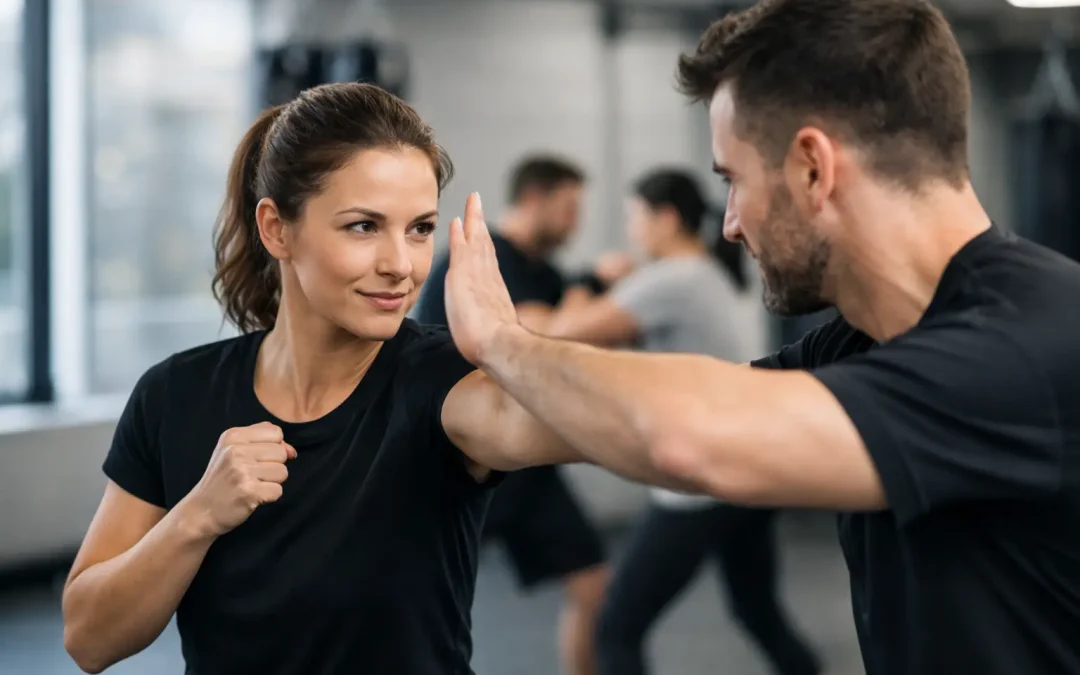
A confident person does not need to look for trouble to feel prepared. Practical self defence is about noticing risk early, staying calm under pressure, and having simple options when a situation feels unsafe. For children, teens, and adults, that confidence can carry into school, work, travel, and everyday life.
At its best, martial arts training gives people more than techniques. It creates better posture, stronger habits, improved fitness, and the discipline to make sensible choices. The goal is never to encourage confrontation. The goal is to help people avoid it whenever possible and act decisively if they cannot.
What self defence really means
Many people picture self defence as a dramatic fight. In reality, the most useful skill is often creating distance before a situation gets physical. Awareness, clear communication, confidence, and the ability to leave safely are all part of effective training.
A good class teaches students to recognize when something does not feel right. That might mean avoiding an isolated route, staying close to friends, speaking to a trusted adult, or moving toward a busy, well-lit place. These choices are not signs of fear. They are signs of focus and good judgment.
Physical techniques still matter, but they should be practical and appropriate to the student. A child needs clear, age-appropriate responses that support safety and encourage them to seek help. An adult may want to develop balance, striking skills, movement, and ways to break free from common grips. In every case, the best approach depends on the situation, the person involved, and the safest available exit.
The skills that make a real difference
Self defence becomes more useful when it is practiced regularly rather than learned as a few moves to memorize. Under stress, people rely on habits. Martial arts classes help develop calm, repeatable habits through structured training.
Awareness and positioning
Awareness means paying attention to your surroundings without living on edge. Students learn to keep their heads up, avoid distractions when walking, and make choices that keep them closer to safety. Positioning matters too. Standing with balance, maintaining personal space, and knowing where exits are can give someone more time to respond.
For young people, this can be as simple as understanding safe boundaries and knowing who to speak to when they are worried. For adults, it may include building the confidence to say no clearly, leave an uncomfortable conversation, or trust their instincts without feeling guilty.
A strong, confident voice
A clear voice can stop a situation from escalating and attract attention when it is needed. Students should be comfortable using firm words such as “Stop,” “Back up,” or “I need help.” This is especially valuable for children, who may need reassurance that they are allowed to speak up when someone crosses a boundary.
Confidence is not about being aggressive. It is about communicating clearly and respectfully. Training gives students a safe place to practice that voice, so it feels more natural outside the class.
Movement, balance, and simple techniques
Being able to move quickly, stay balanced, and create space can be more valuable than trying to overpower someone. Freestyle kickboxing develops coordination, footwork, reactions, and body control. Students learn how to stand with purpose, move away from pressure, and use controlled techniques with discipline.
A useful self defence class does not promise that one move will solve every problem. Real situations are unpredictable. Instead, it builds a foundation of movement and simple responses that students can practice over time. Fitness supports this work too. Greater stamina, mobility, and strength can help people feel more capable in daily life, not just in a difficult moment.
Calm decision-making
Stress can make even simple decisions feel difficult. Regular training helps students get used to following instructions, focusing on a task, and resetting after mistakes. These are valuable life skills.
In a martial arts class, students learn that panic wastes energy. Breathing, creating distance, and looking for a safe way out are usually better choices than reacting emotionally. That mindset can help a teenager handle peer pressure, a child manage a disagreement, or an adult remain composed in a tense situation.
Why martial arts is a better long-term approach
A one-off seminar can introduce useful ideas, but confidence grows through consistent practice. Students need time to improve their coordination, understand boundaries, and build trust in what their bodies can do. That is where regular martial arts training has a real advantage.
Each class reinforces the same positive values: discipline, respect, focus, and self-control. Students are encouraged to work at their own level while still being challenged. Over time, a beginner who was nervous about joining in can become someone who stands taller, concentrates longer, and supports others in the room.
For parents, the benefit is not limited to self defence skills. Children often gain a healthy routine, positive role models, and a place where effort matters. They learn to listen, keep trying, and treat training partners with respect. Those lessons are just as useful at home and at school as they are on the mats.
Adults benefit from that same structure. A regular class offers time away from screens and daily pressures, with a clear purpose and a welcoming group around them. Some adults join to improve fitness, some want practical personal safety skills, and others simply want a new challenge. All can benefit from training that is supportive without being easy.
Self defence for children and teens
Children do not need to be taught to be fearful. They need to understand that their safety matters and that trusted adults are there to help. Age-appropriate training should focus on personal space, clear communication, awareness, and the confidence to report anything that worries them.
Teenagers face different pressures. They may deal with bullying, social conflict, increasing independence, or situations where friends influence their choices. Martial arts gives them a positive outlet for energy while teaching them that real strength includes walking away, staying respectful, and asking for help when needed.
The class environment matters here. Young people learn best when they feel included, challenged, and supported. They should be able to make mistakes without embarrassment, celebrate progress, and understand that confidence is built through effort rather than bravado.
What to look for in a self defence class
The right class should make beginners feel welcome from the start. Look for instructors who explain techniques clearly, set high standards for respect, and adapt training for different ages and abilities. A family-focused club should have structure, but it should also be a place where students enjoy learning.
It is also worth asking what the training is designed to achieve. A good program balances practical skills with fitness, discipline, and personal development. It does not glorify violence or pressure students to compete if that is not their goal. Instead, it helps each person progress at a sensible pace.
At Taylor Martial Arts, freestyle kickboxing classes are built around that balance. Students can develop practical skills while becoming fitter, more focused, and more confident in a positive community setting. Beginners do not need previous experience or a high level of fitness to take the first step.
Confidence starts with showing up
No class can remove every risk from life, and self defence is never about becoming invincible. It is about being more aware, more capable, and more prepared to make safe choices. The confidence built in training often shows up quietly: a child speaking more clearly, a teen carrying themselves with greater assurance, or an adult realizing they are stronger than they thought.
The most helpful next step is a simple one: try a class, ask questions, and give yourself or your child time to grow. Progress comes from turning up, practicing with purpose, and becoming a little more confident each week.
Recent Comments