
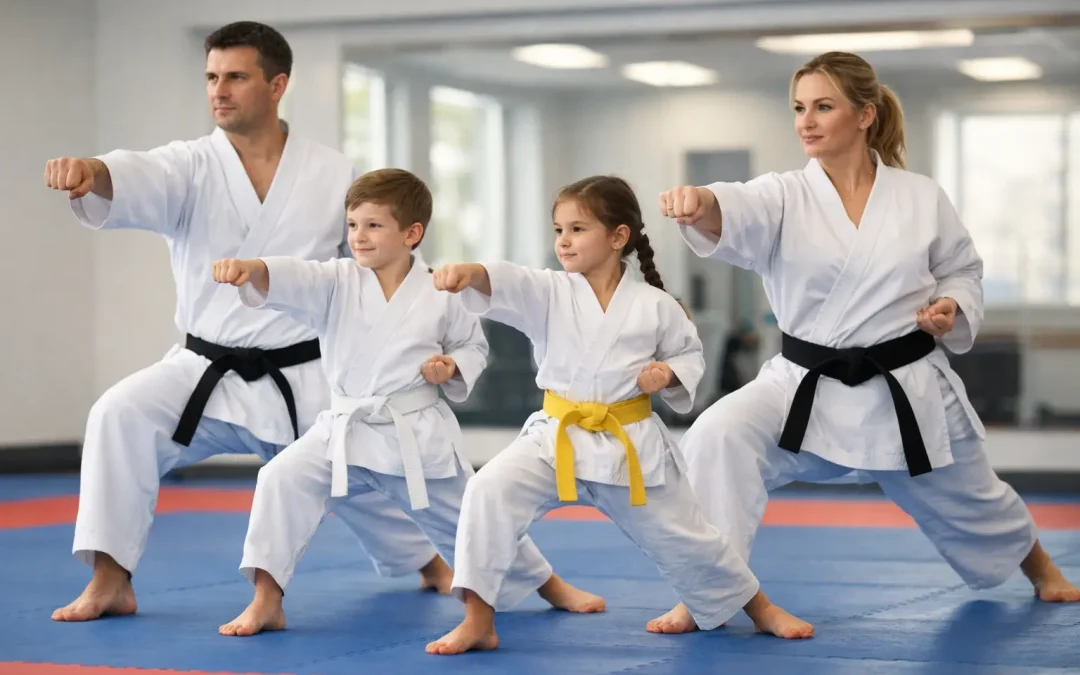
A child lands a new kick with control. A parent finishes a challenging class and realizes they have more energy than they expected. On the drive home, both talk about what they learned. That is what family training together in martial arts can look like: not just another activity on the calendar, but shared progress that carries into everyday life.
For busy families, it can be difficult to find something that supports children’s development while also giving adults a meaningful way to stay active. Freestyle kickboxing offers both. It creates a positive space to build fitness, practical self-defense awareness, discipline, respect, and confidence – at a pace that works for beginners as well as experienced students.
Why Family Training Together in Martial Arts Works
Most family activities are divided by age. Children go to school or clubs, while parents watch from the sidelines, travel to work, or try to fit exercise into an already full week. Martial arts changes the dynamic. Even when family members train in different age-appropriate classes, everyone is working toward the same values: focus, effort, resilience, and steady improvement.
That shared language matters. A child who hears their instructor talk about staying focused can be encouraged at home in the same way. A parent who has worked through a demanding training session understands why their child feels proud after earning a new belt or learning a challenging combination. Progress becomes something the whole family recognizes and celebrates.
Training together does not mean every family member must have the same goals. One person may want better fitness, another may want confidence in school, and someone else may be interested in practical self-defense. A good martial arts program makes room for those differences while keeping everyone connected through positive routines.
Shared Routines Make Healthy Habits Easier
The greatest benefit often starts before class begins. When martial arts becomes a family commitment, exercise is no longer something adults tell children they should do. It becomes something everyone makes time for.
That can reduce the usual struggle around after-school activities. Instead of rushing one child to a club while another waits, families can build a regular training night into their week. The routine creates consistency, and consistency is where confidence grows. Students learn that improvement rarely comes from one perfect class. It comes from showing up, practicing the basics, listening carefully, and trying again.
For parents, this routine can be just as valuable. Adult fitness is often pushed aside when family life gets busy. A structured martial arts class provides a clear time to move, challenge yourself, and step away from daily pressures. You are not expected to arrive already fit or already skilled. You simply need a willingness to learn.
Children Learn More When They See the Example
Children notice what adults do far more than what adults say. When they see a parent train with good effort, listen to instruction, and keep going after a difficult drill, they see discipline in action.
This does not mean parents need to be perfect. In fact, it is helpful for children to see that learning can be uncomfortable at first. A parent may need time to remember a sequence, improve their balance, or develop stamina. Seeing that process teaches children that mistakes are part of growth, not a reason to give up.
The same applies to respect. Martial arts etiquette gives families practical ways to show consideration for instructors, training partners, and themselves. Bowing in, waiting for instructions, practicing safely, and encouraging others are simple actions, but they build habits that reach beyond the training floor.
Fitness Without the Pressure of a Gym
Many adults avoid starting a new fitness routine because they worry about keeping up, being judged, or feeling out of place. Families can have similar concerns for their children, especially if a child is shy, not naturally sporty, or has had a difficult experience in another activity.
A welcoming martial arts environment should meet students where they are. Beginners need clear instruction, safe progression, and encouragement. More experienced students need fresh challenges and the chance to refine their skills. Age-specific classes help make this possible, so younger children can develop coordination and listening skills while teens and adults work on fitness, technique, and practical application.
Freestyle kickboxing is active and engaging. Training can improve cardio fitness, mobility, coordination, strength, and body awareness without feeling like repetitive exercise. Students are focused on learning a stance, a movement, or a combination, and the fitness benefits build naturally through regular practice.
There is a trade-off to consider. Family martial arts is most effective when the program values proper technique and personal development over pushing everyone into the same intense workout. Training should be challenging, but it should also be safe, structured, and suited to each student’s stage of development.
Confidence That Does Not Depend on Being the Best
Confidence is often mistaken for being loud, winning every contest, or picking up skills quickly. Martial arts teaches a more useful version. Real confidence comes from knowing you can stay calm, pay attention, and keep working when something feels difficult.
For children, that may mean speaking more clearly, handling setbacks better, or feeling more comfortable in new social situations. For teenagers, it can mean having a positive place to develop independence, physical confidence, and self-control. For adults, it may be the satisfaction of doing something challenging for themselves while becoming a stronger role model at home.
Training as a family helps keep that confidence grounded. Rather than comparing who is best, families can talk about individual effort. One person may improve their flexibility, another may remember a new combination, and another may simply attend consistently after a long day. All of that is progress.
Practical Self-Defense Starts With Awareness
Families often choose martial arts because they want practical self-defense skills. That is a worthwhile goal, but good self-defense training is about more than strikes and blocks. It starts with awareness, confidence, boundaries, and making sensible choices.
For children and teens, this includes recognizing uncomfortable situations, using a clear voice, and knowing when to seek help from a trusted adult. For adults, it includes awareness of surroundings and learning how to respond with control rather than panic. Physical technique has value, but the aim is always to improve safety and avoid unnecessary conflict.
This is another reason structured instruction matters. Students should learn that martial arts skills are paired with responsibility. Discipline is not only about working hard in class. It is about using what you learn with maturity and respect.
Making Family Martial Arts Sustainable
The best program is not necessarily the one with the most classes or the hardest workouts. It is the one your family can attend consistently and enjoy over time. Before starting, consider practical details such as class times, travel, age groups, and whether each family member has a suitable class level.
It also helps to set simple expectations. Aim to attend regularly rather than expecting immediate results. Let children know they do not need to be perfect on day one. Give adults permission to be beginners too. When training feels like a supportive commitment instead of another pressure, families are more likely to keep going.
At Taylor Martial Arts, families in Carshalton, Croydon, and nearby South London areas can find structured freestyle kickboxing classes designed to support children, teens, and adults at their own level. A free trial is a practical way to see whether the class environment feels right for your family.
The most rewarding part may not be a belt, a new technique, or a fitness milestone. It may be the quiet confidence that develops when your family chooses to show up, learn, and encourage one another week after week. Start with one class, keep an open mind, and let the shared routine become a positive part of your family’s story.
Recent Comments