
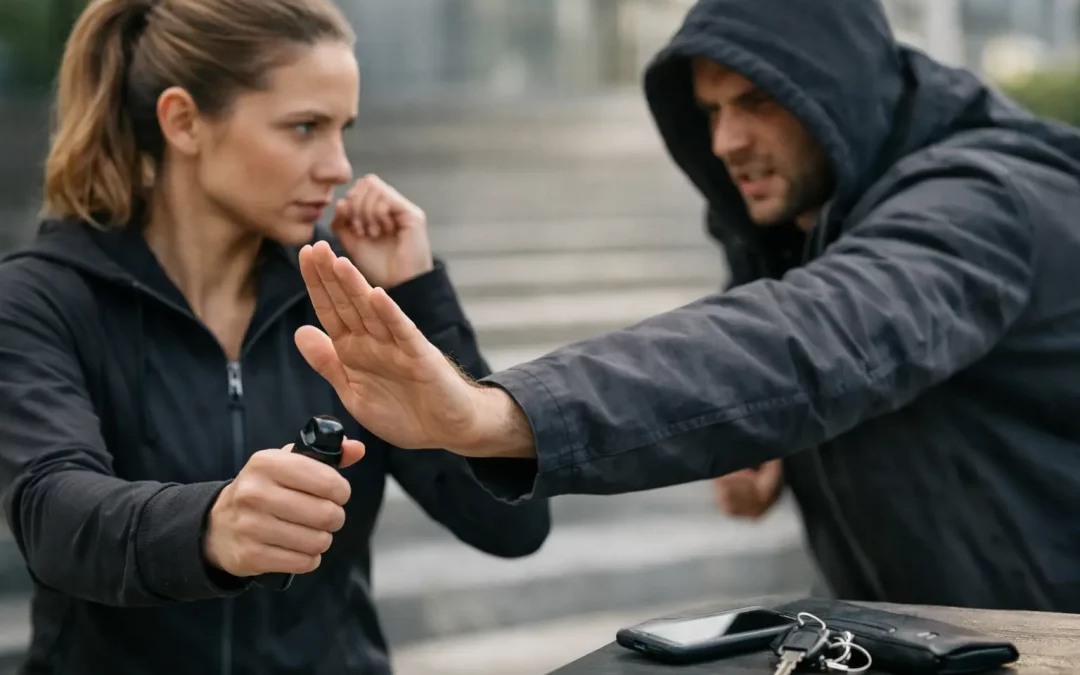
Most people do not need to learn how to win a fight. They need self protection skills that help them avoid trouble early, stay calm under pressure, and respond with confidence if a situation becomes unsafe. That is a very different goal, and it is why good training matters.
For families, teens, and adults, self-protection is not about acting tough. It is about making smart choices, reading situations sooner, and having the discipline to do the right thing quickly. Physical techniques play a part, but they are only one piece of the picture.
What self protection skills actually include
When people hear the phrase self protection skills, they often picture punches, kicks, and blocks. Those can help, but they sit much later in the decision-making process than most people realize. Real self-protection starts before any physical contact happens.
It begins with awareness. Noticing who is around you, where exits are, and when something feels off gives you time to act early. That might mean crossing the street, leaving a tense situation, or choosing not to engage with someone who is trying to provoke a response.
Next comes communication. A clear voice, firm boundaries, and confident body language can stop a situation from escalating. Many people, especially children and teenagers, benefit from practicing how to say no, how to get attention fast, and how to ask for help without hesitation.
Then there is movement. Good footwork, balance, posture, and distance control matter more than flashy techniques. If you can stay on your feet, create space, and move with purpose, you are already in a stronger position.
Physical self-defense comes after that. Simple, repeatable actions are usually the most useful because they can be performed under stress. The goal is not to stay and trade blows. The goal is to protect yourself long enough to get safe.
Why confidence changes everything
Confidence is often misunderstood. It is not aggression, and it is not showing off. Real confidence is quiet. It affects the way you walk, the way you speak, and the way you carry yourself when something feels wrong.
That matters because people who look uncertain are often easier to pressure. Someone who can make eye contact, speak clearly, and hold their ground without panicking sends a different message. This does not guarantee safety, because no method does, but it can reduce vulnerability.
For children, confidence can be even more important. A child who has practiced using their voice, following instructions, and staying composed is better equipped to respond when a situation feels uncomfortable. They are also more likely to tell a trusted adult what happened afterward, which is a major part of staying safe.
The role of discipline in self protection skills
Discipline may not sound exciting, but it is one of the foundations of effective self-protection. In training, discipline means listening well, practicing carefully, and staying consistent over time. Outside training, it means managing emotions, avoiding risky choices, and knowing when to walk away.
That last part is important. One of the strongest self protection skills is restraint. It takes maturity to avoid getting drawn into arguments, dares, or confrontations that have no upside. This is especially relevant for teens, who can face pressure to prove themselves socially.
Adults deal with their own version of this. Stress, fatigue, and frustration can cloud judgment. Training helps because it builds habits. When people practice staying calm, following structure, and making clear decisions in class, those habits carry into everyday life.
Self protection skills for kids, teens, and adults
The best training is age-appropriate. A six-year-old does not need the same instruction as a teenager, and a beginner adult may have different goals from both. That is why a one-size-fits-all approach tends to fall short.
For young children, self-protection should focus on listening, awareness, personal space, and confidence. They need clear rules they can remember and repeat. Simple lessons such as staying close to trusted adults, using a strong voice, and recognizing unsafe behavior are far more useful than complex techniques.
For teenagers, the picture expands. They may need support with peer pressure, online interactions, travel independence, and social situations that can change quickly. At this stage, physical skills can be developed more seriously, but they still need to be paired with judgment and emotional control.
For adults, practical training often centers on awareness, fitness, stress response, and realistic self-defense basics. Adults usually want something that is useful, manageable, and motivating enough to stick with long term. They are not looking for theatrics. They want to feel stronger, sharper, and more capable.
Why regular training works better than quick tips
A few safety tips can be helpful, but self-protection is not something most people learn well in a single session. Under pressure, people fall back on habits. That means repetition matters.
Regular martial arts training helps because it builds more than technique. It improves coordination, balance, timing, and reaction speed. It also teaches people how to stay composed when they feel challenged, which is often the hardest part.
There is also a big difference between understanding a concept and being able to use it. Reading about boundaries is one thing. Practicing posture, voice, and movement in a structured class is another. The same applies to physical defense. Techniques need to be simple enough to repeat and practiced often enough to become familiar.
This is where a supportive class environment makes a difference. People learn faster when they feel encouraged, safe, and challenged at the right level. In a family-focused martial arts club such as Taylor Martial Arts, that structure helps beginners build steadily without feeling overwhelmed.
Common mistakes people make
One common mistake is assuming self-protection is only physical. That can lead people to ignore the earlier signs that give them a chance to avoid danger. Awareness, boundaries, and decision-making are not secondary skills. They are central.
Another mistake is overestimating what can be done under stress. Complicated techniques may look impressive, but simple actions usually hold up better in real life. If a skill is difficult to remember, difficult to perform, or dependent on perfect timing, it may not be the best first line of defense.
People also sometimes train with the wrong goal. If the focus is proving toughness, the lessons can become less useful. Effective self-protection is about safety, control, and getting home well. It is not about winning attention.
What to look for in self protection training
If you are choosing training for yourself or your child, the atmosphere matters as much as the syllabus. A good program should be structured, welcoming, and clear about what it teaches. Students should be encouraged to build confidence and discipline, not fear.
Look for instruction that balances practical self-defense with fitness, focus, and respect. That balance matters because people stay with training that improves more than one area of life. They feel better physically, but they also become more composed and more confident.
It also helps when classes are designed for different ages and levels. Children need a different pace and teaching style from adults. Beginners need room to learn fundamentals properly. Experienced students still need challenge, but not at the expense of safety or good habits.
The bigger benefit of learning these skills
The strongest reason to develop self protection skills is not that you expect trouble every day. It is that the process changes how you carry yourself through life. You become more aware, more disciplined, and better able to manage pressure.
For children, that can mean better focus at school and more confidence in new situations. For teenagers, it can mean healthier choices and stronger self-belief. For adults, it often means improved fitness, clearer thinking, and the satisfaction of doing something positive for yourself consistently.
That is why self-protection training works best when it is treated as part of personal development, not just emergency preparation. The physical skills matter, but so do the habits behind them.
If you want to feel safer, start with training that builds awareness, confidence, discipline, and practical technique together. The goal is not to become someone else. It is to become steadier, stronger, and more prepared to handle real life well.
Recent Comments