
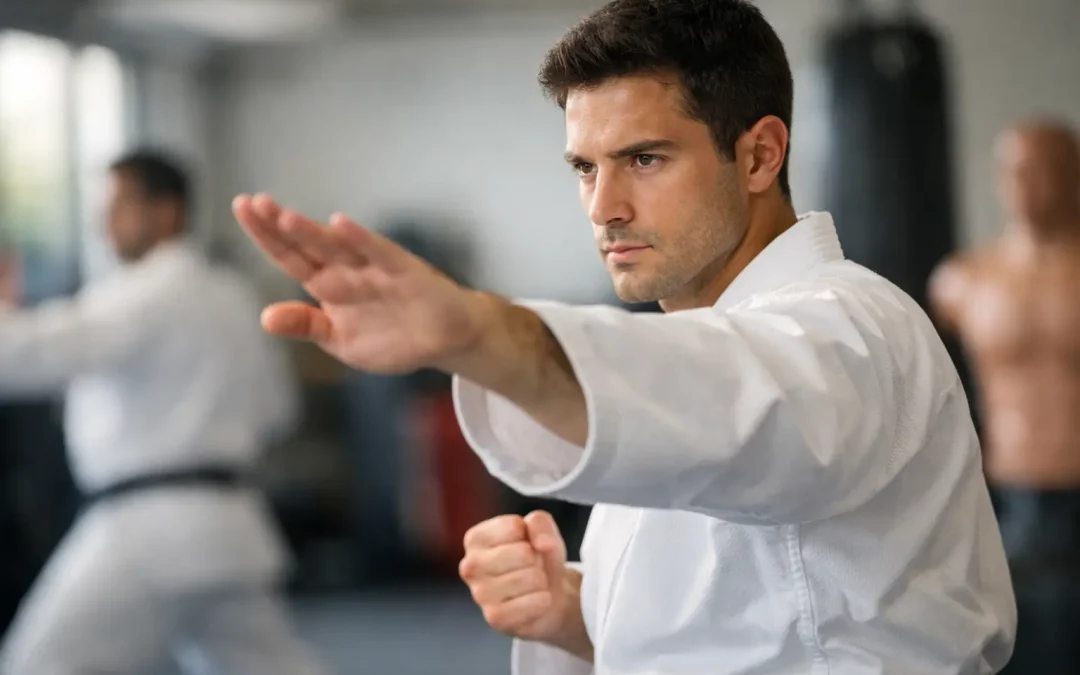
A child who struggles to sit still in class can spend 40 minutes fully engaged in martial arts training. An adult with a busy head can walk into class feeling scattered and leave feeling steady. That is one reason martial arts for focus stands out. It gives the mind a job, gives the body direction, and turns attention into a skill that can be practiced.
Focus is not just about being quiet or still. Real focus means paying attention, following instructions, controlling impulses, and staying with a task even when it gets hard. For many children, teens, and adults, that does not happen automatically. It has to be built. Martial arts helps build it in a practical way because every class asks students to listen, respond, remember, and stay present.
How martial arts for focus trains the mind
In a good martial arts class, students are not drifting from one activity to another. They are working through structure. They line up, listen, warm up, practice technique, repeat combinations, and apply corrections. That rhythm matters because attention grows stronger when it is used consistently.
When an instructor calls out a sequence, students have to process it and act on it straight away. They cannot do three different things at once. They need to watch, listen, and move with purpose. Over time, this helps improve concentration because the brain learns to filter out distractions and stay on one task.
There is also a strong link between movement and attention. Some people focus better when they are active rather than seated. Martial arts uses that to an advantage. Instead of asking a student to simply try harder to concentrate, it gives them physical tasks that demand concentration. Guard position, footwork, timing, balance, and controlled striking all require mental effort.
That is especially helpful for children who have energy to burn. When they are asked to focus in a way that includes movement, the process often feels more natural and more successful.
Why structure makes such a difference
Not all physical activities train focus in the same way. Martial arts tends to be especially effective because structure is built into the class from start to finish. Students know there are expectations. They know they need to show respect, follow instructions, and stay engaged.
This balance matters. If a class is too loose, attention can slip. If it is too rigid, beginners may feel pressured and switch off. The best training environment sits in the middle. It is disciplined, but welcoming. It expects effort, but it supports progress.
That is often where families see the biggest change. Children benefit from clear boundaries and consistent routines. Adults do too, even if they do not always say it that way. Having a set place, a set time, and a clear training format can be a real help when life feels busy or unsteady.
Focus, discipline, and confidence work together
Focus rarely improves on its own. It is closely tied to discipline and confidence. When students begin to focus better, they tend to follow instructions more clearly. When they follow instructions more clearly, they improve faster. When they improve faster, confidence grows.
That confidence then supports better focus. A student who believes they can do something is less likely to give up halfway through. They are more willing to try again, listen to corrections, and stay patient with the process.
This is one reason martial arts can be so valuable for children and teens. A young person who feels frustrated easily may not need more pressure. They may need a place where effort is noticed, progress is visible, and discipline is taught in a positive way. Martial arts does that well because it turns small wins into steady growth.
Adults benefit in a similar way. Many adults come to class carrying stress, poor concentration, or mental fatigue. Training gives them one hour where the outside noise has to stop. They are not checking messages, switching tasks, or sitting in front of a screen. They are learning, moving, and paying attention to what is right in front of them.
What children gain from martial arts for focus
For children, focus is often seen first in the small things. They stand more attentively. They wait their turn more patiently. They remember instructions more accurately. They begin to understand that self-control is part of doing well.
These changes matter because they carry into everyday life. Parents often want an activity that does more than keep a child busy after school. They want something that supports better habits. Martial arts can help because it teaches children to stop, listen, and act with purpose.
That does not mean every child changes overnight. Some need time. Some test boundaries. Some find certain parts of training easier than others. That is normal. Progress in focus is rarely a straight line. What matters is regular practice in an environment that is consistent and encouraging.
Age-appropriate teaching is important here. Younger children need shorter instructions, clear routines, and high engagement. Older children and teens can handle more complexity, but they still benefit from strong structure. When classes are designed properly for each age group, students are more likely to stay engaged and build real focus rather than just being told to behave.
Adults need focus training too
It is easy to talk about focus as if it is only a children’s issue, but plenty of adults struggle with it as well. Busy schedules, work demands, stress, poor sleep, and constant digital distraction can leave people feeling mentally scattered.
Martial arts offers something simple and useful. It asks you to be where you are. If your mind wanders during training, your technique slips. If you rush, your balance changes. If you stop paying attention, you miss key details. The feedback is immediate, which helps adults reconnect with concentration in a very practical way.
There is also a mental reset that comes from training with intent. A focused class can help reduce the feeling of mental clutter because it replaces passive stress with active effort. You leave not just tired, but clearer.
Still, it depends on the class and the person. Someone looking for quiet, slow movement may prefer a different style of training. Someone who benefits from active instruction, repetition, and practical goals may find kickboxing-based martial arts a very good fit.
What to look for in a martial arts school
If focus is one of your main goals, the teaching environment matters as much as the martial art itself. A good school should have clear expectations, experienced instructors, and a positive class culture. Students should feel encouraged, but they should also understand that effort and attention are part of training.
Look for classes that are organized and age-appropriate. Children should not be treated like small adults, and beginners should not be thrown into sessions that feel overwhelming. The right program builds skills in stages.
It also helps to choose a school that values personal development, not just technique. Strong striking and fitness are great benefits, but for many families, the bigger goal is helping children and adults become more disciplined, respectful, and confident. In that kind of setting, focus is trained every week without needing to be forced.
At Taylor Martial Arts, that is a core part of the approach. Training is structured, supportive, and designed to help students grow in confidence, discipline, and focus while learning practical martial arts skills.
Building focus takes repetition
One class can feel great, but long-term focus comes from consistency. That is true in martial arts just as it is anywhere else. Students improve when they keep showing up, keep listening, and keep practicing the basics.
The good news is that focus can be trained. It is not fixed. Some students start with short attention spans and make excellent progress over time. Others already have good concentration but learn how to make it more consistent under pressure.
That is part of what makes martial arts so worthwhile. It does not just tell people to focus better. It gives them repeated chances to do it, improve it, and see the results for themselves.
If you are a parent looking for an activity that helps your child grow stronger in mind as well as body, or an adult who wants a healthier way to sharpen concentration, martial arts can be a strong next step. The real change does not come from one perfect class. It comes from turning up, putting in the work, and learning that focus is something you can build.
Recent Comments