
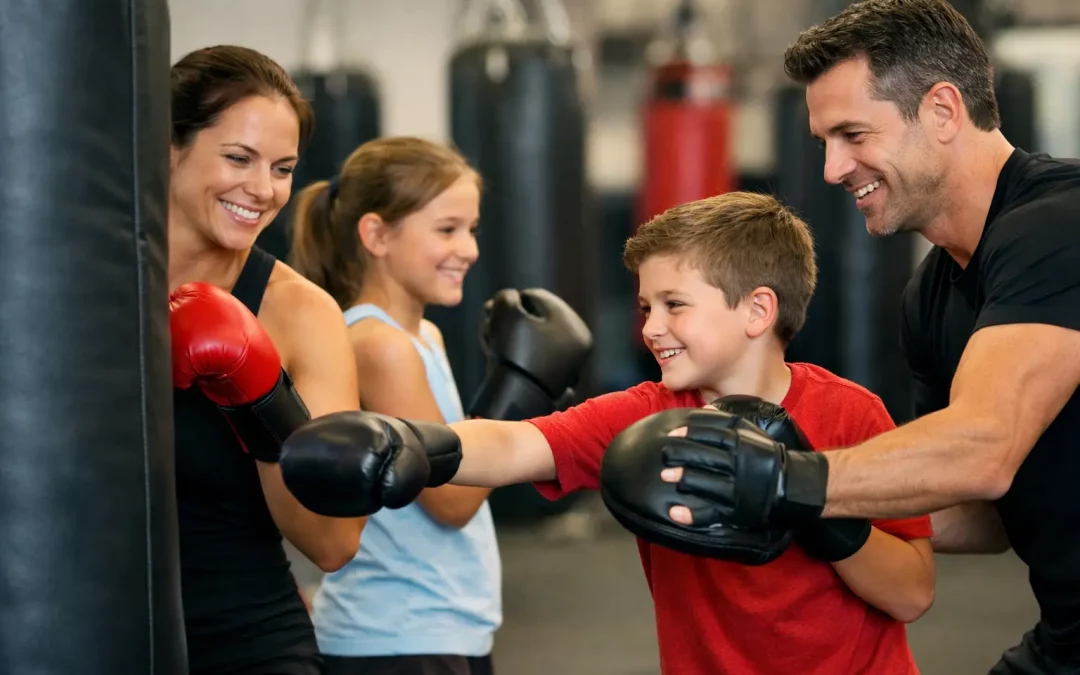
A child who learns to keep their guard up, listen closely, and try again after a missed combination is learning much more than a kickboxing technique. The top benefits of kickboxing training reach into everyday life: stronger bodies, clearer minds, greater confidence, and the discipline to keep moving forward when something feels difficult.
For families, that makes kickboxing a valuable activity at every age. It gives children a positive place to use their energy, gives teens a constructive challenge, and gives adults a practical way to improve fitness and wellbeing. At Taylor Martial Arts, training is built around progress, respect, and the support of a welcoming local community.
Top Benefits of Kickboxing Training Beyond Fitness
Kickboxing is active, engaging, and structured. Students practice punches, kicks, movement, defensive skills, and combinations while building habits that can support them at school, at work, and at home.
A full-body way to get fitter
Kickboxing training uses the whole body. Striking pads, practicing footwork, holding a strong stance, and moving through combinations can develop cardiovascular fitness, coordination, balance, mobility, and muscular endurance. It is a workout that asks students to stay present rather than simply count down the minutes.
For adults, this can be a refreshing alternative to repeating the same gym routine. For children, it makes exercise feel purposeful and fun. The goal is not to be perfect on day one. Consistent training helps fitness build gradually, with each class offering a new opportunity to improve.
The physical challenge can be adjusted for beginners and more experienced students. A good class meets people where they are, while still encouraging them to push a little further over time.
Practical self-defense awareness
Self-defense is not about looking for a fight. It is about developing awareness, confidence, and sensible responses under pressure. Kickboxing gives students an understanding of distance, movement, body position, and how to protect themselves.
Just as importantly, responsible martial arts instruction reinforces self-control. Students learn that avoiding trouble, staying calm, and seeking help are always stronger choices than escalating a situation. Children and teenagers benefit from clear guidance about using their skills responsibly, while adults gain reassurance from learning practical techniques in a controlled setting.
Training cannot promise to remove every risk from life. What it can do is help people feel less helpless, more aware of their surroundings, and better prepared to make safe decisions.
Confidence that is earned, not handed out
Real confidence grows through evidence. A student may begin unsure of their balance, worried about getting a combination wrong, or nervous about joining a group. Then they attend class, practice the basics, receive encouragement, and notice they can do something that once felt out of reach.
That progress matters. A child who works toward the next grade or masters a new technique sees the value of patience. An adult who completes a demanding class after a long day remembers that they are capable of more than they thought.
Kickboxing provides regular, achievable challenges. Progress is personal, so students do not need to compare themselves with the strongest or fastest person in the room. They only need to keep showing up and improving their own standard.
Focus, Discipline, and Respect in Every Class
The benefits of kickboxing are not limited to what happens on the pads. Martial arts training gives students a clear structure: listen to instruction, practice carefully, respect training partners, and finish what they start.
Better focus for children and teens
Children have plenty of energy, and they need healthy ways to direct it. A structured kickboxing class gives them clear goals and routines. They learn to wait for instruction, remember sequences, control their movements, and pay attention to details.
These are useful skills in the classroom as well as the training space. Kickboxing will not replace support for a child with specific learning or behavioral needs, but it can complement a healthy routine by giving them a positive outlet and a consistent set of expectations.
Teenagers can benefit for similar reasons. As social pressures and school demands increase, training offers a space where effort matters. It is not about being the loudest person in the room. It is about showing respect, staying focused, and doing the work.
Discipline through small commitments
Discipline is often misunderstood as being harsh. In martial arts, it is better understood as keeping a promise to yourself. It means arriving ready to train, practicing the basics even when they are not exciting, and responding positively when an instructor gives feedback.
Those small commitments add up. Students learn that improvement is rarely instant. Better technique, fitness, flexibility, and confidence all come from steady effort. This lesson is valuable for young people learning responsibility and for adults trying to build healthier habits around busy schedules.
Respect for others and yourself
Training partners help one another improve. That requires control, trust, and good communication. Students learn to work safely, follow class rules, encourage others, and treat everyone with courtesy regardless of age or experience.
Respect also includes self-respect. Taking time to train says that your health, goals, and personal development matter. For many adults, that can be a powerful change of pace from putting everyone else first.
A Positive Outlet for Stress and Energy
A challenging class can clear the mind. After concentrating on footwork, combinations, and breathing, everyday worries often feel more manageable. Physical activity may help reduce stress, improve mood, and support better sleep, particularly when it becomes part of a regular weekly routine.
For children, kickboxing offers a constructive outlet after a day of sitting in school. For teens, it can provide a break from screens and social pressure. For adults, it creates protected time to move, reset, and focus on something outside work or household responsibilities.
It depends on the person, of course. Some students want high-energy pad work, while others enjoy the calm concentration of practicing technique. A well-led class has room for both, giving each student a safe way to challenge themselves.
Community Makes Progress Easier
It is easier to stay committed when people know your name, notice your progress, and encourage you to keep going. A family-focused martial arts club creates that sense of belonging without requiring students to be elite athletes or experienced fighters.
Parents can feel confident that their children are learning in a structured environment. Siblings may train alongside one another while working toward their own goals. Adults can meet people from their local area who share an interest in fitness, self-defense, and personal growth.
That community element is especially helpful for beginners. Starting something new can feel intimidating, but everyone in a martial arts class once had their first lesson. The right environment replaces pressure with encouragement and turns regular attendance into something students look forward to.
Why Age-Appropriate Training Matters
Kickboxing should not be one-size-fits-all. Younger children need classes that develop coordination, listening skills, confidence, and basic movement through clear, engaging activities. Older children and teens can take on more technical challenges, goal-setting, and controlled partner work. Adults may want a stronger fitness challenge alongside practical self-defense instruction.
Age-appropriate coaching helps students progress safely and enjoy the process. It also keeps expectations realistic. A beginner does not need advanced techniques to feel the benefits. Good foundations – stance, balance, control, focus, and respect – are where lasting progress begins.
If you are choosing an activity for your child or looking for a new routine yourself, give it enough time to become familiar. The first class is about taking that step. The growth comes from returning, practicing, and discovering what consistent effort can do.
Recent Comments